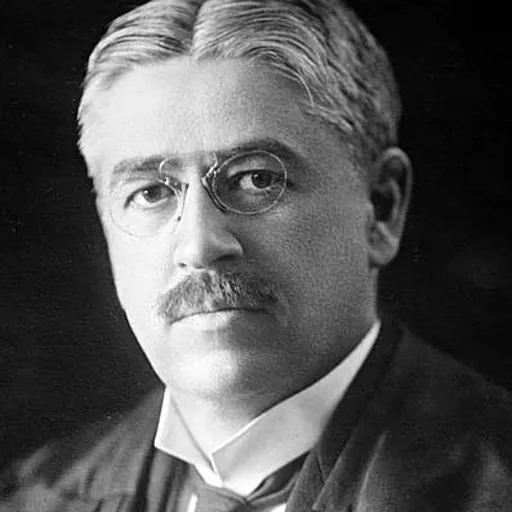
About Nathan Lewis Miller
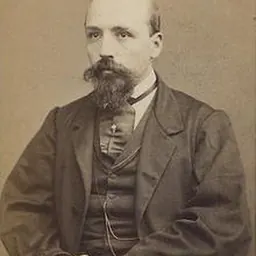
Lived 1868 – 1953 (aged 84). Nathan Lewis Miller was an American judge, lawyer, politician, governor and jurist.
Nathan Lewis Miller (10 October 1868 – 26 June 1953) was an American attorney and politician from New York. A Republican, he served as New York State Comptroller from 1901 to 1903, and a judge of the New York Supreme Court and New York Court of Appeals from 1903 to 1915. From 1921 to 1922, he served as governor of New York.
A native of Solon, New York. Miller graduated from the Cortland Normal School in 1887, taught school for several years while studying law with a Cortland attorney and attained admission to the bar in 1893. He also became active in politics when he began giving campaign speeches on behalf of Cortland County's Republican Committee.
Miller served as a school commissioner in Cortland County from 1894 to 1900 and was the city of Cortland's corporation counsel from 1901 to 1902. In 1901 he was appointed New York State Comptroller following the resignation of the incumbent, and he served until 1903. In 1903, he was appointed a justice of the New York Supreme Court, and in 1905 he was designated to serve as a justice of the court's appellate division. In 1913, he was appointed to the New York Court of Appeals, where he served until 1915.
In August 1915, Miller resigned his judgeship to return to practicing law, and he established a practice in Syracuse. In 1920, he was the successful Republican nominee for governor, and he served one term, 1921 to 1922. Miller prioritized cost-cutting during his term, and enacted reforms including ending the monopoly caused by the state's selection of a single firm as its official printer. Miller was defeated for reelection in 1922. After leaving office, Miller practiced law in New York City with the firm that became Willkie Farr & Gallagher. In addition, he served as general counsel, a director, and a finance committee member of United States Steel. He died at The Pierre hotel in New York City on 26 June 1953 and was buried at Cortland Rural Cemetery.
Early life Nathan Lewis Miller was born in Solon, New York on 10 October 1868, a son of farmer Samuel Miller and Almera (Russell) Miller. The Samuel Miller family moved to a farm near Groton in 1872 and then to one near Cortland in 1881. He then attended the Cortland Normal School, from which he graduated in 1887. While attending the normal school, Miller joined the Gamma Sigma fraternity. After completing his education, Miller taught school in towns near Cortland from 1887 to 1893. Governor Benjamin B. Odell appointed Miller to fill the vacancy.
Miller left the state comptroller's post when Odell selected him to serve as a justice of the New York Supreme Court's sixth district, which included Cortland County. He was a delegate to the 1920 Republican National Convention, where he made the nominating speech for Herbert Hoover.
Governor Despite his demurrals, state Republican leaders continued to promote Miller's candidacy for governor in the 1920 election. Other prospective candidates, including Charles F. Thompson and Francis Hugo, opposed Miller as being too closely aligned with corporate interests and the party's leadership. Miller agreed to accept the nomination and was the choice of the delegates at the party's July convention. Thompson and Miller then competed in the state's September primary election; Miller won the gubernatorial nomination with 65 percent of the vote, though Thompson remained on the ballot as the nominee of the Prohibition Party. In the November general election, Miller defeated incumbent Al Smith in that year's Republican wave, receiving 47 percent of the vote to Smith's 44.
Miller had argued against Prohibition as a federal encroachment on state power, but once the Eighteenth Amendment to the United States Constitution was enacted, he supported enforcement on the grounds that obeying the law, even an unpopular one, took priority. He opposed much socially progressive legislation as paternalistic and opposed U.S. involvement in the League of Nations on the grounds that an isolationist foreign policy would prevent U.S. involvement in future wars. During his term as governor, he pursued some progressive measures, including health clinics for children, an expanded use of executive clemency for state prison inmates, and an end to the de facto monopoly caused by the designation of an official state printer.
Despite his support for some progressive initiatives, Miller's term was concerned primarily with cost cutting and economy. To that end, he eliminated state jobs he considered superfluous or unnecessary, restructured the state department of labor and public service commission, and created a single department to handle state government purchasing. To demonstrate his personal commitment to reducing state expenditures, Miller paid personally for repairs to and maintenance of the New York State Executive Mansion.
Miller campaigned for a second term in 1922 and continued to prioritize cost cutting as his primary theme. However, his focus on reduced state expenditures proved to be unpopular, and Smith handily won their rematch. Near the end of his term, Miller was informed that U.S. Chief Justice William Howard Taft intended to recommend him to President Warren G. Harding for appointment to the U.S. Supreme Court. He declined to be considered because he had already made plans to move to New York City to practice law.
Later career After the end of his term, Miller and Harold Otis formed the Miller & Otis law partnership; in 1931, their firm merged with another New York City partnership, Hornblower, Miller & Garrison. This firm later became Willkie Farr & Gallagher, which has continued to be active in the field of corporation law. From 1925 until his death, Miller served as general counsel, member of the board of directors, and finance committee member for United States Steel. In 1939, he left Hornblower, Miller & Garrison so he could focus solely on his work for U.S. Steel. In 1952, U.S. Steel was one of the companies that prevailed in Youngstown Sheet & Tube Co. v. Sawyer, a landmark U.S. Supreme Court case. Miller participated in authoring the company's brief, and the court's ruling limited the power of the president to seize private property.
In January 1952, Miller was the first recipient of the New York State Bar Association’s Gold Medal for Distinguished Service. He also received the honorary degree of LL.D. from Columbia University, Syracuse University, Colgate University, and Union College. Beginning in the mid-1930s, Miller maintained a summer home in Oyster Bay while residing at The Pierre hotel in New York City. In May 1953, Miller broke his hip after a fall. Health complications including pneumonia soon followed, and he died at The Pierre on 26 June 1953. Miller was buried at Cortland Rural Cemetery in Cortland.
Don’t just read it —
keep it.
Full-length biographies made to live with: read them, listen on the way to work, watch them tonight.
- E-book
- Audio
- Video
Instant download · yours to keep · every purchase keeps this site free
Important facts
People in Nathan Lewis Miller's life
Named in this biography and alive at the same time




Related people
Same field, nearest in time

Contemporaries
People whose lives overlapped Nathan Lewis Miller's



Frequently asked questions
Who was Nathan Lewis Miller?
American judge (1868–1953)
When was Nathan Lewis Miller born?
Nathan Lewis Miller was born on 10 October 1868 in Solon.
When did Nathan Lewis Miller die?
Nathan Lewis Miller died on 26 June 1953 in Syracuse.
What was Nathan Lewis Miller's occupation?
Nathan Lewis Miller was a judge, lawyer, politician, governor and jurist.
What nationality was Nathan Lewis Miller?
Nathan Lewis Miller was American.
Sources & further reading
· Wikipedia: Nathan Lewis Miller
Cite this page
APA: Biography.guide. (2026). Nathan Lewis Miller. https://biography.guide/nathan-lewis-miller/
MLA: "Nathan Lewis Miller." Biography.guide, https://biography.guide/nathan-lewis-miller/.
Chicago: "Nathan Lewis Miller." Biography.guide. https://biography.guide/nathan-lewis-miller/.
Data last updated: 2026-09-20 · Spot an error? Report a correction.
Portrait: Wikimedia Commons · author & licence
Page generated 2026-09-27 04:57 UTC