
About Natalya Estemirova
Lived 1958 – 2009 (aged 51). Natalya Estemirova was a Russian journalist, human rights defender, writer, lecturer, historian and human rights activist.
Natalya Khusainovna Estemirova (, ; 28 February 1958 – 15 July 2009) was a Russian human rights activist and board member of the Russian human rights organization Memorial. Estemirova was abducted by an unknown group of people on 15 July 2009 around 8:30 a.m. from her home in Grozny, Chechnya, as she was working on "extremely sensitive" cases of human rights abuses in Chechnya. Two witnesses reported they saw Estemirova being forced into a car shouting that she was being abducted. Her remains were later found with bullet wounds in the head and chest area at 4:30 p.m. in woodland away from the federal road "Kavkaz" near the village of Gazi-Yurt, Ingushetia.
Biography Born in Kamyshlov, Sverdlovsk Oblast to Russian and Chechen parents, Estemirova graduated with a history degree from Grozny University and taught history in a local high school until 1998. In 1991, she worked as a correspondent for the local newspapers The Voice and The Worker of Grozny. While working on TV in Grozny, she filmed thirteen short documentaries about victims of the Russian punitive practices. She participated in the Organization of Filtration Camps Inmates as a press secretary. The widow of a Chechen policeman, she gathered evidence on human rights violations since the beginning of the Second Chechen war in 1999, leaving her daughter in Yekaterinburg with relatives. In 2000, she became a representative for the Memorial Human Rights Centre in her native Grozny. She visited many hospitals in Chechnya and Ingushetia, taking hundreds of photographs of child victims of the war.
Estemirova was a frequent contributor to the independent Moscow newspaper Novaya Gazeta and the Caucasus news website Kavkazsky Uzel.
Estemirova received the Right Livelihood Award as a representative of Memorial at a ceremony in the Swedish parliament building in 2004. Along with Sergey Kovalyov, chairman of Memorial, she was awarded the Robert Schuman Medal by the Group of the European People's Party in 2005. In October 2007, she was awarded the first Anna Politkovskaya Award, honouring brave women human rights defenders from war and conflict, who speaks up for the victims, who are often at a great personal risk. The Anna Politkovskaya Award is presented annually to honour the memory of Russian investigative journalist Anna Politkovskaya on the anniversary of her murder on 7 October 2006, by Reach All Women in War (RAW), an international human rights organization supporting women human rights defenders in war and conflict zones. Estemirova worked together with investigative journalist Anna Politkovskaya and human rights lawyer Stanislav Markelov, both of whom were also murdered, in 2006 and 2009, respectively.
Assassination Estemirova was abducted on 15 July 2009 from her home in Grozny, Chechnya. According to Tanya Lokshina of the Moscow bureau of Human Rights Watch, an unknown group of individuals abducted Estemirova near her house in Grozny at around 8:30 a.m. Her colleagues raised an alert when she did not come to a planned meeting and went to her home, found witnesses and questioned them. Two witnesses reportedly saw Estemirova being forced into a car while shouting that she was being abducted. Lokshina said Estemirova was abducted as she was working on "extremely sensitive" cases of human rights abuses in Chechnya. Lokshina said that she had been targeted for her professional activities. Human Rights Watch had demanded the Kremlin and Ramzan Kadyrov to return Estemirova home safely.
Vladimir Markin, press secretary for the investigative committee of the Prosecutor General of Russia, said a body of a woman with bullet wounds in the head and chest was found at 4:30 p.m. in woodland 100 m away from the federal road "Kavkaz" near the village of Gazi-Yurt, Ingushetia. Investigators found items belonging to Estemirova in the purse of the woman. These items were a passport, an ID of the Chechnya expert for the Human Rights Commissioner of Russia and the mandate of the penitentiary supervision public committee.
Funeral Estemirova was "buried in line with Islamic tradition before sunset on Thursday, in a cemetery in her ancestral village, Koshkeldy, in Chechnya's Gudermes district."
About 150 people attended a vigil that was held in Moscow's Pushkin Square about nine days after the murder, following Russian Orthodox tradition. After all but twenty people had left, police arrested the organizer of the event, Viktor Sotirko of Memorial. He was held for two hours and charged with disturbing the peace. Police said only 30 people had been sanctioned to attend the event, but far more had shown up.
Response The BBC's Rupert Wingfield-Hayes, stationed in Moscow, reported that Estemirova was engaged in "very important and dangerous work", investigating hundreds of cases of alleged kidnappings, torture and extrajudicial killings by Russian government troops or paramilitaries in Chechnya.
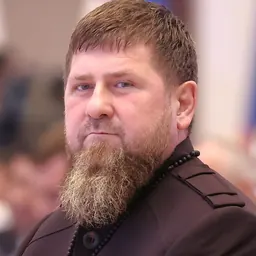
Memorial claimed that "state terror" was to blame, calling the killing an "extrajudicial execution" by government-backed death squads. According to Orlov, shortly before the murder Kadyrov made an open threat to her by saying: "Yes, my hands are up to the elbows in blood. And I am not ashamed of that. I killed and will kill bad people". Kadyrov denied any involvement and promised to investigate the killing personally. He condemned the killers, saying they "must be punished as the cruelest of criminals". Nurdi Nukhazhiyev, Chechen human rights ombudsman, called Orlov's accusation "groundless and ludicrous".
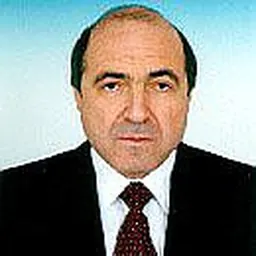
In January 2010, Ramzan Kadyrov, in an interview to Russia Today accused Boris Berezovsky of murdering Estemirova. Despite expressing confidence that the crime will be solved, he acknowledged that as of that date it had not:
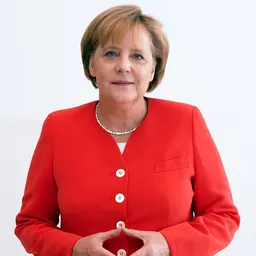
Medvedev responded to the accusation, saying the timing of the crime, a day before his trip to Germany for talks with Chancellor Angela Merkel, was a provocation intended to give rise to "the most primitive theories and those most disagreeable to the state". The chairman of the EPP Group in the European Parliament, Joseph Daul, condemned the perpetrators and called for an investigation and bringing the perpetrators to trial.
The Sweden-based human rights organization Civil Rights Defenders named the Natalia Project after Estemirova. The Natalia Project is an alarm and positioning system for human rights defenders at risk.
Investigation In February 2010, an anonymous source in the Russian law enforcement bodies claimed that investigators knew Estemirova's murderer. Yet, the murderer wasn't caught, nor was the organizer of the crime identified.
Journalists of Novaya Gazeta together with the human rights society Memorial and the International Federation for Human Rights are conducting their own investigation, they also monitor the official investigation. According to them, the main version of the official investigators is that Estemirova was murdered by rebel Alkhazur Bashayev, a member of a jamaat in the Chechen village of Shalazhy (Шалажи). On 15 January 2010, during a search in the house of Alkhazur Bashayev, the investigators found a large stockpile of weapons, including the handgun that was used to murder Estemirova and a counterfeit police id with a photograph of Bashayev. On 7 February 2010, they found an abandoned VAZ-2107 car that was identified as the car bought by Bashayev. In the car, they found a suppressor made of the same material as the fragment found on the crime scene. The plant fragments found on the suspension on the car were similar to the plants found at the crime scene.
According to the official investigators, Bashayev was trying to smear Kadyrov and the leadership of the Chechen Republic, and he might also have been upset by publications by Estemirova where she had alleged that Bashayev had been recruiting for the rebel group without any opposition of the officials and suggested that he might be an agent for Kadyrovtsy.
According to the official information, on 13 November 2009, Bashayev was killed by an air strike during a special operation led by Adam Delimkhanov.
Novaya Gazeta journalists and human rights activists disagree with the conclusions of the investigators and suspect a massive cover-up: The DNA analysis of materials found on the crime scene is not matched to Alkhazur Bashayev or his relatives. The relations between Bashayev and official Kadyrovtsy are very dubious. The killing of Bashayev is not proven. Quite possible that he is alive and the information of his deaths were cover-up. It is probable that the handgun was put into Bashayev's house after Bashayev's death.
Don’t just read it —
keep it.
Full-length biographies made to live with: read them, listen on the way to work, watch them tonight.
- E-book
- Audio
- Video
Instant download · yours to keep · every purchase keeps this site free
Important facts
People in Natalya Estemirova's life
Named in this biography and alive at the same time



Related people
Same field, nearest in time




Contemporaries
People whose lives overlapped Natalya Estemirova's



Frequently asked questions
Who was Natalya Estemirova?
Russian human rights activist (1958-2009)
When was Natalya Estemirova born?
Natalya Estemirova was born on 28 February 1958 in Kamyshlov.
When did Natalya Estemirova die?
Natalya Estemirova died on 15 July 2009 in Gazi-Yurt.
What was Natalya Estemirova's occupation?
Natalya Estemirova was a journalist, human rights defender, writer, lecturer, historian and human rights activist.
What nationality was Natalya Estemirova?
Natalya Estemirova was Russian.
Sources & further reading
· Wikipedia: Natalya Estemirova
Cite this page
APA: Biography.guide. (2026). Natalya Estemirova. https://biography.guide/natalya-estemirova/
MLA: "Natalya Estemirova." Biography.guide, https://biography.guide/natalya-estemirova/.
Chicago: "Natalya Estemirova." Biography.guide. https://biography.guide/natalya-estemirova/.
Data last updated: 2026-09-20 · Spot an error? Report a correction.
Page generated 2026-09-27 05:33 UTC