
Natacha Rambova
American film personality and fashion designer
About Natacha Rambova
Lived 1897 – 1966 (aged 69). Natacha Rambova was an American actor, archaeologist, screenwriter, film producer, writer and fashion designer.
Natacha Rambova (born Winifred Kimball Shaughnessy; January 19, 1897 – June 5, 1966) was an American dancer, costume designer, art director, and Egyptologist. Rising to prominence in the early 1920s, she became one of Hollywood's first women to exert significant creative control behind the camera, particularly through her collaborations with silent film actor Rudolph Valentino, whom she married in 1923.
Trained in ballet and the visual arts, Rambova began her career dancing with Russian ballet choreographer Theodore Kosloff before moving into stage and film design. She gained recognition for her work with Russian actress Alla Nazimova, contributing to a series of visually daring productions noted for their modernist and Art Deco aesthetics. As Valentino's wife and creative partner, Rambova played a central—if controversial—role in shaping his screen image, serving as costume designer, art director, and consultant on several of his films. Her emphasis on stylized design, historical authenticity, and European modernism marked a departure from conventional Hollywood aesthetics of the period and proved both influential and controversial.
Following her divorce from Valentino in 1926, Rambova largely withdrew from the film industry and opened a couture boutique in New York. During the Great Depression, she relocated to Europe, where she married a Spanish nobleman. In her later years, she became an Egyptologist, collaborating with scholars and co-authoring works on ancient Egyptian history and mythology. She died in 1966 in California of a heart attack while working on a manuscript examining patterns within the texts in the Pyramid of Unas.
Early life Rambova was born Winifred Kimball Shaughnessy on January 19, 1897, in Salt Lake City, Utah. Her father, Michael Shaughnessy, was an Irish Catholic from New York City who fought for the Union during the American Civil War and then worked in the mining industry. Her mother, Winifred Shaughnessy (née Kimball), was the granddaughter of Heber C. Kimball, a member of the first presidency of the Church of Jesus Christ of Latter-day Saints, and was raised in a prominent Salt Lake City family.
During her childhood, Rambova spent summer vacations at the Villa Trianon in Le Chesnay, France with Edgar's sister, the French designer Elsie de Wolfe. She was given the nickname "Wink" by her aunt Teresa to distinguish her from her mother because of their shared name.
A rebellious teenager, Rambova was sent by her mother to Leatherhead Court, a boarding school in Surrey, England. In her schooling, she became fascinated by Greek mythology, and also proved especially gifted at ballet. After seeing Anna Pavlova in a production of Swan Lake in Paris with her former step-aunt Elsie, Rambova decided she wanted to pursue a career as a ballerina. Career
Early dance career
Her family initially encouraged her to study ballet as a social grace rather than a profession. However, she demonstrated such exceptional talent that plans were made to take her to London and, under the management of Herbert Beerbohm Tree, place her with one of England's leading dance teachers. The outbreak of World War I disrupted these plans and prevented the journey in 1914.
Rambova made her public debut as a dancer in November 1914 at a benefit fête in Burlingame held in aid of Belgian war relief. In 1915, she continued performing throughout the San Francisco Bay Area and later that summer traveled to New York City, where she remained for an extended stay with her aunt Teresa. Standing at , Rambova was too tall to be a classical ballerina, but she was soon offered a leading part in his act. Rambova's mother was outraged upon discovering the affair and attempted to separate her from Kosloff by withholding $2,637 owed for dance lessons and gowns, offering payment only if he ceased contact. She also tried to have him arrested and deported on statutory rape charges.
Fearing that her relationship with Kosloff was about to be severed, Rambova ran way from home on April 26, 1916, and fled to Canada before sailing to Bournemouth, England. There, she stayed with Kosloff's wife Maria "Alexandria" Baldina, under an assumed role as a governess for his daughter. Two days after she went missing, Kosloff sued Rambova's mother for the unpaid bill. She accused Kosloff of using hypnotism on her daughter. During Kosloff's performance at a local theater in June 1916, a bouquet of American Beauty roses was thrown onto the stage accompanied by a card bearing "Winifred de Wolfe" in her handwriting. Although its source could not be determined, her relatives took it as evidence that she was alive. As part of their arrangement, her mother told the press that Rambova had been located in Australia and was fulfilling an engagement. In August 1916, Rambova returned to the United States and was reunited with her mother in San Francisco. Her mother followed her to Chicago and they met with the chief of the Federal Bureau of Investigation before Rambova rejoined Kosloff's company in Omaha under the Russian-inspired alias Vera Fredowa. Shortly after, Kosloff suggested that she adopt the stage name Natacha Rambova. She eventually became disillusioned upon learning that Kosloff had affairs with several women in the company during her absence, though her determination to establish herself as an artist tempered her sense of betrayal and disappointment.
Costume and set design In 1917, Kosloff was hired by Cecil B. DeMille as a performer and costume designer for the film The Woman God Forgot, after which he and Rambova relocated from New York to Los Angeles. Rambova carried out much of the creative work as well as the historical research on Aztec culture for Kosloff, who claimed credit for these as his own. After the film's completion, DeMille offered Theodore Kosloff and his assistants further studio work, but they declined in order to continue touring on the Keith-Orpheum circuit. In late 1917, the Imperial Russian Ballet launched its second Los Angeles engagement, highlighted by The Aztec Dance, performed by Natacha Rambova and Kosloff, who wore his costume from the DeMille film. The tour was critically successful and concluded in New York in the spring of 1918.thumb Shortly thereafter, the Russian Revolution led to the confiscation of Kosloff's Moscow property by the Bolshevik government, resulting in the financial collapse of the Imperial Russian Ballet. A final tour was planned for the 1918–19 season, during which auditions were held nationwide for students to enroll in the Los Angeles dance school established by Kosloff, Rambova, and Vera Fredova at Trinity Auditorium. Maria Gambarelli of the New York Metropolitan Opera replaced Rambova as Kosloff's principal dance partner, as Rambova increasingly focused on designing costumes and sets for new productions inspired by Tartar themes. Disheartened by Kosloff's financial collapse but not wanting to return home, she nonetheless remained with the company, devoting her efforts to research and design. The elaborate production was well received, with the press praising its "striking and spectacular" costuming, harmonious setting, and superb dancing.
Rambova began to resent Kosloff for taking credit for the extensive research and design work she undertook in support of his emerging motion-picture career. Although Kosloff was an avid painter, he showed little interest in costume or set design, yet he routinely presented Rambova's completed sketches to DeMille as his own after approving them. Rambova designed costumes for Kosloff's roles in Why Change Your Wife? (1920) and Something to Think About (1920). For DeMille's production, Forbidden Fruit (1921), a fantasy sequence inspired by Cinderella was assigned to Rambova and Mitchell Leisen. The sequence became the film's most visually striking element. Leisen later credited Rambova for much of the work: "I did some of the clothes for the Cinderella Ball... Natasha [sic] Rambova did the others. One of hers was a black dress for the Fairy Godmother that had little electric lights all over the skirt." To Rambova's frustration, Photoplay credited the film's costume designs to Claire West, head of wardrobe at the Lasky Studio, where DeMille worked. DeMille himself credited Kosloff with creating the fantasy sequence's costumes, further obscuring Rambova's role.
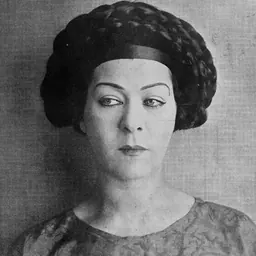
Around this time, actress Alla Nazimova was taking dance lessons from Kosloff in preparation for one of her films. As he had previously done with DeMille, Kosloff offered to submit costume and set designs. This resulted in Rambova's work appearing in the dream sequences of Nazimova's film Billions (1920), which also featured girls from the Kosloff School of Dancing as nymphs. Rambova subsequently began designing for Nazimova's next project, an adaptation of Pierre Louÿs's Aphrodite. Rather than presenting the sketches himself, Kosloff asked Rambova to deliver the designs directly to Nazimova. Nazimova responded favorably but requested revisions, and was impressed when Rambova executed the changes immediately in her own hand, making clear that she was the designer responsible for the work. Impressed by both the designs and their creator, Nazimova offered Rambova a position on her production staff as an art director and costume designer, proposing a wage of up to USD $5,000 per picture . thumb
While working on Aphrodite—a project that was never filmed—Rambova used the opportunity to end her relationship with Kosloff. She chose a weekend to move out of his Franklin Avenue house while Kosloff was away visiting DeMille at his country estate, Paradise. Agnes de Mille, one of Kosloff's students and DeMille's niece, later remarked that his visits there involved "girls" rather than hunting. Rambova was aware of Kosloff's ongoing affairs and of his sexual relationships with young pupils, factors that prompted her departure. On the morning she planned to leave him, Kosloff returned home unexpectedly, confronted her, and ordered her to unpack. When she refused and headed for the door, he shot her with a hunting rifle, and the bullet lodged above her knee. Rambova escaped with the help of a housemate, Vera Fredova, fleeing through a window and reaching a waiting taxi.
Rambova went to the Metro studio, where Nazimova's Aphrodite was in production. French cinematographer Paul Ivano later recalled that Rambova arrived "in tears, nearly hysterical," adding, "We spent nearly the entire day picking the birdshot out of her leg, as she related how Kosloff had tried to kill her." Despite the severity of the attack, Rambova declined to press charges, believing that the resulting notoriety would damage her reputation and overshadow the beginning of her career as Nazimova's art director. Instead, she chose to suppress the episode. In later years, she explained her injuries by claiming she had been shot by a jealous ballerina, using the story as an excuse for abandoning her dance career. Her relationship with Kosloff profoundly affected her: she became determined to conceal her emotions and vulnerabilities behind a carefully maintained air of aloof detachment.
Relationship with Rudolph Valentino
In 1921, Rambova was introduced to actor Rudolph Valentino by Nazimova on the Metro lot while he was filming Uncharted Seas (1921). "It wasn't love at first sight," Rambova later recalled to Photoplay. "I think it was good comradeship more than anything else. We were both very lonely but we had known each other more than six months before we became interested in each other." They subsequently worked together on Camille (1921), a film that was a financial failure and resulted in Metro Pictures terminating their contract with Nazimova. While making the film, however, Rambova and Valentino became romantically involved.
They married on May 13, 1922, in Mexicali, Mexico, an event described by Rambova as "wonderful ... even though it did cause many worries and heartaches later." However, since he had obtained from his estranged wife, actress Jean Acker, only an interlocutory decree of divorce and not a final divorce judgment (which could be obtained only after an year had passed from the interlocutory decree of divorce), Valentino was jailed for bigamy, having to be bailed out by friends. Rambova later claimed that Famous Players–Lasky treated Valentino harshly and attempted to force her out of his life by sending her to New York and urging her to leave for Europe.
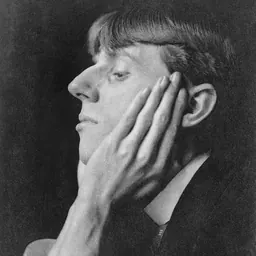
While her association with Valentino lent Rambova a celebrity typically afforded to actors, their professional collaborations showed up their differences more than their similarities, and she did not contribute to any of his successful films in spite of serving as his manager. In The Young Rajah (1922) she designed authentic Indian costumes that tended to compromise his Latin lover image, and the film was a major flop. She also supported his one-man strike against Famous Players–Lasky, which left him temporarily banned from movie work. In the interval, they performed a promotional dance tour for Mineralava Beauty Products in 1923. When they reached her hometown of Salt Lake City, and she was billed as "The Little Pigtailed Shaughnessy Girl", Rambova was deeply insulted. During the tour, Rambova and Valentino publicly criticized the Hollywood studio system; Rambova later articulated these views in an article she wrote for the summer issue of Movie Weekly, condemning graft in the motion-picture business and arguing that audiences were forced to subsidize corruption through inflated ticket prices. In 1922, Rambova designed the costumes for Nazimova's Salomé, inspired by the work of Aubrey Beardsley. Rambova's later work with Valentino was characterized by elaborate and costly preparations for films that underperformed at the box office, including Monsieur Beaucaire (1924) and A Sainted Devil (1924).left Rambova and Valentino with their dogs at their Whitley Heights home. Published in The New Movie, August 1930In September 1924, Rambova and Valentino traveled through Spain to research locations, architecture, and artifacts for a planned film project, later titled The Hooded Falcon. Rambova oversaw the acquisition of props and antiques, while Valentino documented Moorish sites. The trip proved costly, exhausting research funds and resulting in significant debt. After returning to the California, the couple retreated to their home in Whitley Heights, Los Angeles, designed by Rambova as a highly stylized sanctuary emphasizing modern décor and European antiques. They socialized infrequently in Hollywood, favoring privacy and domestic life. Rambova later remarked that work was "the one thing which makes life in Hollywood tolerable."
Rambova oversaw costume and set design by Adrian and William Cameron Menzies for The Hooded Falcon. When production delays made filming impractical, producer J. D. Williams persuaded the Valentinos to proceed with Cobra (1925) as an interim project. Rambova did some designs but took little interest in the contemporary story, later stating that modern subjects bored her unless they were "symbolic or fantastical," and ultimately relinquished production management duties to Valentino's manager George Ullman. The film was a commercial failure, with Ullman publicly attributing its problems to Rambova's influence. Sensational claims by actress Colleen Moore circulated in Hollywood, alleging that Rambova relied on daily séances to write the script. Meanwhile, production plans for The Hooded Falcon were repeatedly scaled back, and the script by June Mathis was ultimately abandoned, with setbacks often attributed to Rambova.
By this time, critics and the press were beginning to blame Rambova's excessive control for these failures. United Artists went so far as to offer Valentino an exclusive contract with the stipulation that Rambova had no negotiating power, and was disallowed from even visiting the sets of his films. After this, Rambova was offered $30,000 to create a film of her choosing, which resulted in the production of What Price Beauty?, a drama which she co-produced and co-wrote. Rambova discovered actress Myrna Loy and cast her in the film.
When Rambova and Valentino separated in 1925, she initially dismissed the divorce rumors. "I'm sure this marital holiday will be a good thing for us both. When a husband and wife both are working and both are the possessors of temperaments I think they should have a vacation from each other. Since I've begun making my own pictures we have been drawn more or less apart, and I can't find the time to devote to the home that I used to. My husband is a great lover of home life," she said. Ullman acknowledged arranging the surveillance but denied Valentino's involvement, and no explanation was publicly given. She was granted a divorce in Paris on the grounds of abandonment on January 19, 1926. thumb
After the divorce was finalized, Rambova moved on to other ventures: On March 2, 1926, she patented a doll she had designed with a "combined coverlet", and also produced and starred in her own picture, Do Clothes Make the Woman? with Clive Brook (now lost). However, the distributor took the opportunity to bill her as 'Mrs. Valentino' and changed the title to When Love Grows Cold; Rambova was horrified by the title change. The film did garner press due to it being Rambova's first screen credit, however. An Oregon newspaper teased before a screening: "Natacha Rambova (Mrs. Rudolph Valentino)... So much has been written of this remarkable lady who won and lost the heart of the great Valentino that everyone wants to see her. Tonight is your opportunity to do so."
The film, however, was not well received by critics; a review in Picture Play deemed the film "the poorest picture of the month, or of almost any month, for that matter," adding: "The interiors are bad, the costumes atrocious. Miss Rambova is not well dressed, nor does she film well, in the slightest degree." After its release, Rambova never worked in film, on or offscreen, again. Three months later, Valentino died unexpectedly of peritonitis, leaving Rambova inconsolable, and she purportedly locked herself in her bedroom for three days. Though she did not attend his funeral, she sent a telegram to Valentino's business manager George Ullman, requesting he be buried in her family crypt at Woodlawn Cemetery in the Bronx (a request Ullman denied).
Writing and fashion design After Valentino's death, Rambova relocated to New York City. There, she immersed herself in several endeavors, appearing in vaudeville at the Palace Theatre and writing a semi-fictional play entitled All that Glitters, which detailed her relationship with Valentino, and concluded in a fictionalized happy reconciliation. She also published the 1926 memoir, Rudy: An Intimate Portrait by His Wife Natacha Rambova, which contains memories of her life with him. The following year, a second memoir was published entitled Rudolph Valentino Recollections (a variation of Rudy: An Intimate Portrait), in which she prefaces an addended final chapter by asking that only those "ready to accept the truth" read on; what follows is a detailed letter supposedly communicated by Valentino's spirit from an astral plane, which Rambova claimed to have received during an automatic writing session. While residing in New York, she frequently arranged séances with medium George Wehner, and claimed to have made contact with Valentino's spirit on several occasions. Rambova also appeared in supporting parts in two original 1927 Broadway productions: Set a Thief, a drama written by Edward E. Paramore, Jr., and Creoles, a comedy written by Kenneth Perkins and Samuel Shipman.
In June 1928, she opened an elite couture shop on Fifth Avenue and West 55th street in Manhattan, which sold Russian-inspired clothing that Rambova herself designed. Her clientele included Broadway and Hollywood actresses such as Beulah Bondi and Mae Murray. On opening the shop, she commented: "I'm in business, not exactly because I need the money, but because it enables me to give vent to an artistic urge." In addition to clothing, the shop also carried jewelry, although it is unknown if it was designed by Rambova or imported. By late 1931, Rambova had grown uneasy about the economic situation of the United States during the Great Depression, and feared the country would experience a drastic revolution. This led her to close her shop and formally retire from commercial fashion design, leaving the United States to live in Juan-les-Pins, France in 1932.
On a yacht cruise to the Balearic Islands, she met her second husband Álvaro de Urzáiz, a British-educated Spanish aristocrat. The couple married privately in 1932, with the union not publicly disclosed until 1934. She settled in New Milford, Connecticut, where she spent the following several years working as an editor on the first three volumes of Piankoff's series Egyptian Texts and Religious Representations, Rambova continued to write and research intensely into her sixties, often working twelve hours per day.
Later life and death In the early 1950s Rambova developed scleroderma, which significantly affected her throat, impeding her ability to swallow and speak.
In 1957, Rambova moved to New Milford, Connecticut, and devoted her time to researching a comparative study of ancient religious symbolism, which she continued virtually unabated until her death.
She grew delusional, believing that she was being poisoned, and quit eating, resulting in malnourishment. On September 29, 1965, she was discovered going "berserk" in a hotel elevator in Manhattan. Rambova was admitted to Lenox Hill Hospital, where she was diagnosed with paranoid psychosis brought on by malnutrition.
With her health in rapid decline, Rambova's cousin, Ann Wollen, relocated her from her home in Connecticut to California, in order to help take care of her. There, Rambova was admitted to Methodist Hospital in Arcadia. On January 19, 1966, she was relocated to a nursing home at Las Encinas Hospital in Pasadena. She died there six months later of a heart attack on June 5, 1966, at the age of 69. At her wishes, Rambova was cremated, and her ashes were scattered in a forest in northern Arizona.
She left an estate valued at $368,000, a large collection of Tibetan-Lamaist art and ritual objects—donated to the Philadelphia Museum of Art—and an unfinished 1,000-page manuscript examining patterns in the texts of the Pyramid of Unas. This has led some historians to refer to the couple's union as a "lavender marriage." and Dell Richards's Lesbian Lists: A Look at Lesbian Culture, History, and Personalities (1990).
The basis of the claim is an alleged relationship Rambova had with Alla Nazimova, her friend and peer while Rambova was beginning her career in film design. (D.) Michael Quinn points out the ambiguity regarding the allegations that Rambova was bisexual and had a romantic relationship with Alla Nazimova. She purportedly told friends she "hated lesbians" during her relationship with Valentino, which has been interpreted as both genuine and as potentially reflective of her own self-hatred and psychological denial over her sexuality. Some sources less definitively allege only her relationship with Nazimova, while others refer to her as Valentino's "lesbian wife." Biographer Morris also disputes the claim, writing in his epilogue of Madam Valentino that "the convenient ... allegation that Rambova was a lesbian collapses when one scrutinizes the facts." Additionally, a close friend of writer Mercedes de Acosta (also an alleged lover of Nazimova) told Morris that she believed Rambova and Nazimova's relationship was nothing other than platonic. Rambova's friend Dorothy Norman also stated that Rambova had been "displeased" by De Acosta's controversial 1960 autobiography, which implied she was bisexual or homosexual, as it had "cast her in an improper light." In his 1996 book The Silent Feminists, Anthony Slide stated that "all who [knew] Rambova deny that she was a gay woman."
Influence Design and fashion
Rambova was one of the few women in Hollywood during the 1920s to serve as a head art designer in film productions. At the time, her costume and set designs were considered "highly stylized," and divided opinion among critics. A 1925 Picture Play magazine profile on What Price Beauty? noted the "bizarre" effects present, adding: "Miss Rambova insists the picture will be popular in its appeal, and not, as one might think, 'arty.'" Rambova's sets incorporated shimmering shades of silver and white against sharp "moderne" lines, and blended elements of Bauhaus and Asian-inspired geometries. and Aubrey Beardsley. She specialized in "exotic" and "foreign" effects in both costume and stage design. For costumes she favored bright colors, baubles, bangles, shimmering draped fabrics, sparkles, and feathers. She also strived for historical accuracy in her costume and set designs. As noted in The Moving Picture Worlds review of 1917's The Woman God Forgot (Rambova's first film project): "To the student of history the accuracy of the exteriors, interiors, costumes, and accessories ... [the film] will make strong appeal." left Costume designs by Rambova published in Photoplay, December 1922Commenting on her career in film, design historian Robert La Vine proclaimed Rambova one of the "most inventive designers ... ever," also noting her as one of few who crafted both sets and costumes.
Though her work in both set and costume design has been deemed influential by film and fashion historians alike, Rambova herself claimed to "loathe fashion," adding: Thus, Rambova's approach to fashion design in her post-film career was conscious of the individual, a practice which fashion historian Heather Vaughan suggests was carried over from her past designing movie costumes for "individual character types." Vaughan adds: "While not necessarily an innovator of fashion, her Hollywood cachet and ability to synthesize fashion and traditional cultures allowed her to create designs and a personal style that continues to fascinate."
Rambova's clothing designs drew on various influences, described by fashion critics as blending and re-working elements of Renaissance, 18th-century, Oriental, Grecian, Russian, and Victorian fashion. Common preferences in her work included the dolman sleeve, long skirts with high waists, premium velvets, and intricate embroidery, as well as incorporation of geometric shapes and use of "vivid colors ... that are violent and definite. Scarlets, vermilions, strong blues, [and] blazoning purples." She was cited as influential by several designers with whom she worked, including Norman Norell, Adrian, and Irene Sharaff. Rambova typically dressed in the style of her designs, and thus her personal style was also influential: She often wore her hair in coiled "ballerina style" braids, sometimes covered in a headscarf or turban, with dangling earrings and calf-length velvet or brocade skirts. Actress Myrna Loy once proclaimed Rambova the "most beautiful woman she'd ever seen."
In 2003, Rambova was posthumously inducted into the Costume Designers' Guild Hall of Fame. Scholarly work Rambova's scholarly work has been regarded as significant by contemporary academics in the fields of Egyptology and history: archaeologist Barbara Lesko notes that her contribution to Piankoff's Mythological Papyri "demonstrates her organizational skills and her commitment to searching out truths and does not reek of unfounded theories or other eccentricity."
Legacy In 1991, Michael Morris' book Madam Valentino: The Many Lives of Natacha Rambova was published by Abbeville Press. In 1975, she was portrayed by Yvette Mimieux in Melville Shavelson's television film The Legend of Valentino (1975), and again by Michelle Phillips in Ken Russell's feature film Valentino (1977). Ksenia Jarova later portrayed her in the American silent film Silent Life (2016), and she also figured in a fictionalized narrative in the network series American Horror Story: Hotel (2015), played by Alexandra Daddario.
Filmography
§ Indicates surviving films
Stage credits Year Title Role Run date(s) Venue ofperformances Notes 1927 Set a Thief Anne Dowling February 21 – May 1 Empire Theatre 80 Broadway 1927 Creoles Golondrina September 22 – October 16 Klaw Theatre 28 Broadway
Don’t just read it —
keep it.
Full-length biographies made to live with: read them, listen on the way to work, watch them tonight.
- E-book
- Audio
- Video
Instant download · yours to keep · every purchase keeps this site free
Important facts
Family & relationships
People in Natacha Rambova's life
Named in this biography and alive at the same time



Related people
Same field, nearest in time


Contemporaries
People whose lives overlapped Natacha Rambova's


Frequently asked questions
Who was Natacha Rambova?
American film personality and fashion designer (1897-1966)
When was Natacha Rambova born?
Natacha Rambova was born on 19 January 1897 in Salt Lake City.
When did Natacha Rambova die?
Natacha Rambova died on 5 June 1966 in Pasadena.
What was Natacha Rambova's occupation?
Natacha Rambova was an actor, archaeologist, screenwriter, film producer, writer and fashion designer.
What nationality was Natacha Rambova?
Natacha Rambova was American.
Sources & further reading
Cite this page
APA: Biography.guide. (2026). Natacha Rambova. https://biography.guide/natacha-rambova/
MLA: "Natacha Rambova." Biography.guide, https://biography.guide/natacha-rambova/.
Chicago: "Natacha Rambova." Biography.guide. https://biography.guide/natacha-rambova/.
Data last updated: 2026-09-26 · Spot an error? Report a correction.
Page generated 2026-09-27 05:14 UTC