
About Narmadashankar Dave
Lived 1833 – 1886 (aged 52). Narmadashankar Dave was an Indian writer, poet, essayist, playwright, lexicographer and orator.
Narmadashankar Lalshankar Dave (24 August 1833 – 26 February 1886), popularly known as Narmad, was an Indian Gujarati-language poet, playwright, essayist, orator, lexicographer and reformer under the British Raj. He is considered to be the founder of modern Gujarati literature. was published posthumously. His poem Jai Jai Garavi Gujarat is now the state anthem of Gujarat state of India.
Early life
Narmad was born in Surat, Gujarat on 24 August 1833 to Lalshankar and Navdurga in a Nagar Brahmin family. His family home in Amliran, Surat was destroyed in the great fire of 1837 but was later rebuilt. He commenced schooling with Nana Mehta in Bhuleshwar, Bombay at age five. He later joined Fakir Mehta and Ichchha Mehta's school in Surat and moved to Bombay where he attended the Government Gujarati school of Balgovind Mehta at Pydhonie. He returned to Surat where he attended the school of Durgaram Mehta and Pranshankar Mehta. He was initiated in Upanayan at age eight. He started studying at the English School, Elphinstone Institute, Bombay on 6 January 1845, beginning college in June 1850. He delivered his first public speech Mandali Malvathi Thata Labh (The Advantages of Forming An Association) that same year. His mother died on 23 November 1850 and he left college.
Career Saraswati Mandir was built by Narmad in 1866. Image taken in 1933. Now restored. He was appointed a teacher at the school of Rander on 1 May 1851. He again recited his early essay in Swadesh Hitechchhu Mandali and started Gyansagar magazine in July 1851. He was transferred to a school in Nanpara in March 1853. After the death of his wife Gulab, he left this position and went to Bombay, in January 1854. He returned to college on the suggestion of his friend Jhaverilal Umiyashankar and joined Buddhi Vardhak Sabha, a literary group in June 1854. He started learning Siddhant Kaumudi.
He became interested in poetry and started writing in September 1855, studying literary metre over the following year. He presided over Buddhivardhak Granth from March to December 1856. The case was filed by Jadunathji against writer Karsandas Mulji after the journalist published an article alleging sexual exploitation of women in his religious sect.
He visited Income Tax Commissioner Curtis regarding a surcharge on 3 February 1863. With the help of friends, he started a biweekly newsletter called Dandiyo ( A drum stick), modelled after British weekly The Spectator, in September 1864. It was loudly reformist in its stand and attacked traditional customs of Hindu society. It ran until 1869 when it was merged with The Sunday Review.efn-ua|The Sunday Review was also closed after some time. Dandiyo was revived by Natwarlal Mulchand Vimawala in 1936. It was later renamed Prabhakar in March 1947. He founded Vedsarasvati in Sarasvatimandir of Surat on 16 April 1877.
Aryanitidarshak Mandali performed his play Draupadi-Darshan in 1878. By 1880 he had become fully "believer" and performed Upanayana for his son that year. He wrote a play, Shri Sarshakuntal in 1881 which was performed. He published a translation of Bhagvad Gita in 1882. Although unhappy about breaking a resolve not to work for other people, he was forced due to financial difficulties into taking a position as a secretary to Gokuldas Tejpal Dharmakhata. He wrote a play, Shri Balkrishnavijay in 1883.
His health failing due to the stress of work starting a hostel, he left his job on 19 July 1885. After a prolonged eight-month illness, he died of arthritis on 26 February 1886 in Bombay.
Works
Narmad is considered to be the founder of modern Gujarati literature. He introduced many creative forms of writing to the Gujarati language, including pioneering works in autobiography, poetry, lexicography, historical plays and folk literature research. He was an outspoken journalist and pamphleteer. Narmad was a strong opponent of religious fanaticism and orthodoxy. He promoted nationalism and patriotism with famous songs such as Sahu Chalo Jeetva Jang, wrote about self-government and discussed having one national language, Hindustani, for all of India, nearly five decades before Mahatma Gandhi or Nehru. His poem Jai Jai Garavi Gujarat, written in the preface of Narmakosh, listed with a sense of pride all the cultural symbols that go into constituting the Gujarati identity. These symbols included things non-Hindu, implying that Gujarat belongs to all the castes, communities, races, religions and sects that live together there. The poem is now de facto state song of Gujarat. Mahatma Gandhi acknowledged him for his philosophy of nonviolence.
His poem, "Jai Jai Garavi Gujarat" (1873), is used as a de facto state song for Gujarat.
Prose His Rasapravesh (1858), Pingalpravesh (1857), Alankarpravesh (1858), Narmavyakaran Part I and II (1865), Varnavichar (1865), Nayika Vishaypravesh (1866) are his collections of essays on poetics with historical importance. Chandravadan Mehta wrote a play based on his life.
Honours Narmad has been called Arvachino Ma Adya (Earliest Among the Moderns). His house, Saraswati Mandir, has been restored and converted into museum. Several places in Gujarat were named after him, such as Central Library in Surat. Busts of him have been erected in Ahmedabad, Vadodara and Surat. In 2004, South Gujarat University was renamed Veer Narmad South Gujarat University in his memory. The literary honour Narmad Suvarna Chandrak has been yearly awarded by Narmad Sahitya Sabha, Surat since 1940. A special cover was released by India Post on his 175th birth anniversary in 2008.
Personal life He married Gulab, daughter of Surajram Shastri of Sudder Court, Surat, on 29 April 1844. She gave a birth to girl in 1852 who died 15 days later. Gulab herself died on 5 October 1853 following a stillbirth. In May 1856, he married Dahigauri, daughter of Tripuranand Shastri; she separated from him in 1860. He married Subhadra (later Narmadagauri), a widow of his caste, in 1869, breaking the customary taboo against widow remarriage. She gave birth to their son Jayshankar in 1870. Jayshankar worked as a clerk for Bombay Municipality, and never married, dying on 31 March 1910 of the plague.
Gallery
Don’t just read it —
keep it.
Full-length biographies made to live with: read them, listen on the way to work, watch them tonight.
- E-book
- Audio
- Video
Instant download · yours to keep · every purchase keeps this site free
Important facts
People in Narmadashankar Dave's life
Named in this biography and alive at the same time
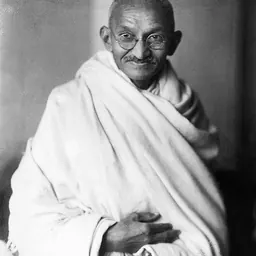

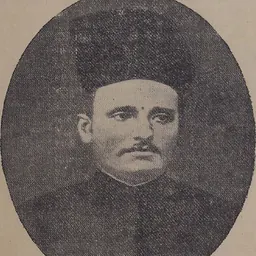

Related people
Same field, nearest in time

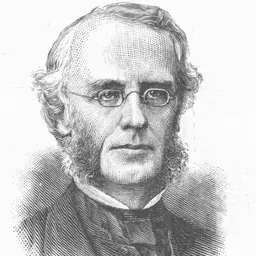
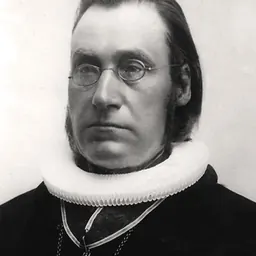
Contemporaries
People whose lives overlapped Narmadashankar Dave's



Frequently asked questions
Who was Narmadashankar Dave?
Gujarati author, poet, scholar and public speaker (1833–1886)
When was Narmadashankar Dave born?
Narmadashankar Dave was born on 24 August 1833 in Surat.
When did Narmadashankar Dave die?
Narmadashankar Dave died on 26 February 1886 in Mumbai.
What was Narmadashankar Dave's occupation?
Narmadashankar Dave was a writer, poet, essayist, playwright, lexicographer and orator.
What nationality was Narmadashankar Dave?
Narmadashankar Dave was Indian.
Sources & further reading
· Wikipedia: Narmadashankar Dave
Cite this page
APA: Biography.guide. (2026). Narmadashankar Dave. https://biography.guide/narmadashankar-dave/
MLA: "Narmadashankar Dave." Biography.guide, https://biography.guide/narmadashankar-dave/.
Chicago: "Narmadashankar Dave." Biography.guide. https://biography.guide/narmadashankar-dave/.
Data last updated: 2026-09-20 · Spot an error? Report a correction.
Page generated 2026-09-27 05:28 UTC