
About Narendra Kumar
Lived 1940 – 2017 (aged 77). Narendra Kumar was an Indian theoretical physicist and physicist, known for Order and disorder and Superconductivity.
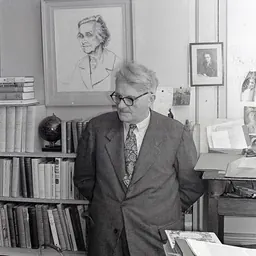
Narendra Kumar (1 February 1940 – 28 August 2017) was an Indian theoretical physicist and a Homi Bhaba Distinguished Professor of the Department of Atomic Energy at Raman Research Institute. He was also an honorary professor at Jawaharlal Nehru Centre for Advanced Scientific Research.
Known for his research on disordered systems and superconductivity, Kumar was an elected fellow of all the three major Indian science academies – Indian Academy of Sciences, Indian National Science Academy, and National Academy of Sciences, India – as well as the American Physical Society and The World Academy of Sciences. The Council of Scientific and Industrial Research, the apex agency of the Government of India for scientific research, awarded him the Shanti Swarup Bhatnagar Prize for Science and Technology, one of the highest Indian science awards, for his contributions to physical sciences in 1985. In 2006, he received the Padma Shri, the fourth highest civilian honour of the Government of India, in the science and engineering category.
Biography
Born on the 1 February 1940 to Labha Mal Julka-Taravatti couple in Bilaspur in the Indian state of Chhattisgarh, Narendra Kumar obtained an honors degree in electronics and electrical communication engineering in 1962 from the Indian Institute of Technology, Kharagpur, passing the examination with second rank. He continued at IIT Kharagpur for his master's studies and before completing MTech with a first rank in 1963, he stood first in India in the All India Electronics Engineering Examination in 1962. After obtaining the master's degree, Kumar started his career in 1963 as a senior scientific officer at Defence Institute of Advanced Technology (then known as Institute of Armament Studies) and served there till his move to National Chemical Laboratory in 1965 as a B grade scientist. After doing his postdoctoral work at the laboratory of Maurice Pryce of University of British Columbia, he joined Indian Institute of Science as an assistant professor and served the institution for close to quarter of a century during which period, he held the position of a professor from 1975 to 1994. Kumar was appointed as the director of Raman Research Institute (RRI) in 1994 where he served until his superannuation in 2005. Post-retirement, he continued his association with RRI as the Homi Bhabha Distinguished Scientist and DAE chair professor. During his career, he has had visiting assignments at various institutions abroad such as University of Liège (1975–76), University of Warwick (1978–79), Drexel University (1984), National Autonomous University of Mexico (1985), McGill University (1987 and 1988) and International Centre for Theoretical Physics (1988–89). Kumar was also associated with Jawaharlal Nehru Centre for Advanced Scientific Research, a multidisciplinary research institute, where he held an honorary professor position He died on 28 August 2017.
Legacy
His doctoral studies at IIT Bombay gave Kumar the opportunity to work alongside noted physicists such as Krityunjai Prasad Sinha and Ram Prakash Singh, and during his days at the University of British Columbia he studied condensed matter physics with Maurice Pryce. and disordered systems at Indian Institute of Science and his collaboration with Pedro Pereyra and others yielded the Dorokhov-Mello-Pereyra-Kumar (DMPK) equation, a theory on multi-channel conductivity using the principle of maximum entropy, which has since been subjected to studies by several scientists. Besides his work on diffusion in glasses, Kumar has done extensive studies on random dynamical systems, especially on the nature of electron transport. His studies have been documented by way of a number of articles and the article repository of Indian Academy of Sciences has listed 167 of them. Kumar has published four books, Interaction-Magnetically-Ordered-Solids, coauthored with his mentor, Krityunjai Prasad Sinha, Invitation to Contemporary Physics, Deterministic Chaos: Complex Chance out of Simple Necessity and Quantum Transport in Mesoscopic Systems: Complexity and Statistical Fluctuations which is a monograph in the field of mesoscopic physics. He had also guided 12 doctoral students in their doctoral studies.
Awards and honors The Council of Scientific and Industrial Research awarded Kumar the Shanti Swarup Bhatnagar Prize, one of the highest Indian science awards, in 1985. He received the TWAS Prize in 1992 and the Indian Institute of Technology, Bombay, chose him for its Distinguished Alumnus Award in 1996. A year after receiving the Mahendra Lal Sircar Prize in 1997, Kumar was selected for the Goyal Award of Kurukshetra University in 1998, followed by the FICCI Award of the Federation of Indian Chambers of Commerce & Industry in 1999. The year 2006 brought him three major awards: the Padma Shri, the fourth highest Indian civilian honor, the R. D. Birla Award of the Indian Physics Association, and the Distinguished Materials Scientist Award of the Materials Research Society of India.
The Indian Academy of Sciences elected Kumar as their fellow in 1985 and Kumar was elected as a fellow by the Indian National Science Academy in 1987. He received elected fellowships of two science organizations in 1994, the National Academy of Sciences, India, and the American Physical Society. The award orations delivered by him include the Jawarharlal Nehru Birth Centenary lecture (1996) and the Jagadis Chandra Bose lecture (2008) of the Indian National Science Academy.
Selected bibliography Books
Articles
Don’t just read it —
keep it.
Full-length biographies made to live with: read them, listen on the way to work, watch them tonight.
- E-book
- Audio
- Video
Instant download · yours to keep · every purchase keeps this site free
Important facts
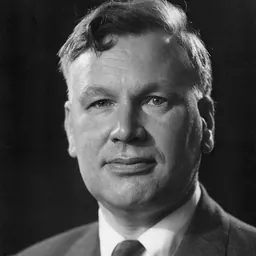
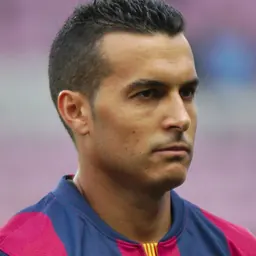
People in Narendra Kumar's life
Named in this biography and alive at the same time




Related people
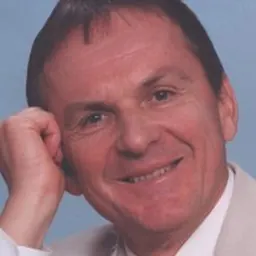
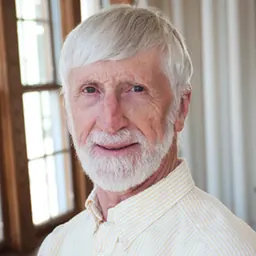
Same field, nearest in time


Contemporaries
People whose lives overlapped Narendra Kumar's

Frequently asked questions
Who was Narendra Kumar?
Musical artist (1940-2017)
When was Narendra Kumar born?
Narendra Kumar was born on 1 February 1940 in Bilaspur.
When did Narendra Kumar die?
Narendra Kumar died on 28 August 2017.
What was Narendra Kumar's occupation?
Narendra Kumar was a theoretical physicist and physicist.
What was Narendra Kumar known for?
Narendra Kumar was known for Order and disorder and Superconductivity.
What nationality was Narendra Kumar?
Narendra Kumar was Indian.
Sources & further reading
· DBpedia: Narendra Kumar (physicist)
Cite this page
APA: Biography.guide. (2026). Narendra Kumar. https://biography.guide/narendra-kumar-theoretical-physicist/
MLA: "Narendra Kumar." Biography.guide, https://biography.guide/narendra-kumar-theoretical-physicist/.
Chicago: "Narendra Kumar." Biography.guide. https://biography.guide/narendra-kumar-theoretical-physicist/.
Data last updated: 2026-09-20 · Spot an error? Report a correction.
Page generated 2026-09-27 04:59 UTC