
About Nana Akuoko Sarpong
Lived 1938 – 2026 (aged 87–88). Nana Akuoko Sarpong was a Ghanaian politician, lawyer and minister.
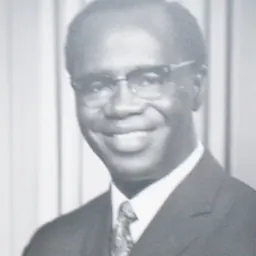
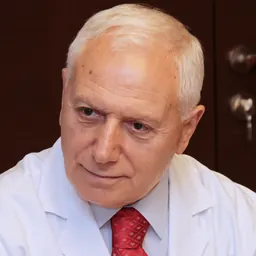
Nana Kwame Akuoko Sarpong, (11 August 1938 – 26 March 2026) was a Ghanaian traditional ruler, politician and lawyer. He was the paramount chief or Omanhene of the Agogo Traditional Area of Ghana. Sarpong served as Secretary for Health (Minister for Health), Secretary for Internal Affairs (Minister for the Interior) and Secretary for Chieftaincy Affairs (Minister for Chieftaincy and Religious Affairs) in the PNDC government. He also served as a member of the council of state in the fourth Republic.
Early life and education Nana Kwame Akuoko Sarpong was born on 11 August 1938 at Agogo, Ashanti, Gold Coast. He started his primary education at the Methodist and Presbyterian Primary Schools, Agogo. In 1954, he gained admission into the Accra Academy. His contemporaries included Edward Utuka, who was executed with Ignatius Acheampong by the AFRC in 1979. Sarpong obtained his Cambridge School Certificate in 1957. He enrolled at Opoku Ware School in 1958 where he was one of the members of the first batch of sixth form students that enrolled at the school. He obtained his Cambridge Higher School Certificate in 1959.
He gained admission into the University of Ghana to pursue courses in economics, sociology, law and political science. He graduated in 1963 with a Bachelor of Arts degree. At the university, he was a member of the editorial board of the Echo, (a weekly Magazine of the Commonwealth Hall), secretary of the Junior Common Room, secretary of the Commonwealth Hall Union, a member of the Commonwealth Hall Debating Society and also tutor of the University of Ghana Dancing Club. In 1963, he pursued a post graduate law program at the University of Ghana and obtained his LLB (Hons) in 1965. Some of his contemporaries included Tawia Modibo Ocran whom he contested against to win the JCR Presidency of the Commonwealth Hall in the previous year; 1964. In 1965, he entered the Ghana Institute of Management and Public Administration (GIMPA), Green hill to study Public Administration. At GIMPA, he was the president of the Students Representative Council (SRC) and also acting president of the National Union of Ghana Students (NUGS). He graduated in 1965 and was called to the Ghana Bar that same year in October.
Career In 1966, he served as a public prosecutor (assistant state attorney) in the office of the Attorney General and Minister of Justice, Cape Coast, Central Region (Ghana). He resigned a year later to enter private legal practice in the Law Firm of E.M.A. Ablor & Co., Cape Coast and later became a senior partner and founding member of the Law Firm of Forson, Sarpong & Co. with offices in Cape Coast and Takoradi. Between 1967 and 1969, he was elected as the Secretary and later President of the Central Region Bar Association and served on the executive board of the Ghana Bar Association. From 1970 to 1972, he served on the board of various institutions including; Graphic Corporation, Aggrey Memorial Secondary School, Cape Coast, the Ghana Bar Association and was also a member of the Ghana Police Council. In 1972, he was the deputy secretary of the Ghana Bar Association.
Politics In 1967, he joined John Bilson and Obed Asamoah to found the Third Force Party for the 1969 elections. The party could not begin operations as Asamoah joined Komla Agbeli Gbedemah's National Alliance of Liberals and subsequently got elected to represent the Biakoye District of the Volta Region in the erstwhile Second Republic which was led by Kofi Abrefa Busia. but later joined the Progress Party before the 1969 General Election and subsequently became an executive member of the Progress Party. During his tenure as health secretary he was the leader of the delegation representing Ghana at the Conference of the Commonwealth Health Ministers held in Melbourne, Australia. That same year he led Ghana's delegation to the World Health Organization Conference in Geneva, Switzerland. He was Chairman of the Council of Ministers of the West African Health Ministers Organization.
In 2009, he was appointed a member of the Council of State.
Sports Sarpong was captain of the school football team and athletics team at primary level. He was a member of the Accra Academy sports team as a hockey player and football player. He also played football at Opoku Ware School. At the University of Ghana, he was a member of the school's tennis club and the captain of the GIMPA tennis club. He was chairman of the Central Regional Sports Council and also chairman of the Venomous Vipers Football Club, Cape Coast. He was a trustee and patron of the Accra Lawn Tennis Club and also patron of the Ghana Athletics Association.
Don’t just read it —
keep it.
Full-length biographies made to live with: read them, listen on the way to work, watch them tonight.
- E-book
- Audio
- Video
Instant download · yours to keep · every purchase keeps this site free
Important facts
People in Nana Akuoko Sarpong's life
Named in this biography and alive at the same time



Related people
Same field, nearest in time




Contemporaries
People whose lives overlapped Nana Akuoko Sarpong's



Frequently asked questions
Who was Nana Akuoko Sarpong?
Ghanian politician
When was Nana Akuoko Sarpong born?
Nana Akuoko Sarpong was born in 1938 in Agogo.
When did Nana Akuoko Sarpong die?
Nana Akuoko Sarpong died on 26 March 2026.
What was Nana Akuoko Sarpong's occupation?
Nana Akuoko Sarpong was a politician, lawyer and minister.
What nationality was Nana Akuoko Sarpong?
Nana Akuoko Sarpong was Ghanaian.
Sources & further reading
· Wikipedia: Nana Akuoko Sarpong
· DBpedia: Nana Akuoko Sarpong
Cite this page
APA: Biography.guide. (2026). Nana Akuoko Sarpong. https://biography.guide/nana-akuoko-sarpong/
MLA: "Nana Akuoko Sarpong." Biography.guide, https://biography.guide/nana-akuoko-sarpong/.
Chicago: "Nana Akuoko Sarpong." Biography.guide. https://biography.guide/nana-akuoko-sarpong/.
Data last updated: 2026-09-20 · Spot an error? Report a correction.
Page generated 2026-09-27 05:06 UTC