
About Naitō Nobunari
Lived 1545 – 1612 (aged 67). Naitō Nobunari was a Japanese samurai.
was a Japanese samurai of the Sengoku period through early Edo period, who served the Tokugawa clan; he later became a daimyō.
Nobunari is believed to have been the illegitimate son of Matsudaira Hirotada (which would make him the half-brother of Tokugawa Ieyasu). He was later adopted by Naitō Kiyonaga. As the years passed on with his brother's succession to headship and the birth of the Tokugawa, Nobunari primarily acted as the former's page, but ascended to a greater means of ranking after supporting in the 1565 assault against Mikawa monk rioters. After distinguishing himself in battle during a certain assault upon Kuroma castle at a later time
In 1572, during the Takeda clan campaign in Mikawa, Nobunari participated in the forces of Tokugawa. Ieyasu sent him, Honda Tadakatsu, to lead the vanguard, where they meet Takeda forces led by Yamagata Masakage and Baba Nobuharu at the battle of Hitokotosaka. It is said that in this battle Tadakatsu gained recognition from the enemy forces for his antler helmet and his Tonbo-giri spear for his exploit in staving off the charges of Baba Nobuharu units. In the end of this battle, Tadakatsu and Naitō Nobunari fought well, as both of them managed to break through from the encirclement attempts by Takeda forces and managed to lead the Tokugawa forces to escape safely.
In 1573, Nobunari went on to respectively support the Tokugawa within the Battle of Mikatagahara in 1573, and Nagashino of 1575, where he showed at least moderate ability on both battlefields. By the year of 1590, Nobunari would be awarded Nirayama Castle of Izu Province—respectively holding 10,000 koku to its name—and would enter into the Edo period with a 50,000 koku fief at Nagahama within Ōmi Province, where he remained as daimyō until he died in 1612.
During the Battle of Sekigahara in 1600, he defended Mimabashi Castle in Numazu, Suruga Province. Just before the battle, when Ieyasu stopped by Numazu, Nobunari expressed a wish to serve alongside Ieyasu instead of defending the castle. However, Ieyasu told him the importance to defend the castle.
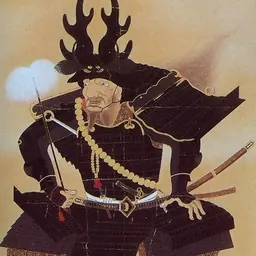
In the Edo period painting, Nobunari was depicted as one of the Tokugawa 28 generals (Tokugawa nijūhachishinshōjin).
Family Father: Matsudaira Hirotada Mother: Naito no Tsubone Wife: Awao Nagakatsu's daughter Children: Naito Nobumasa (1568-1626) Naito Nobuhiro (d.1619) Naito Nobusuke
Don’t just read it —
keep it.
Full-length biographies made to live with: read them, listen on the way to work, watch them tonight.
- E-book
- Audio
- Video
Instant download · yours to keep · every purchase keeps this site free
Important facts
People in Naitō Nobunari's life
Named in this biography and alive at the same time





Related people
Same field, nearest in time

Contemporaries
People whose lives overlapped Naitō Nobunari's




Frequently asked questions
Who was Naitō Nobunari?
Samurai and daimyo of Omi Province
When was Naitō Nobunari born?
Naitō Nobunari was born on 13 June 1545.
When did Naitō Nobunari die?
Naitō Nobunari died on 20 August 1612.
What was Naitō Nobunari's occupation?
Naitō Nobunari was a samurai.
What nationality was Naitō Nobunari?
Naitō Nobunari was Japanese.
Sources & further reading
Cite this page
APA: Biography.guide. (2026). Naitō Nobunari. https://biography.guide/naito-nobunari/
MLA: "Naitō Nobunari." Biography.guide, https://biography.guide/naito-nobunari/.
Chicago: "Naitō Nobunari." Biography.guide. https://biography.guide/naito-nobunari/.
Data last updated: 2026-09-26 · Spot an error? Report a correction.
Page generated 2026-09-27 05:15 UTC