
About Nairi Zaryan
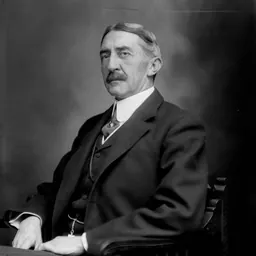
Lived 1900 – 1969 (aged 68). Nairi Zaryan was a Russian writer, opinion journalist, public figure, translator and editor.
Nairi Zarian (, born Hayastan Yeghiazarian; December 31, 1900 – July 12, 1969) was a Soviet and Armenian writer, poet and playwright. From 1944 to 1946, he was the President of the Writers Union of Armenia. From 1951 to 1958 he was a Deputy in the Supreme Soviet of the Armenian SSR. He also served as the Chairman of the Armenian Soviet Socialist Republic Committee for the Defense of Peace, the local Armenian branch of Soviet Peace Committee.
Biography
Nairi Zarian was born on December 31, 1900, in the village of Karagündüz (called Kharakonis by its Armenian inhabitants), near Lake Erçek, in the Van Vilayet of the Ottoman Empire. His parents, Yeghiazar and Hourig Yeghiazaryan, were farmers.
Zarian received his early education at the local parish school, Saint Theodoros. Both of Zarian's parents died during his childhood due to malnutrition and disease, leaving him at the age of fourteen to care for his only surviving younger sister, Yeranuhi, with the support of his aunts and uncles.
In 1915, amid the events of the Van Resistance, Zarian and his sister were compelled to flee their homeland. They joined the mass exodus of Armenian refugees escaping the violence and persecution of the Armenian genocide.
Between 1915 and 1921, Nairi Zarian lived in American missionary orphanages set up and supported by Near East Relief in Yerevan and Dilijan. In 1921, he graduated from the Yerevan parochial school. He graduated from the History Department of Yerevan State University in 1927, then completed his postgraduate studies at the Literary Department of the Leningrad branch of the State Academy of Arts Studies (currently known as Russian Institute for the History of the Arts.
In the poem "Rock of Rushan" (1930) he showed "the socialistic resistance of an Armenian village". His novel Hatsavan (1937, completed and republished in 1947–1949) is dedicated to the process of collectivization. During World War II, Zarian published a large number of poems and notes, in 1943 finishing his poem "The Voice of Homeland". In 1946 his historical tragedy Ara Geghetsik was published. From 1951 to 1958 he was a deputy in the Supreme Soviet of the Armenian SSR.
Don’t just read it —
keep it.
Full-length biographies made to live with: read them, listen on the way to work, watch them tonight.
- E-book
- Audio
- Video
Instant download · yours to keep · every purchase keeps this site free
Important facts
Related people
Same field, nearest in time



Contemporaries
People whose lives overlapped Nairi Zaryan's



Frequently asked questions
Who was Nairi Zaryan?
Armenian poet (1900–1969)
When was Nairi Zaryan born?
Nairi Zaryan was born on 31 December 1900 in Karagündüz.
When did Nairi Zaryan die?
Nairi Zaryan died on 11 July 1969 in Yerevan.
What was Nairi Zaryan's occupation?
Nairi Zaryan was a writer, opinion journalist, public figure, translator and editor.
What nationality was Nairi Zaryan?
Nairi Zaryan was Russian.
Sources & further reading
Cite this page
APA: Biography.guide. (2026). Nairi Zaryan. https://biography.guide/nairi-zaryan/
MLA: "Nairi Zaryan." Biography.guide, https://biography.guide/nairi-zaryan/.
Chicago: "Nairi Zaryan." Biography.guide. https://biography.guide/nairi-zaryan/.
Data last updated: 2026-09-22 · Spot an error? Report a correction.
Page generated 2026-09-27 05:23 UTC