About Nabû-mukin-apli
Lived 1100 BC – 1000 BC. Nabû-mukin-apli was a sovereign.
Nabû-mukin-apli, typically inscribed dAG-DU-A, “Nabû (is) establisher of a legitimate heir,” ruled 974–939 BC, founded Babylon’s 8th dynasty, the so-called Dynasty of E, and ruled for thirty-six years. The Synchronistic Kinglist records him as a contemporary of the Assyrian king Tiglath-Pileser II. His reign was plagued by Aramean invasions, resulting in Babylon being cut off from its agricultural hinterland for several years and consequently being unable to celebrate the new year festival.
Biography
His reign falls in the midst of the Babylonian dark age and consequently his ancient sources are meager. He is mentioned in the Eclectic Chronicle but without any surviving historical information. The Religious Chronicle provides the most detail about his reign. The Akitu festival, or New Year’s festival of Marduk and Nabû, was interrupted several times, indeed for a stretch of nine straight years, because the “Aramaeans were belligerent.” Nabu's shrine is in the neighboring city of Borsippa and the festival seemed to involve the transport of cultic idols to the city of Babylon. The Kaldu (Chaldeans) migrated into Babylonia, and settled in the far southeast of Babylonia just after his reign.
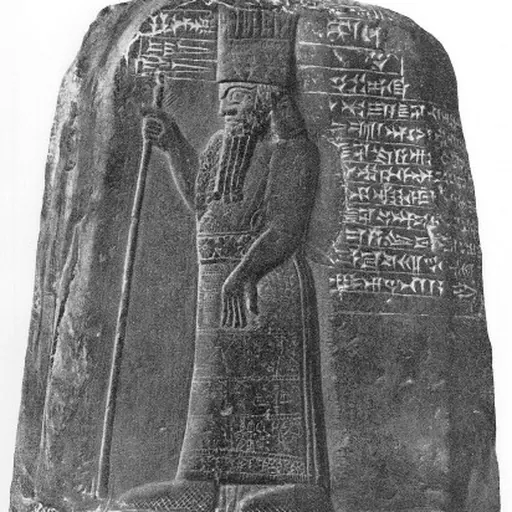
A kudurru or boundary stone from Sippar (pictured), A recently identified kudurru from the east of the Tigris in the Diyala region on the Mingatu-karītu canal is dated to his 16th year and details the sales of two plots of land. There is another kudurru fragment but it is badly damaged and gives no useful information concerning his reign. A single unpublished economic text in the Musée d'Art et d'Histoire, Geneva, Switzerland, is dated to his reign.
His younger son, Rīmūt-ilī, acted as šatam ekurrāti, overseer of the temples. He was succeeded by his other sons, firstly Ninurta-kudurri-uṣur II, for 8 months, and then Mar-biti-aḫḫe-idinna for an as yet undetermined period.
Inscriptions
Don’t just read it —
keep it.
Full-length biographies made to live with: read them, listen on the way to work, watch them tonight.
- E-book
- Audio
- Video
Instant download · yours to keep · every purchase keeps this site free
Important facts
Related people
Same field, nearest in time


Contemporaries
People whose lives overlapped Nabû-mukin-apli's



Frequently asked questions
Who was Nabû-mukin-apli?
king of Babylon
When was Nabû-mukin-apli born?
Nabû-mukin-apli was born in 1100 BC.
When did Nabû-mukin-apli die?
Nabû-mukin-apli died in 1000 BC.
What was Nabû-mukin-apli's occupation?
Nabû-mukin-apli was a sovereign.
What nationality was Nabû-mukin-apli?
Nabû-mukin-apli's recorded nationality: Babylon.
Sources & further reading
Cite this page
APA: Biography.guide. (2026). Nabû-mukin-apli. https://biography.guide/nabu-mukin-apli/
MLA: "Nabû-mukin-apli." Biography.guide, https://biography.guide/nabu-mukin-apli/.
Chicago: "Nabû-mukin-apli." Biography.guide. https://biography.guide/nabu-mukin-apli/.
Data last updated: 2026-09-20 · Spot an error? Report a correction.
Page generated 2026-09-27 05:10 UTC