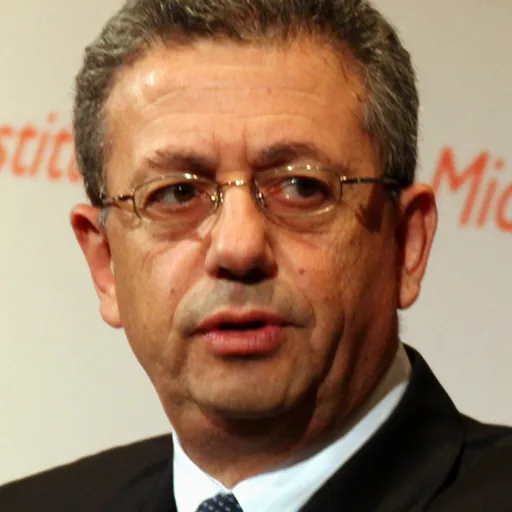
Mustafa Barghouti
Palestinian physician and politician (born 1954)
About Mustafa Barghouti
Born 1954. Mustafa Barghouti is a politician, physician and writer.
Mustafa Barghouti (, ; born 1 January 1954) is a Palestinian physician, activist, and politician who serves as General Secretary of the Palestinian National Initiative (PNI), also known as al-Mubadara, and head of the Palestinian Medical Relief Society.
He has been a member of the Palestinian Legislative Council since 2006 and is also a member of the Palestine Liberation Organization (PLO) Central Council.
In 2007, Barghouti was Minister of Information in the Palestinian unity government. He is an advocate of the use of non-violence and civil disobedience to confront Israel's illegal occupation of the West Bank, Gaza Strip, and East Jerusalem.
Early life and education Mustafa Barghouti was born 1 January 1954 in Jerusalem. His family is from what is today Bani Zeid, a municipality of over 6,000, founded in 1966 when the villages of Deir Ghassaneh and Beit Rima merged during Jordanian rule. He grew up in Ramallah and his father was the municipal engineer for the nearby village of Al-Bireh. Barghouti has said that his family "has always been very political, very active," noting that under the Mandate, his grandfather and great-uncle "were jailed by the British." He has said that he "grew up surrounded by internationalist, progressive literature," and has described his family's politics as always being "shaped by opposition to social injustice, rather than by nationalism." His father, he has noted, "used to speak to us of his Jewish comrades in Tiberias or Acre."
Barghouti has said that he was "very active" as a student activist in the West Bank. In 1971, he went to Moscow to study medicine and spent seven years there completing his medical training.
Barghouti served as Secretary-General of the Palestinian People's Party (formerly the Communist Party) and represented it in the Palestinian National Council, the legislative body of the PLO, until his resignation from the PPP in 2002. He stood for election in the 1996 PLC elections, running as a candidate in the Ramallah district, but lost out narrowly after a recount.
Madrid Conference of 1991 In 1991, Barghouti was a delegate to the Madrid Conference, which was held with the aim of ending the Israeli–Palestinian conflict and the First Intifada.
At Madrid, he has said, "we sought to consolidate Palestinian unity—it was crucial that Israel should not succeed in erecting a wall between internal and external representatives." Barghouti has complained that "Oslo was decided behind the back of the Palestinian delegation to Madrid, and by extension, behind the back of the Palestinian people." He has described the Oslo negotiations as "a technical and political disaster," complaining that while "the Madrid team had been well briefed and had 600 experts at its disposal, the PLO's Oslo negotiations were conducted by amateurs." Israel, he has said, took "gross advantage of the naïvety of the Palestinian negotiators," but the result was "so disastrous, so unjust, that even the signatories couldn't make it stick....This is why democracy is so important in these cases: because it renders the negotiators accountable to the people, answerable for every document they sign."
Barghouti said that after 1993, he and his colleagues "were conducting a struggle on two fronts," against the Israeli Occupation and against the Palestinian Authority. "Not only were our leaders completely inept at negotiating with Israel, but they were rapidly transforming themselves into a gigantic security apparatus…consuming 34 per cent of the budget." The PA, he has complained, "has functioned along the same lines as the totalitarian Arab governments that gave it refuge," trying "to control every aspect of life."
In a 2012 interview, Barghouti emphasized that the PNI is committed to nonviolence, which "works better because it allows everybody, and not just a small group of people, to participate. It works better because it does not allow the Israelis to claim that they are victims in this conflict. It reveals and exposes them as they are in reality: the oppressors, the occupiers, and the creators of an apartheid system." start=00:11:16 Barghouti, at an event in Brisbane, Australia in 2013, expressing his view that the freedom of Palestinians is tied with the freedom of Israelis (minute 11:16 to 12:58).
At a March 2013 press conference occasioned by US President Barack Obama's visit to the Occupied Territories, Barghouti, noting that Obama's stated goal was "to listen", protested that "We Palestinians have been listening for too long. This passivity on Obama's part is unacceptable and dangerous at a time when the two state solution is under risk." Barghouti also lamented that Obama would not be going to Hebron, "where the geographical segregation system is very clear", and said that, given comments made by Obama in his famous Cairo speech, he had hoped that Obama would at least "issue severe condemnations against Israeli violence against Palestinians in nonviolent resistance protests" and "praise Palestinian nonviolence as we have stuck with that end." Barghouti was also disappointed that Obama, having visited the graves of Yitzhak Rabin and Theodor Herzl, would not be visiting Arafat's grave, and that he would be visiting the Eretz Israel Museum, which "contains stolen Palestinian artifacts".
2005 PNA presidential election Barghouti announced on 29 November 2004 that he would be a candidate in the 9 January 2005 election to choose a successor to the just-deceased Yasser Arafat as President of the Palestinian National Authority. Barghouti was endorsed by his fellow PNI co-founder Dr. Haidar Abdel-Shafi.
His campaign, he said, encountered several obstacles, including use of the PA's resources in favor of Abbas. He also claimed that, while campaigning, he was "harassed by Israeli soldiers on seven occasions" and arrested twice; meanwhile, Arab TV stations "backed the Fatah candidate." Still, Barghouti argued, "we managed to bring together a solid democratic coalition" consisting of "independent unions, workers' committees, eminent figures of the democratic left such as Abd al-Shafi, moderate Islamists including Abd al-Sattar Qasim, and many groupings from Palestinian civil society."
2012 tear-gas incident Barghouti claimed that at the annual Land Day protest in Bethlehem in 2012, he was struck in the head by a canister of tear gas shot by Israeli forces. "I was hit with a tear-gas bomb on the side of my head and my back," Dr. Barghouti told a reporter from his hospital bed. "My scalp is injured, my right ear has problems, and they are checking to see if I have any spinal injury."
Gaza war Following the October 7 attacks and the beginning of Israel's assault on Gaza, Barghouti reiterated his opposition to attacks on civilians, saying that "I am against any killing of any civilian, whether Palestinian or Israeli. And we're sorry for all those people who were killed, Palestinians and Israelis." In addition to condemning the attacks on civilians on October 7, Barghouti also condemned threats made by Hamas to harm hostages and advocated for a ceasefire and exchange of prisoners, which he claimed that Hamas was willing to pursue.
The war in Gaza resulted in a humanitarian catastrophe, and the Palestinian Medical Relief Society, which Barghouti runs, has been active in the Gaza Strip, providing critical medical care. Barghouti has argued that Israel has been committing genocide in the Gaza Strip, stating that "The ultimate goal of Israel is ethnic cleansing," like the ethnic cleansing of Palestinians in during the 1948 Nakba. He argued that, "Without American political and military support, Israel would not have been able to continue its ruthless occupation and apartheid against Palestinians or to commit the genocide in Gaza."
In 2024, Barghouti said that he continues to believe in a peaceful political resolution to the conflict, where Palestinians are guaranteed national rights and Israel ends what Barghouti describes as its system of apartheid, occupation, and oppression. He has indicated that recognition of a right of return is a must, but that this could likely be implemented in a way mutually acceptable to both sides.
In a December 2008 article, Barghouti condemned the ongoing Israeli "state terror," in which, he charged, over "290 people have been murdered." He said it was "time to expose the myths that they [the Israelis] have created." For example, he rejected the claim that Israel had "ended the occupation of the Gaza Strip in 2005," accusing it of intensifying its "military aggression," carrying out "frequent raids and targeted assassinations," and imposing "a comprehensive siege on the Strip," forcing Gazans to live "on the edge of starvation and without the most basic necessities of human life" and causing "a humanitarian catastrophe."
Writing about the Nakba in May 2013, Barghouti called on Israel "to recognize its responsibility for this crime, as a first step towards accountability and a just solution to this conflict." He accused Israel of "living in a state of denial," noting that its "textbooks don't recognize the rights of the Palestinian people or the Nakba." He rejected "Israel's traditional narrative and founding myth," which, he argued, is belied by the reality of "horrific massacres by Zionist militias...where even women, children, and elderly Palestinians were not spared." And he said that the Nakba "is not just a tragic moment in history" but "has been an ongoing process from that time against all of the Palestinian people."
Barghouti has said that there are two possible just solutions to the Israeli–Palestinian conflict: "an independent Palestinian state" covering, at the very least, all the area within the 1967 frontiers, and with its capital in East Jerusalem, and with all settlements dismantled, or "a single democratic state," no longer exclusively Jewish, "in which all citizens are equal." He complains that Israel "has sought to trap the Palestinians into a corner of the chessboard where there's no longer any choice. If we agree on a two-state solution, we are offered bantustans. And if we say that in those conditions, we'd prefer a single, bi-national state, then we are accused of wanting to destroy Israel." In a March 2013 interview, he said that the peace process was "frozen with no prospects of peace on the horizon," with "an unprecedented increase in Israeli settlements and land takeover throttling the idea of a Palestinian state." He also lamented "the intolerable economic situation," the "internal division between Fatah and Hamas," and "the humiliation that Palestinians are experiencing at the hands of settlers and also in encounters with Israelis inside Israel." Yet he said that he was given "great hope" by "the growing movement amongst people for non-violent resistance".
Boycott issue
Barghouti claimed in 2005 that the PNI did not support a boycott of Israel, while adding that it did call for sanctions against Israel, including "suspension of the EU–Israel accords...; stopping all military co-operation with Israel...; a halt to investment in Israel; [and] cutting off cultural relations at government level."
In a 2012 interview, Barghouti affirmed his support for a multi-prong strategy to end the Israeli occupation of the West Bank. "Popular resistance," he said, "is a successful formula because it works both in the case of two states or one. In my opinion, the strategic choice before us is made up of four elements: the escalation of popular resistance, the BDS campaign, revamping all domestic and Palestinian economic policies to focus them on reinforcing the people's steadfastness instead of drowning them in debts, taxes and consumerism, rejecting the distinction between Areas A, B and C, and fourthly, national unity." His daughter, Dia Barghouti, is a doctoral candidate at the University of London. The incident was the most complained-about United Kingdom program in 2024. In response to the incident, during an interview with Nigeria Info, Barghouti addressed Hartley's accusation by pointing to his long history of defending women's rights and accusing Hartley-Brewer of racism.
Don’t just read it —
keep it.
Full-length biographies made to live with: read them, listen on the way to work, watch them tonight.
- E-book
- Audio
- Video
Instant download · yours to keep · every purchase keeps this site free
Important facts
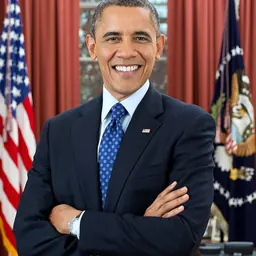
People in Mustafa Barghouti's life
Named in this biography and alive at the same time

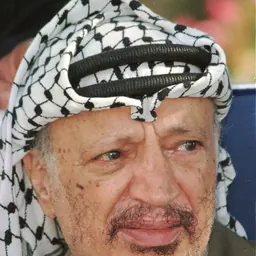

Related people
Same field, nearest in time


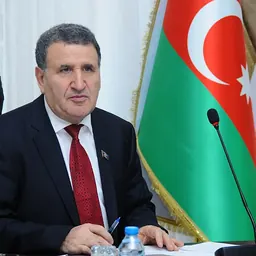


Contemporaries
People whose lives overlapped Mustafa Barghouti's



Frequently asked questions
Who is Mustafa Barghouti?
Palestinian physician and politician (born 1954)
When was Mustafa Barghouti born?
Mustafa Barghouti was born on 15 January 1954 in Jerusalem.
What is Mustafa Barghouti's occupation?
Mustafa Barghouti is a politician, physician and writer.
What nationality is Mustafa Barghouti?
Mustafa Barghouti's recorded nationality: Palestine.
Sources & further reading
· Wikipedia: Mustafa Barghouti
Cite this page
APA: Biography.guide. (2026). Mustafa Barghouti. https://biography.guide/mustafa-barghouti/
MLA: "Mustafa Barghouti." Biography.guide, https://biography.guide/mustafa-barghouti/.
Chicago: "Mustafa Barghouti." Biography.guide. https://biography.guide/mustafa-barghouti/.
Data last updated: 2026-09-22 · Spot an error? Report a correction.
Portrait: Wikimedia Commons · author & licence
Page generated 2026-09-27 05:03 UTC