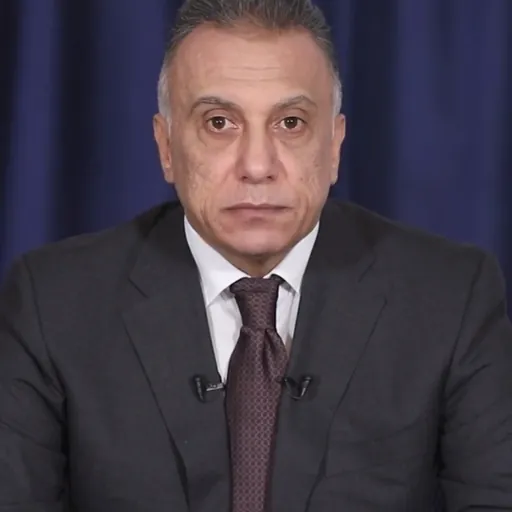
About Mustafa Al-Kadhimi
Born 1967. Mustafa Al-Kadhimi is an Iraqi politician, writer, journalist, human rights defender and documentalist.
Biography Al-Kadhimi was born in Baghdad in 1964 to Abdul Latif, who was born in Al-Shatrah, a town in southern Iraq, located northeast of Nasiriyah. He later migrated from Nasiriyah to Baghdad as a student. Around 1963, Abdul Latif relocated the family to Baghdad, where he later worked as a technical supervisor at Baghdad International Airport. He was also active in politics, representing the National Democratic Party in Shatrah.
Al-Kadhimi was a vocal opponent of the regime of Saddam Hussein. He left Iraq in 1985 and lived in exile in Iran then Germany, before settling in the United Kingdom, where he worked as a journalist human rights activist. He eventually became a citizen of the UK. where he wrote extensively on Iraqi politics, governance reform, democracy, and human rights issues. He has also published a number of books and studies. He was responsible for reforming the Iraqi National Intelligence Service (INIS) to be more effective and to meet international standards. He oversaw ending the politicization of intelligence action, implementing advanced methods to intelligence gathering and analysis, and setting priorities to broaden the scope of the work of the National Intelligence Service. Under his leadership, the agency expanded its remit, particularly in counter-terrorism, both internally and abroad, playing a vital role in Iraq's fight against ISIL, also known as Daesh. During his tenure, he established links with scores of countries and bureaus working within the US-led federation against ISIL. In October 2021, during al-Kadhimi's tenure, the INIS conducted what he described as a "complex external operation" that led to the capture of Sami Jasim al-Jaburi, identified by Iraqi and US authorities as a senior Islamic State figure in charge of the group's finances.
In 2017, during a rare visit to Riyadh alongside Haider al-Abadi, al-Kadhimi was seen in a long embrace with Saudi Crown Prince Mohammed bin Salman, drawing regional attention to the close rapport between the two men.
On 9 April 2020, he was named by President Barham Salih as prime minister-designate, the third person tapped to lead the country in just ten weeks. Kadhimi was nominated, state television reported, shortly after the previously designated prime minister, Adnan al-Zurfi, announced he was withdrawing because he had failed to secure enough support to form a government. After nearly six months of political negotiations, Iraq's parliament confirmed al-Kadhimi as Prime Minister of Iraq on 6 May 2020. Before entering office, al-Kadhimi said his government would be a government that would find solutions to Iraq's many problems and not a crisis ridden government. Ahead of the parliamentary vote to approve his cabinet, al-Kadhimi stated that his would be a "solution-based, not a crisis government," and pledged to prevent Iraq from being used as a battleground by other countries. He assumed office on the heels of major upheavals in Iraq – large protests, falling oil prices, and the COVID-19 pandemic.
Upon assuming power, al-Kadhimi promised to guide Iraq through a serious financial crisis, saying the state treasury was “nearly empty” after years of waste and declining oil prices. Al-Kadhimi's cabinet vowed to reduce public spending and audit salaries granted to millions of Iraqis but retracted the plan after public criticism. In August 2020, he hired hundreds of unemployed Iraqis at the ministry of defense, but not enough to halt sit-ins outside other public sector offices demanding jobs. He had few allies in government and his parliament was heavily dominated by pro-Iran MPs who balked at his references to protester demands. He also struggled to fulfill his promise to bring the security forces to justice who were allegedly responsible for the deaths of nearly 600 protesters and activists since October 2019. In addition, al-Kadhimi pledged to investigate the recent murders of journalists and political activists that had increased in the past year, but no one had been brought to justice as of September 2020.
In October 2020, Al-Kadhimi's cabinet approved an economic reform agenda known as the "White Paper", which identified over 200 reforms aimed at addressing Iraq's economic challenges. Al-Kadhimi described the White Paper as a multi-year plan to address uncontrolled corruption and mismanagement, rebuild the Iraqi economy, and reduce Iraq's heavy dependence on oil revenues by diversifying sources of national income, with implementation proposed over a five-year period.
During his premiership, al-Kadhimi also sought to restore Iraq's regional diplomatic role. Beginning in April 2021, he facilitated several rounds of talks in Baghdad between Saudi Arabia and Iran, contributing to efforts to reduce tensions between the two countries. On 28 August 2021, Baghdad hosted the inaugural Conference for Cooperation and Partnership, attended by leaders and senior officials from Iraq's neighboring states along with French President Emmanuel Macron. The summit, described by international observers as a significant diplomatic step, underscored Iraq's emerging role as a regional mediator.
On 27 June 2021, al-Kadhimi met Egyptian President Abdel Fattah el-Sisi and Jordanian King Abdullah II in Baghdad for the fourth Iraq–Egypt–Jordan trilateral summit. The meeting marked the first visit by an Egyptian head of state to Iraq since 1990.
In July 2021, al-Kadhimi and U.S. President Joe Biden sealed an agreement to end the U.S. combat mission in Iraq by the end of 2021. Following his visit to the United States, Iraq reclaimed 17,000 archaeological artifacts returned by U.S. authorities and institutions, including items held by the Museum of the Bible and Cornell University. The repatriation occurred within a wider context of antiquities looting in Iraq, including extensive destruction and smuggling by ISIS between 2014 and 2017. Iraqi Culture Minister Hassan Nazim described the repatriation as "the largest return of antiquities to Iraq.
Criticism Al-Kadhimi was criticized in failing to raise alarms when it was found that since September 2021, $2.5bn from the country's tax deposits were reported as missing, the allegations were made by the finance ministry under Prime Minister Mohammed Shia' Al Sudani.
Accusation for the deaths of Soleimani and al-Muhandis
Iran and its allied Fatah Alliance heavily opposed al-Kadhimi's appointment. In April 2020, Kata'ib Hezbollah, a Shia-Iraqi militia with close links to Iran and ties to the Popular Mobilization Forces, published a statement that accused al-Kadhimi of being culpable for the deaths of its leader Abu Mahdi al-Muhandis and Iranian General Qasem Soleimani and charged him with working with the United States. On 25 June 2020, Iraqi security forces raided KH base in Dora, southern Baghdad and detained at least 14 militia members.
Attempted assassination
In the early hours of 7 November 2021, al-Kadhimi survived an assassination attempt via explosive drone, two drones were shot down by the army while the last one targeted his residence in the heavily fortified Green Zone district of Baghdad. The assassination attempt was suspected by many to be Iran’s response to Al-Kadhimi for his crackdown on Iranian supported militias and his strict policy of removing foreign influence in Iraq.
On 8 November, a pair of anonymous regional officials and some (also anonymous) militia sources told Reuters that Iranian-backed militias were behind the attack, such as Kata'ib Hezbollah or Asaib Ahl al-Haq, also alleging that the weapons used by the perpetrators were made in Iran.
The assassination attempt came during high tension period after pro-Iranian parties lost seats in the 2021 Iraqi parliamentary election.
Post-premiership In July 2022, Al-Kadhimi was awarded the Legion of Honor by the French government. The medal, presented by the French ambassador to Iraq on behalf of President Emmanuel Macron, is France's highest order of merit and was granted in recognition of his role in strengthening bilateral relations. During this meeting, Al-Kadhimi noted the importance of bilateral cooperation between Iraq and France including areas such as economic development and security.
After stepping down as prime minister, al-Kadhimi resided in London and the United Arab Emirates. On 25 February 2025, Al-Kadhimi returned to Iraq after an extended period abroad which followed security concerns including an assassination attempt in 2021. He did not confirm whether he would run in future elections, stating that participation would depend on the transparency and credibility of the electoral process. Ali Ibn Abi Talib: The Imam and the Man (1989) Islamic Concerns (1995) Humanitarian Concerns (2000) – selected by the European Union as the best book written by a political refugee The Iraq Question: Reconciliation Between the Past and the Future (2012)
Don’t just read it —
keep it.
Full-length biographies made to live with: read them, listen on the way to work, watch them tonight.
- E-book
- Audio
- Video
Instant download · yours to keep · every purchase keeps this site free
Important facts
People in Mustafa Al-Kadhimi's life
Named in this biography and alive at the same time


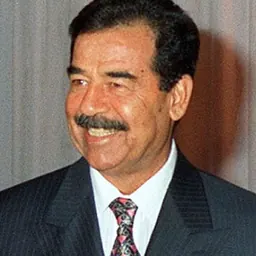


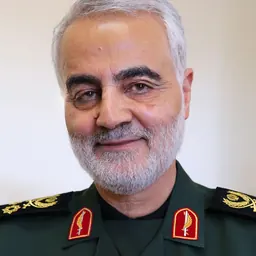
Related people
Same field, nearest in time
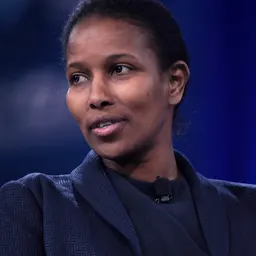

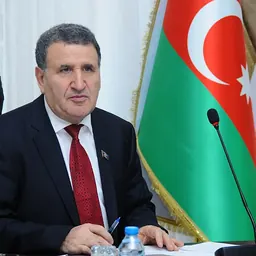


Contemporaries
People whose lives overlapped Mustafa Al-Kadhimi's

Frequently asked questions
Who is Mustafa Al-Kadhimi?
Iraqi politician
When was Mustafa Al-Kadhimi born?
Mustafa Al-Kadhimi was born on 5 July 1967 in Kadhimiya.
What is Mustafa Al-Kadhimi's occupation?
Mustafa Al-Kadhimi is a politician, writer, journalist, human rights defender and documentalist.
What nationality is Mustafa Al-Kadhimi?
Mustafa Al-Kadhimi is Iraqi.
Sources & further reading
· Wikipedia: Mustafa Al-Kadhimi
Cite this page
APA: Biography.guide. (2026). Mustafa Al-Kadhimi. https://biography.guide/mustafa-al-kadhimi/
MLA: "Mustafa Al-Kadhimi." Biography.guide, https://biography.guide/mustafa-al-kadhimi/.
Chicago: "Mustafa Al-Kadhimi." Biography.guide. https://biography.guide/mustafa-al-kadhimi/.
Data last updated: 2026-09-23 · Spot an error? Report a correction.
Portrait: Wikimedia Commons · author & licence
Page generated 2026-09-27 05:06 UTC