
About Mushtaq Ahmed
Lived 1967 – 2021 (aged 53). Mushtaq Ahmed was a Bangladeshi journalist.
Mushtaq Ahmed (; 5 December 1967 – 25 February 2021), popularly known as Kumir Bhai, was a Bangladeshi dissident, writer, and entrepreneur. His pen name was Michael Kumir Thakur. He founded the first ever commercial Crocodile breeding farm in Bangladesh. His book Kumir Chashir Diary was published in 2018. He was working on another book. He was accused with 10 others of sharing cartoons in social media posts criticizing the Bangladeshi government's corrupt and mismanaged response to COVID-19 pandemic and was detained in pre-trial for almost a year. On 25 February 2021 he died in jail, after being denied bail 6 times.
He was the first "martyr" of the notorious 2018 Digital Security Act.
Mushtaq Ahmed was an activist and used to write Facebook posts about contemporary socio-political issues. In one of his Facebook posts before his arrest in May 2020, Ahmed expressed his frustration about COVID-19 pandemic management by Bangladesh Government and wrote, "When a society laments the loss of an economy more than the loss of human life, it doesn't need a virus, it's already sick."
Arrest and death Arrest On 6 May 2020, around 1:00am, Rapid Action Battalion-3 arrested Ahmed from his home in Dhaka for criticising the Bangladesh government's handling of the COVID-19 pandemic in 10 Facebook posts and links. After 8 months, he was charged under the notorious Digital Security Act is alleged to be used in Bangladesh to crack down on political dissent. Around 2000 cases have been filed from 2018 to the beginning of 2021 under Digital Security Act.
Six civilians, including security guards of houses and malls, peon and relatives, have been made witnesses of the case against Ahmed, but five of them told Prothom Alo that they didn't give any such testimony to the police.
Detention For the whole 9 months, from Ahmed's arrest to his death, his family was not able to meet him. Visit to prison was not allowed due to the pandemic. Two days before his death, the prosecution produced him before the court for bail hearing, only to be denied bail. In all, his bail appeals were denied six times. Mahfuz Anam, Editor and Publisher, The Daily Star, wrote, "writer Mushtaq was condemned and his punishment implemented without the minimum due process of law being available to him."
Death In an interview with The Daily Star, cartoonist Ahmed Kabir Kishore, Ahmed's co-accused, revealed that Ahmed was tortured in custody. Ahmed died on 25 February 2021, after collapsing in Kashimpur High Security Jail with low blood pressure. He was buried at Azimpur graveyard.
Reactions
Domestic
Ahmed's death sparked widespread protests across the country demanding justice, repeal of the Digital Security Act and release of all detainees under the act. During the march of 300 protesters at the University of Dhaka and at the National Press Club, security forces clashed with them. The students were chanting "justice" near the Dhaka University campus Thirty activists were injured during the clash and six people were arrested by police. Journalists, civil society and many political parties including the Bangladesh Nationalist Party termed his death as state sponsored murder. Bangladesh's National Human Rights Commission said the state cannot avoid responsibility for the death which is a gross violation of human rights.
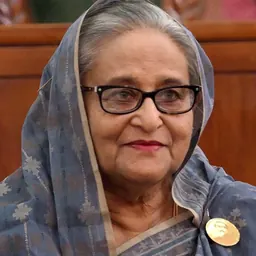
Responding to a query on Ahmed's death, the Prime Minister of Bangladesh - Sheikh Hasina, counter questioned, "What can be done if someone falls ill and dies?". "No death is desired. It is also not desired that unrest will be created", she added.
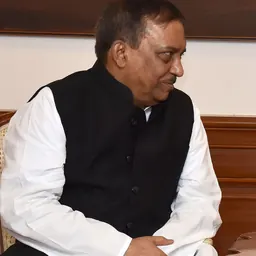
Asaduzzaman Khan Kamal, Home Minister of Bangladesh told journalists that Mushtaq Ahmed violated the law and there were cases against him. He also alleged that Mushtaq Ahmed hurt the faiths of others through his writing several times.
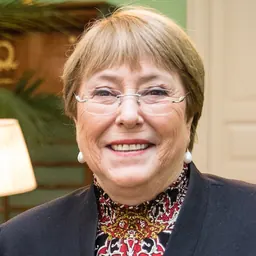
International United Nations (UN) High Commissioner for Human Rights Michelle Bachelet urged independent investigation into Ahmed's death and overhaul of Digital Security Act. Thirteen diplomatic mission heads in Bangladesh - including France, the UK and the US, called on the Government of Bangladesh to conduct a swift and transparent inquiry into his death. Nine international human rights organizations have urged the Bangladesh government to repeal the Digital Security Act. They asked the UN to review Bangladesh's security forces' and law-enforcement agencies' participation in UN Peacekeeping Operations, given their concerning record of human rights abuses.
"Ahmed's death has sent a chill through Bangladesh civil society and should force the government into ending this peremptory treatment of peaceful criticism," said Brad Adams, Asia director of Human Rights Watch. "Posting satire about the ruling Awami League on Facebook should not amount to the equivalent of a death sentence", he added.
Aliya Iftikhar, Committee to Protect Journalists's senior Asia researcher said, "Mushtaq Ahmed's death in a Bangladeshi prison, where he never should have been detained in the first place, is a devastating and unconscionable loss".
The International Federation of Journalists general secretary, Anthony Bellanger, said, "We stand in solidarity with our colleagues in Bangladesh as they mourn the loss of Mushtaq Ahmed. This writer should have never been imprisoned let alone die in a high-security jail. This is a crime against freedom of expression. The long list of incarcerations against journalists and activists is evidence enough that The DSA must be urgently repealed."
Global association of writers, PEN International, demanded an independent and transparent investigation into writer Mushtaq's death in custody and also urged the Bangladesh government to immediately repeal the Digital Security Act.
Aftermath On the sixth day of continued protests, cartoonist Kishore was granted bail, 10 months after his arrest. He was released from jail the next day.
Don’t just read it —
keep it.
Full-length biographies made to live with: read them, listen on the way to work, watch them tonight.
- E-book
- Audio
- Video
Instant download · yours to keep · every purchase keeps this site free
Important facts
People in Mushtaq Ahmed's life
Named in this biography and alive at the same time


Related people
Same field, nearest in time




Contemporaries
People whose lives overlapped Mushtaq Ahmed's

Frequently asked questions
Who was Mushtaq Ahmed?
Bangladeshi dissident, writer, and entrepreneur
When was Mushtaq Ahmed born?
Mushtaq Ahmed was born on 5 December 1967 in Chuadanga District, East Pakistan, Khulna Division.
When did Mushtaq Ahmed die?
Mushtaq Ahmed died on 25 February 2021 in Gazipur District.
What was Mushtaq Ahmed's occupation?
Mushtaq Ahmed was a journalist.
What nationality was Mushtaq Ahmed?
Mushtaq Ahmed was Bangladeshi.
Sources & further reading
· DBpedia: Mushtaq Ahmed (writer)
Cite this page
APA: Biography.guide. (2026). Mushtaq Ahmed. https://biography.guide/mushtaq-ahmed/
MLA: "Mushtaq Ahmed." Biography.guide, https://biography.guide/mushtaq-ahmed/.
Chicago: "Mushtaq Ahmed." Biography.guide. https://biography.guide/mushtaq-ahmed/.
Data last updated: 2026-09-22 · Spot an error? Report a correction.
Page generated 2026-09-27 04:59 UTC