
Müşfika Kadınefendi
Ottoman noble; consort of sultan Abdul Hamid II
About Müşfika Kadınefendi
Lived 1867 – 1961 (aged 93). Müşfika Kadınefendi was a Turkish.
Destizer Müşfika Kadın (; ; meaning "the compassionate one"; born Ayşe Ağır; 1872 – 18 July 1961; after the Surname Law of 1934: Müşfika Kayısoy) was the eighth consort of Sultan Abdul Hamid II of the Ottoman Empire.
Early life Müşfika Kadın was born in 1872 in the Caucasus. Born as Ayşe, she was a member of Abkhazian noble family, Ağır. Her father was Gazi Şehid Ağır Mahmud Bey, and her mother was Emine Hanım. She had a sister named Fatma Hanım one year younger than her, as well as a brother named Şahin Bey seven years older than her. Mahmud Bey volunteered for service in the Ottoman-Russian war of 1877–78, entrusting his wife and children to the care of Hüseyin Vasfi Pasha, an army officer posted in the area.
Hüseyin Vasfi Pasha's wife Bezminigar Hanım was Mahmud Bey's cousin, hence a close relative, and moreover had been in service to valide sultan Pertevniyal Sultan before her marriage, so for these reasons the pasha sent Mahmud Bey's family to live with his wife in Istanbul. At that time Ayşe was three years old, Fatma was two and Şahin Bey ten. In those days Pertevniyal Sultan was despondent over the death of her son Sultan Abdulaziz. Her only pleasure and distraction lay in passing time by training young children, gathering them about her and finding consolation in their behavior.
Knowing these things, Bezminigar Hanım decided to present Mahmud Bey's family to Pertevniyal Sultan. With difficulty she won over Emine Hanım, then she took the two girls round. Pertevniyal Sultan was enchanted by Emine Hanım's beautiful face, blue eyes and blonde hair and by the sweet aspects of Fatma's head of curls. She adopted the two girls and ordered Navekyar Kalfa to look after Ayşe and Şevkidide Kalfa to look after Fatma, under the protection of her own high Hazinedar Şemsicemal Kalfa, and changed their names, as palace tradition had it, calling her Destizer , and her sister Destiper. Their mother Emine Hanım and older brother Şahin Bey remained in the home of Bezminigar Hanım, but when the word arrived that Mahmud Bey had been killed in the war, despite all attempts to dissuade them, they returned to the palace which they had come from. After this nothing further was heard of them.
When Pertevniyal Sultan died in 1883, as custom dictated all the servants in the villa, headed by the High Hazinedar, were transferred to Dolmabahçe Palace.
Marriage Destizer grew into a young lady in Dolmabahçe Palace. She was beautiful, tall and blonde with blue eyes, and she was known for her elegance and when she entered her fourteenth year she was noticed by Abdul Hamid II, who in those days was in the habit of going to the harem after the ceremony of receiving felicitations on festival days. She was taken to the Yıldız Palace straightaway.
As had been the case with Abdul Hamid's other consorts, once Müşfika joined their ranks the apartments known as the Lesser Chancellery were then made ready. A household staff was delegated, with Dilesrar Kalfa appointed mistress of the household. She was well known in the palace because she had been in service since the latter days of the reign of Sultan Abdulmejid I and had served Sultan Abdulaziz.
Abdul Hamid made Müşfika's sister, Destiper hazinedar with the name of Şükriye Hanım. When Şükriye Hanım came of age, she was given in marriage to Halid Pasha, the second son of Abdul Hamid's Master of the Robes Ismet Bey, whose mother was Abdul Hamid's wet nurse. In 1917, some five months before Abdul Hamid's death, Şükriye Hanım died of typhoid. Abdul Hamid was in Beylerbeyi Palace when he was informed of her death, and it was Abdul Hamid who paid the expenses for her shroud and for laying out her corpse. She lies in the cemetery at Rumeli Hisarı.
On 15 November 1887, a year after the marriage, she gave birth to her only daughter, Hamide Ayşe Sultan, who was, with Naime Sultan, one of Abdülhamid's favorite daughters. Abdul Hamid presented a brooch to Filürye Kalfa, who had brought the news of Ayşe's birth to him. Ebezade Kamile Hanım, who served as midwife at Ayşe's birth was presented with three hundred liras, and Dr. Triandafilidis, the specialist in women's diseases of that era who had examined and treated Müşfika every week during her pregnancy was conferred with a decoration.
Before Ayşe's birth Abdul Hamid had ordered the construction of a villa known as the New Villa on the grounds of Yıldız Palace. In 1888, when Ayşe was seven months old Abdul Hamid relocated her to this villa. Until the end of his reign, Abdul Hamid used to have dinner with Müşfika in her apartments.
On 27 April 1909, Abdul Hamid was deposed, and sent into exile in Thessaloniki, and Müşfika and Ayşe accompanied him. Ayşe returned to Istanbul in 1910, however, Müşfika remained with him. But after Thessaloniki fell to Greece in 1912, she returned to Istanbul with Abdul Hamid, and settled in the Beylerbeyi Palace. She remained with Abdul Hamid until he died in her arms in 1918.
Widowhood
After Abdul Hamid's death, she moved to Yıldız Palace. She donated the Quran, that Abdul Hamid had presented to her at the time of her marriage, to the pious foundation that maintained Abdul Hamid's mausoleum and had her name inscribed in it.
In 1924, Ayşe, together with other members of his family, was sent into exile. As being an adjunct member of the imperial family Müşfika was not exiled, and chose to remain in Turkey. She took up Turkish nationality, and moved to Gazi Osmanpaşa's mansion on Serencebey Street 53. In 1934, in accordance to the Surname Law, she took the surname "Kayısoy" pertaining to Abdul Hamid's descendance from the Kayıhan tribe. after which in 1949, President İsmet İnönü fixed her monthly allowance to two hundred liras. Unable to get along with this amount of allowance, she wrote to the then President Adnan Menderes in 1954, after which fifty liras were added to her allowance. at the age of approximately eighty-nine, at Gazi Osmanpaşa's mansion on Serencebey Street 53, Müşfika is a character in Ahmet Altan's historical novel Like a Sword Wound (2018).
Don’t just read it —
keep it.
Full-length biographies made to live with: read them, listen on the way to work, watch them tonight.
- E-book
- Audio
- Video
Instant download · yours to keep · every purchase keeps this site free
Important facts
more
Müşfika KayısoyFamily & relationships
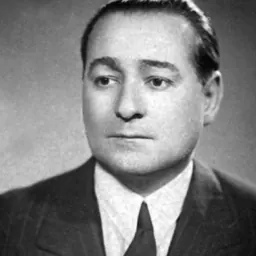
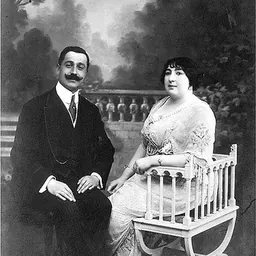
People in Müşfika Kadınefendi's life
Named in this biography and alive at the same time






Contemporaries
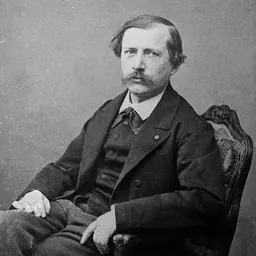
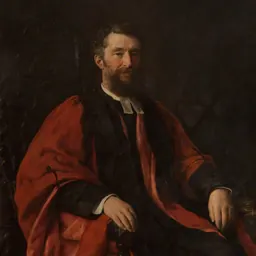
People whose lives overlapped Müşfika Kadınefendi's


Frequently asked questions
Who was Müşfika Kadınefendi?
Ottoman noble; consort of sultan Abdul Hamid II (1867–1961)
When was Müşfika Kadınefendi born?
Müşfika Kadınefendi was born on 10 December 1867 in Artvin Province.
When did Müşfika Kadınefendi die?
Müşfika Kadınefendi died on 16 July 1961 in Istanbul.
What nationality was Müşfika Kadınefendi?
Müşfika Kadınefendi was Turkish.
Sources & further reading
· Wikipedia: Müşfika Kadınefendi
Cite this page
APA: Biography.guide. (2026). Müşfika Kadınefendi. https://biography.guide/musfika-kadinefendi/
MLA: "Müşfika Kadınefendi." Biography.guide, https://biography.guide/musfika-kadinefendi/.
Chicago: "Müşfika Kadınefendi." Biography.guide. https://biography.guide/musfika-kadinefendi/.
Data last updated: 2026-09-20 · Spot an error? Report a correction.
Page generated 2026-09-27 05:28 UTC