
Muriel Dowding, Baroness Dowding
British noble
About Muriel Dowding, Baroness Dowding
Lived 1908 – 1993 (aged 85). Muriel Dowding, Baroness Dowding was an animal rights advocate.
Muriel Dowding, Baroness Dowding (; other married name Whiting; 22 March 1908 – 20 November 1993) was an English humanitarian and animal rights activist known for championing anti-vivisection, vegetarianism and the improvement of animal welfare. Like her second husband Lord Dowding, 1st Baron Dowding she was a vegetarian, an anti-vivisectionist, spiritualist and theosophist. She coined the term cruelty-free and was a pioneer of the cruelty-free movement.
In 1959, Dowding founded the charity Beauty Without Cruelty (BWC) Her first school was Mr Thomas’ School for the Sons of Gentlemen, in Porchester Terrace, London and she was the only girl in the school. Her parents separated when she was 8 and later divorced and she went to live with family friends, returning to her mother aged 15. She had an unconventional childhood and was greatly influenced by her mother’s theosophical and spiritualist views who, as a vegetarian, an astrologer and a trained spiritual healer, held a weekly prayer healing circle at their home which Dowding and her sister Kathleen (Tottie) joined. Like her mother, she went on to become a Lecture Secretary of the Theosophical Society in Tunbridge Wells, set up her own absent healing circle and became involved with the White Eagle Lodge, a spiritualist association, becoming close to its founder Grace Cooke with shared ideals about non-violence to all animal life.
Dowding married her first husband, Jack Maxwell Whiting (Max) in 1935. They had one son, David Maxwell, born in 1938, during which Dowding nearly died. During World War II Max, who was in a reserved occupation joined the Royal Air Force Volunteer Reserve (RAFVR) and on 22 May 1944 was posted ‘missing in action’, although his death in Denmark was not confirmed until 1946. He invited her to meet him and they later married on 25 September 1951, at Caxton Hall, London. It was their shared interest in spiritualism which informed their concern for the ethical treatment of animals. His moving speeches in the House of Lords in support of the Humane Slaughter Bill concluded in legislation that eased animal suffering. It was the legislation of the Protection of Animals (Anaesthetics) Act, 1964 in which Lord and Lady Dowding took great pride, which had made it a criminal offence to castrate or otherwise cut into the living flesh of an animal without the use of anaesthesia.
Dowding became a committee member of the Animal Defence and Anti-Vivisection Society, after meeting its founder Lind-af-Hageby and in 1957, was elected to the council of the National Anti-Vivisection Society, later becoming their long-time president, following her husband Lord Dowding’s death in 1970. In this post she led demonstrations, petitioned parliament and helped raise the anti-vivisection cause, representing the organisation at conferences in the United Kingdom and abroad. In 1967. Dowding strove unsuccessfully to unify the two leading British anti-vivisection societies, the NAVS and the British Union for the Abolition of Vivisection (BUAV) of which BUAV had split away from in 1898.
Beauty Without Cruelty origins The seeds of BWC were planted in 1946, while Dowding unpacked several brands of face creams bought years before when they were scarce. She noticed they were in varying degrees of decay, except one jar in perfect condition. A friend in the beauty industry informed her that this particular cream contained no animal ingredients. Then, in 1955, Dr Harry Lillie, surgeon to the Antarctic whaling fleet, informed her about the cruelty involved in furs and the trapping of fur-bearing animals and the annual slaughter of baby harp seals off Atlantic Canada, leaving a deep and lasting impression on her. In 1963, she founded Beauty Without Cruelty Cosmetics (BWC Ltd) with the help of Kathleen Long so that their full range of cruelty-free products could be sold. It produced its own cruelty-free cosmetics and marketed its own line of simulated furs and leathers.
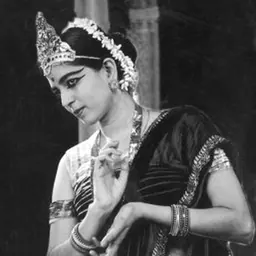
Other animal welfare causes In 1969, Dowding cofounded IAAPEA, remaining a patron until her death. In 1977, prior to the opening of the Third National Conference on Animal Welfare in New Delhi, India, Rukmini Devi Arundale arranged a meeting between the then Indian Prime Minister, Sri Morarji Desai and Dowding, where she helped secure the historic ban of exporting rhesus monkeys from India for experimentation. Mr Desai announced the ban at the conference the following day. In 1979, Dowding rallied in New York for a week of anti-fur protest coordinated by Dr. Ethel Thurston, head of BWC U.S.A. branch, to coincide with the American International Fur Fair. The effort is remembered as the beginning of the American anti-fur movement.
Dowding was also a committee member of the Vegan Society and a Fellowship of Life patron. She also claimed to have got rid of rats and mice from her home by talking to them.
Supported by her second husband and family, Dowding’s sister, Kathleen Albino brought the Compassion quarterly journal into being, covering the activities of the movement and publishing articles on kindred subjects in the wider humanitarian field. Following Lord Dowding’s death in 1970, her son David Whiting gave up his career as an engineer to help his mother, travelling to many parts of the world, often risking his life, in order to bring back the hard facts and expose abuses to animals in trade, being dubbed ‘The Animal Spy’ by the press.
Later life Dowding was left almost penniless having given all her money away to charity. She died in 1993 and her ashes were buried with her second husband in the RAF Chapel, Westminster Abbey.
Legacy Brigid Brophy writes: “Lady Dowding is the person who has provided practical alternatives to conniving atrocities. She has brought into being an organisation for providing alternative cosmetics and alternative clothes. She has brought into being a fund for financing non-atrocity experimentation, thereby providing an alternative to the huge quantities of private and state capital that exert such a pull towards the perpetuation of atrocities.”
Publications Beauty Not the Beast. An autobiography by Muriel, The Lady Dowding. Neville Spearman. (1980). ISBN 9780859780568 The Psychic Life of Muriel, the Lady Dowding: An Autobiography. Theosophical Publishing House (1980) [Foreword by Victor Goddard] ISBN 978-0835605649
Don’t just read it —
keep it.
Full-length biographies made to live with: read them, listen on the way to work, watch them tonight.
- E-book
- Audio
- Video
Instant download · yours to keep · every purchase keeps this site free
Important facts
People in Muriel Dowding, Baroness Dowding's life
Named in this biography and alive at the same time





Related people
Same field, nearest in time




Contemporaries
People whose lives overlapped Muriel Dowding, Baroness Dowding's



Frequently asked questions
Who was Muriel Dowding, Baroness Dowding?
British noble
When was Muriel Dowding, Baroness Dowding born?
Muriel Dowding, Baroness Dowding was born on 22 March 1908 in London.
When did Muriel Dowding, Baroness Dowding die?
Muriel Dowding, Baroness Dowding died on 20 November 1993.
What was Muriel Dowding, Baroness Dowding's occupation?
Muriel Dowding, Baroness Dowding was an animal rights advocate.
Sources & further reading
· Wikipedia: Muriel Dowding, Baroness Dowding
Cite this page
APA: Biography.guide. (2026). Muriel Dowding, Baroness Dowding. https://biography.guide/muriel-dowding-baroness-dowding/
MLA: "Muriel Dowding, Baroness Dowding." Biography.guide, https://biography.guide/muriel-dowding-baroness-dowding/.
Chicago: "Muriel Dowding, Baroness Dowding." Biography.guide. https://biography.guide/muriel-dowding-baroness-dowding/.
Data last updated: 2026-09-20 · Spot an error? Report a correction.
Page generated 2026-09-27 05:10 UTC