
About Muriel Box
Lived 1905 – 1991 (aged 85). Muriel Box was a British film director, writer, screenwriter, playwright, biographer and autobiographer.
Violette Muriel Box, Baroness Gardiner, (22 September 1905 – 18 May 1991) was an English screenwriter and director, Britain's most prolific female director, having directed 12 feature films and one featurette. Her screenplay for The Seventh Veil (co-written with husband Sydney Box) won an Academy Award for Best Original Screenplay.
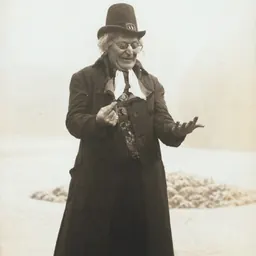
Early life Violette Muriel Baker was born in Simla, Poplar Grove, New Malden, Surrey, on 22 September 1905. Here she took ballet lessons and studied drama with Sir Ben Greet. In the 1920s, she met Joseph Grossman of Stoll Pictures which led to work as an extra in The Wandering Jew and in the thriller series The Old Man in the Corner.
In 1929, Baker left a typing job at Barcley Corsets in Welwyn Garden City, for the scenario department of British Instructional Pictures. As talkies were introduced, Barker was given the task of reading unsolicited manuscripts which led to her developing story writing and dialogue skills. She landed a job as continuity clerk on Anthony Asquith's Tell England (1931). She moved to British International Pictures at Elstree, where she worked on Alfred Hitchcock's Number Seventeen (1932). Their production company, Verity Films, first released short wartime propaganda films, including The English Inn (1941), her first directing effort, after which it branched into fiction. The couple achieved their greatest joint success with The Seventh Veil (1945) for which they gained the Academy Award for Best Writing, Original Screenplay in the following year.
After the war, the Rank Organisation hired her husband to head Gainsborough Pictures, where she was in charge of the scenario department, writing scripts for a number of light comedies, including two for child star Petula Clark, Easy Money and Here Come the Huggetts (both 1948). Muriel Box occasionally assisted as a dialogue director, or re-shot scenes during post-production. Her extensive work on The Lost People (1949) gained her a credit as co-director, her first for a full-length feature.
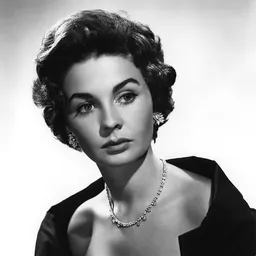
Box often experienced prejudice in a male-dominated industry, especially hurtful when perpetrated by another woman. Jean Simmons had her replaced on So Long at the Fair (1950), and Kay Kendall unsuccessfully attempted to do the same with Simon and Laura (1955). Many producers questioned her competence to direct large-scale feature films, and while the press was quick to note her position as one of very few women directors in the British film industry, their tone tended to be condescending rather than filled with praise. She published her memoirs, Odd Woman Out, in 1974, and published Rebel Advocate, a biography of her second husband, Gerald Gardiner, in 1983.
Personal life She married Sydney Box in 1935 and gave birth to a daughter, Leonora the following year. They divorced in 1969. Her sister-in-law Betty Box was Head of Production at the Gainsborough Pictures studio in Poole Street, Hoxton, and her brother-in-law through Betty was Peter Rogers, producer of the Carry On series of British comedy films. In 1970, she married Gerald Austin Gardiner, who had been Lord Chancellor, who died in 1990. She died in Mote End, Nan Clark's Lane, Mill Hill, Hendon, Barnet, London and 1960 Royal Academy of Arts Exhibitions, while living at Pond Cottage, Nan-Clark's Lane, Mill Hill NW7.
Filmography Screenwriting credits
Too Young to Love (1960) The Truth About Women (1957) The Passionate Stranger (1957) Street Corner (1953) The Happy Family (1952) Christopher Columbus (1949) Here Come the Huggetts (1948) The Blind Goddess (1948) Daybreak (1948) Good-Time Girl (1948) Easy Money (1948) Portrait from Life (1948) When the Bough Breaks (1947) Holiday Camp (1947) Dear Murderer (1947) The Brothers (1947) The Man Within (1947) A Girl in a Million (1946) The Years Between (1946) The Seventh Veil (1945) 29 Acacia Avenue (1945) Alibi Inn (1935)
Directing credits
Rattle of a Simple Man (1964) The Piper's Tune (1962, featurette for Children's Film Foundation Too Young to Love (1960) Subway in the Sky (1959) This Other Eden (1959) The Truth About Women (1957) The Passionate Stranger (1957) Eyewitness (1956) Simon and Laura (1955) To Dorothy a Son (1954) The Beachcomber (1954) A Prince for Cynthia (1953, short) Street Corner (1953) The Happy Family (1952) The Lost People (1949) The English Inn (1941, documentary short [credited as Muriel Baker])
Don’t just read it —
keep it.
Full-length biographies made to live with: read them, listen on the way to work, watch them tonight.
- E-book
- Audio
- Video
Instant download · yours to keep · every purchase keeps this site free
Important facts
People in Muriel Box's life
Named in this biography and alive at the same time




Related people
Same field, nearest in time


Contemporaries
People whose lives overlapped Muriel Box's




Frequently asked questions
Who was Muriel Box?
British film director and writer (1905-1991)
When was Muriel Box born?
Muriel Box was born on 22 September 1905 in Royal Borough of Kingston upon Thames.
When did Muriel Box die?
Muriel Box died on 18 May 1991 in London.
What was Muriel Box's occupation?
Muriel Box was a film director, writer, screenwriter, playwright, biographer and autobiographer.
What nationality was Muriel Box?
Muriel Box was British.
Sources & further reading
Cite this page
APA: Biography.guide. (2026). Muriel Box. https://biography.guide/muriel-box/
MLA: "Muriel Box." Biography.guide, https://biography.guide/muriel-box/.
Chicago: "Muriel Box." Biography.guide. https://biography.guide/muriel-box/.
Data last updated: 2026-09-20 · Spot an error? Report a correction.
Page generated 2026-09-27 05:08 UTC