
About Munio Weinraub
Lived 1909 – 1970 (aged 61). Munio Weinraub was an Israeli architect, known for Haifa, Hebrew University of Jerusalem and Jerusalem.
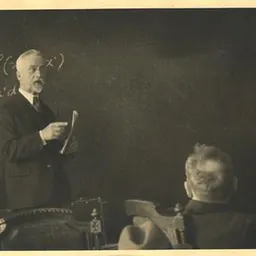
Munio Gitai Weinraub (March 6, 1909 – September 24, 1970) was a Polish-born Jewish architect who was part of the Bauhaus movement in Israel. Throughout his 36-year career, he was responsible for the planning and construction of thousands of housing units, including workers' housing and private homes in and around Haifa.
Weinraub also took part in the initial planning of the Hebrew University campus in Givat Ram and the Yad Vashem Museum in Jerusalem. From the beginning of his career, Weinraub sought to combine the values of Hannes Meyer's social planning with the construction art of his mentor and teacher Ludwig Mies van der Rohe. As such, his works are generally characterized by minimalist geometry. Similar to Mies van der Rohe, Weinraub chose to give up "problems of form" in order to dedicate himself to "problems of construction" and focus on engineering, the treatment of the material, and the processing of the architectural individual.
Early life and education Munio Gitai Weinraub was born in the small town of Szumlany in Galicia (now Ukraine). He grew up in the city of Bielsko, in Cieszyn Silesia, a city with a considerable German-speaking population in Poland. He was the youngest of four sons and his childhood was overshadowed by World War I. After the war, Weinraub became a member of the Jewish youth group Hashomer Hatzair, a scouting organization that combined nature explorations similar to those of Baden-Powell's Scouts in the UK, and the romantic tendencies of the German Wandervögel groups, with the study of Zionist and Socialist ideologies.
Work
After his studies, Weinraub worked for Ludwig Mies van der Rohe, the Bauhaus director at the time. Mies hired him to work with him in his Berlin office, where his main responsibility was to supervise the installation of a number of works at the 1931 German Building Exhibition. He was then expelled and found refuge in Switzerland, where he worked for the architect Moser in Zurich.
At the end of 1934, Weinraub left Europe and immigrated to Palestine and settled in Haifa, which was the urban base of the Hebrew labor movement. He maintained his relationship with the Kibbutz Hashomer Hatzair when he took part in the planning and design of sixteen of the movement's founding points. Weinraub was one of the few practicing architects in Palestine who worked according to the Bauhaus method. Their work focused on serving local labor movement institutions and designing schools, cultural structures, factories, employee housing, kibbutzim, private residences, office buildings, and industrial facilities. Their work was noted for being "rigorously simple" and "stylistically conventional rather than vanguard". This incurred involvement in the initial planning policy-making of Israel. . The firm also won a dozen more national competitions during the 1950s.
During the 1950s, Weinraub and Mansfeld both began teaching at the Technion, in Haifa.
Solo career Weinraub continued his career on his own, pursuing commissions for architecture, working for the labor federation, the kibbutzim, and various educational institutions.
Apart from his activities as a designer and architect, Weinraub (like many architects of his generation) was also a furniture designer who created desk and chair designs for some large companies. Although Weinraub was not overly concerned with architectural theory, his buildings display a coherent typological approach, which indicates a theoretical search for a humane Functionalism. The museum was established by his son, Amos Gitai, and includes Weinraub's private archive and a room restoring the studio where he worked. The museum was established in collaboration with the Haifa Municipality and the Haifa Museums Company. The "Kowalski Efrat" office of the architects Zvi Efrat and Meira Kowalski was responsible for adapting the building to its purpose as a museum and Carmit Hernick Saar was responsible for its execution.
The museum's opening exhibition was 'The Architecture of Memory', curated by Amos Gitai. The exhibition was accompanied by the book Carmel, produced in collaboration with the Munio Gitai Weinraub Architecture Museum and the Haifa Museums.
Every year, the museum hosts several exhibitions on Israeli and international architecture, and various events such as conferences and public conversations with architects and artists.
Among the exhibitions held at the museum: Building of the Khan al-Ahmar Bedouin School, Curators: Amos Gitai, Sharon Yavo Ayalon, and Nitzan Satt, 2016. Public Housing, Curators: Sharon Yavo Ayalon and Nitzan Satt, 2016 Ecological Ripples, Curator: Architect Dr. Joseph Cory, 2015. Industrial Urbanism: Places of production, Curator: Tali Hatuka, 2015 Learning from Vernacular, For a New Vernacular Architecture, Curator: Pierre Frey, 2013 Haifa Encounters: Arab-Jewish Architectural Collaboration during the British Mandate, Curators: Walid Karkabi and Adi Roitenberg, 2014. The Architecture of Memory, Curator: Amos Gitai, The Museum's Opening Exhibition, 2014.
Personal life and death In 1936, Weinraub married Efratia Margalit (Munchik) (1909–2004). The couple had two sons, photographer Gideon Gitai (1940-2019) and Israeli filmmaker Amos Gitai, who himself studied architecture at the Technion in Haifa and University of California, Berkeley.
In the 1960's, he Hebraized his surname to Gitai.
He died from colon cancer in Haifa in 1970 at the age of 61, buried in Kibbutz Kfar Masaryk.
Don’t just read it —
keep it.
Full-length biographies made to live with: read them, listen on the way to work, watch them tonight.
- E-book
- Audio
- Video
Instant download · yours to keep · every purchase keeps this site free
Important facts
Family & relationships
People in Munio Weinraub's life
Named in this biography and alive at the same time


Related people
Same field, nearest in time
Contemporaries
People whose lives overlapped Munio Weinraub's




Frequently asked questions
Who was Munio Weinraub?
Israeli architect (1909–1970)
When was Munio Weinraub born?
Munio Weinraub was born on 6 March 1909 in Shumliany.
When did Munio Weinraub die?
Munio Weinraub died on 24 September 1970 in Haifa.
What was Munio Weinraub's occupation?
Munio Weinraub was an architect.
What was Munio Weinraub known for?
Munio Weinraub was known for Haifa, Hebrew University of Jerusalem, Jerusalem and Technion – Israel Institute of Technology.
What nationality was Munio Weinraub?
Munio Weinraub was Israeli.
Sources & further reading
Cite this page
APA: Biography.guide. (2026). Munio Weinraub. https://biography.guide/munio-weinraub/
MLA: "Munio Weinraub." Biography.guide, https://biography.guide/munio-weinraub/.
Chicago: "Munio Weinraub." Biography.guide. https://biography.guide/munio-weinraub/.
Data last updated: 2026-09-22 · Spot an error? Report a correction.
Page generated 2026-09-27 05:17 UTC