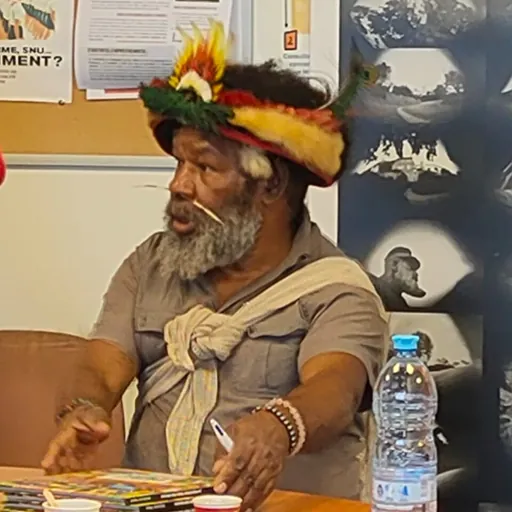
Mundiya Kepanga
Papuan chief
About Mundiya Kepanga
Born 2000. Mundiya Kepanga is a traditional leader or chief.
Mundiya Kepanga is a Papuan chief from the Tari region in the Highlands of Papua New Guinea and a member of the Huli tribe.
During trips across Europe and North America, he has given lectures at schools and natural history museums. He has also organized assemblies focused on Indigenous people and he delivered the inaugural lecture of the University of Versailles for 2015/2016 in Forensic Anthropology and Osteoarchaeology.
Mundiya Kepanga has promoted intercultural dialogue and donated a complete set of his community's tribal costumes to the Museum of Natural History in Rouen, France. He has been involved in environmental preservation initiatives, including the establishment of a traditional bed and breakfast in his village.
Since 2000, several books and documentaries have been made on his perspective on the Western world, such as "Reversed Exploration", which was broadcast by Canal+ and National Geographic in more than 20 countries. He also co-authored several scientific articles, including in collaboration with Yves Coppens and Jean Malaurie.
Invited as a traditional chief to several meetings organized on the occasion of the COP21 Summit on climate change, he took part in the Indigenous People Facing Climate Change conference, organized at Musée de l'Homme in Paris, joining Nicolas Hulot, Gilles Boeuf, and Raoni Metuktire.
Biography Ukuma Mundiya Kepanga was born in the mid-1960s in the Highlands of Papua New Guinea, in a small hut built specifically for his birth at Anda Mini in the Telabo region. He belongs to the Telabo Angi Puria clan, part of the Huli tribe, whose members live mainly in the Tari region in the center of the Hela province.
He currently earns his living from farming sweet potatoes and pigs. As part of Huli tradition, he let his hair grow since he was a teenager to make a manda, a ritual wig worn during the ritual initiation ceremony. Since then, he has become adept at making and collecting adornments and feathers and joined his community's traditional dance group, Sing-Sing.
In September 2001, Mundiya met the French photographer and filmmaker Marc Dozier, a specialist on Papua New Guinea, and traveled with him as his guide for several weeks. This meeting is recounted in an article published in the French travel magazine Grands Reportages Dans la maison des hommes.
In 2003, Mundiya and his cousin Polobi Palia left their country for the first time, invited by Marc Dozier to discover France. This led to the publication of a book, Le long-long voyage, by Dakota Publishing.
In late 2006–early 2007, Mundiya and his cousin Polobi were invited a second time to France. This trip led to the making of a 100-minute documentary, titled "The Reversed Exploration" and produced by Jean-Marie Barrère and Marc Dozie of Bonne Pioche Production. The film shows Mundiya and Polobi travelling through France and making comments on the French way of life, in the style of the Persian Letters by Montesquieu. Broadcast for the first time on the French TV channel Canal+ on 8 January 2008, the film was later also broadcast by many other French and international TV channels like National Geographic.
In 2012, with his friend Marc Dozier acting as his translator, Mundiya published his autobiography, Au pays des hommes blancs, les mémoires d'un Papou en Occident (Niugini).
In 2012, when he heard that a Maori skull was being returned to the New Zealand indigenous community by Sebastian Minchin, director of the Natural History Museum in Rouen, France, Mundiya Kepanga decided to offer a full set of traditional Huli adornments to the same museum. The adornments, called Djeri in Huli, are on the third floor of the Natural History Museum in Rouen, in a display cabinet in the Australasia section.
In 2015, he was invited to participate in several conferences organized during the COP21 summit on climate change. He took part in the Indigenous People Facing Climate Change conference held at Musée de l'Homme in Paris.
Filmography BrotherWood, Lato Sensu production, a documentary about a forest currently under production. A Papuan in Binche, Niugini production, 7 minutes, a movie by Marc Dozier. Bluebell Girls Meet the Papuans, a One Planet production, 52 minutes, a movie by Jean-Marie Barrère and Marc Dozier. The reversed exploration, Bonne Pioche production, 104 minutes, a movie by Jean-Marie Barrère and Marc Dozier.
Don’t just read it —
keep it.
Full-length biographies made to live with: read them, listen on the way to work, watch them tonight.
- E-book
- Audio
- Video
Instant download · yours to keep · every purchase keeps this site free
Important facts
People in Mundiya Kepanga's life
Named in this biography and alive at the same time


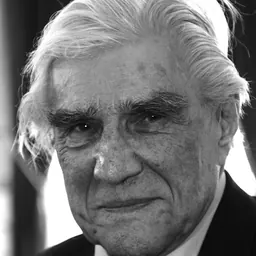

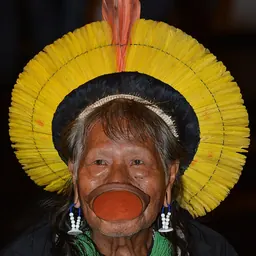
Related people
Same field, nearest in time
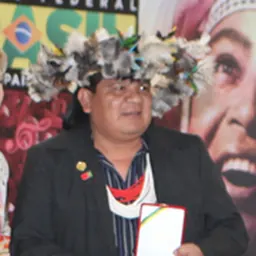



Contemporaries
People whose lives overlapped Mundiya Kepanga's

Frequently asked questions
Who is Mundiya Kepanga?
Papuan chief
When was Mundiya Kepanga born?
Mundiya Kepanga was born in 2000 in Anda Mini, Hela Province, Papua New Guinea.
What is Mundiya Kepanga's occupation?
Mundiya Kepanga is a traditional leader or chief.
What nationality is Mundiya Kepanga?
Mundiya Kepanga's recorded nationality: Papua New Guinea, Huli people.
Sources & further reading
Cite this page
APA: Biography.guide. (2026). Mundiya Kepanga. https://biography.guide/mundiya-kepanga/
MLA: "Mundiya Kepanga." Biography.guide, https://biography.guide/mundiya-kepanga/.
Chicago: "Mundiya Kepanga." Biography.guide. https://biography.guide/mundiya-kepanga/.
Data last updated: 2026-09-23 · Spot an error? Report a correction.
Portrait: Wikimedia Commons · author & licence
Page generated 2026-09-27 05:05 UTC