
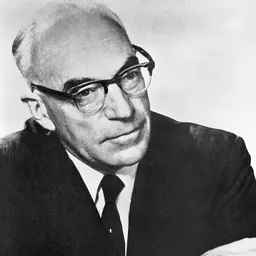
Muhammad Taqi Usmani
Pakistani judge
About Muhammad Taqi Usmani
Born 1943. Muhammad Taqi Usmani is a Pakistani and Indian qadi, mufti, islamic jurist, poet, theologian and legal scholar.
Muhammad Taqi Usmani (born 3 October 1943) SI, OI, is a Pakistani Islamic jurist and leading scholar of the Qur'an, Hadith, Islamic law, Islamic economics, and comparative religion. He was a member of the Council of Islamic Ideology from 1977 to 1981, a judge of the Federal Shariat Court from 1981 to 1982, and a judge in the Shariat Appellate Bench of the Supreme Court of Pakistan from 1982 to 2002. In 2020, he was selected as the most influential Muslim personality in the world. He is considered a leading intellectual of the contemporary Deobandi movement, and his opinions and fatwas are widely accepted by Deobandi scholars and Deobandi institutions worldwide, including the Darul Uloom Deoband in India. Since 2021, he has been serving as the Chairman of Wifaq ul Madaris Al-Arabia. His father, Shafi Usmani, was the Grand Mufti of Darul Uloom Deoband and Taqi Usmani migrated to Pakistan with his family after the partition of India in 1948.
Usmani studied at Darul Uloom Karachi, the University of Karachi, and the University of the Punjab. He began teaching at Darul Uloom Karachi in 1960. Since 1967, he has been the editor of the Urdu magazine Al-Balagh and the English magazine Al-Balagh International since 1976. He is recognized as an authority in the field of Islamic law and its application. He is a permanent member of the International Islamic Fiqh Academy of the OIC and a former deputy chairman. He is also a member of the Muslim World League based in Mecca. At the age of 17, he wrote his first book titled Islam and Birth Control. He is the author of 143 books on various subjects in Arabic, English, and Urdu. He is widely recognized for his contributions to Islamic economics, where he has played a leading role in Islamizing the banking and finance industry in Pakistan and abroad. In 1998, his book on Islamic economics, An Introduction to Islamic Finance, was considered significant. His extensive work in Islamic economics led to his appointment as the Chairman of the Accounting and Auditing Organization for Islamic Financial Institutions (AAOIFI), a Bahrain-based Islamic Financial Institution of the Islamic Development Bank. In 2014, he was appointed as the Chairman of the Shariah Board of the State Bank of Pakistan. He has also served as the Chairman of the Shariah Board in more than a dozen Islamic banks and financial institutions. In recognition of his contributions to Islamic economics, he received the Islamic Development Bank Prize in 2014. Under his supervision, the English translation of Ma'ariful Qur'an was completed. He has authored translations and explanations of the Quran in both English and Urdu, which were published as The Noble Quran and Tauzeeh Al-Qur'an, respectively. Along with Ulum al-Quran, these works are his major contributions to the study of the Quran. In the field of Fiqh (Islamic jurisprudence), his notable works include Fatawa-e-Usmani, Fiqh al-Buyu, Fiqhi Maqalat, Islam and Modern Economic Problems, and Buhuth fi Qadhaya Fiqhiyyah Mu`asirah, among others. His comprehensive explanation of Sahih Muslim, titled Takmilah Fath al-Mulhim, spans six volumes and is considered his finest work. The Hadith encyclopedia Al-Mudawwanah al-Jāmiʿah was compiled under his supervision. Among his other works in the field of hadith sciences are Inamul Bari, Darus Tirmizi, and The Authority of Sunnah. In recognition of his services in public welfare, he was honored with Pakistan's civil award, the Sitara-i-Imtiaz, in 2019. In 2010, Abdullah II of Jordan bestowed upon him the Order of Independence. In 2022, he received an honorary Doctor of Letters degree from an American International Theism University. Usmani pioneered the concept of Islamic banking in Pakistan when he established the Meezan Bank.
Early life and education
Muhammad Taqi Usmani was born on 5 Shawwal 1362 AH (3 October 1943) in the city of Deoband in Saharanpur district, United Provinces, British India. He was the fifth and youngest son of Mufti Muhammad Shafi (1897–1976). With his full nasab (patronymic), he is Muhammad Taqi ibn Muhammad Shafi ibn Muhammad Yasin ibn Khalifah Tahsin Ali ibn Imam Ali ibn Karim Allah ibn Khair Allah ibn Shukr Allah. The forefathers of Miyanji Shukr Allah are unknown, but the family claims descent from Uthman, the third caliph and a companion of the Islamic prophet Muhammad, hence the nisbat "Usmani".
Usmani was born to several generations of educators. The title "Miyanji" applied to several of his ancestors indicates that they were teachers. His grandfather Muhammad Yasin (1865/661936) taught Persian at Darul Uloom Deoband. Born the year before the madrasah's founding, he had been one of its first students and studied with some of its early teachers including Muhammad Yaqub Nanautawi, Sayyid Ahmad Dihlawi, Mulla Mahmud Deobandi, and Mahmud al-Hasan Deobandi. Usmani's father Muhammad Shafi was also a product of the Deoband seminary. He taught there for several decades and held the post of chief mufti.
Teachers Usmani received teaching licenses to teach hadith from Islamic scholars including Muhammad Shafi, Muhammad Idris Kandhlawi, Qari Muhammad Tayyib, Saleemullah Khan, Rashid Ahmed Ludhianvi, Sahban Mahmud, Zafar Ahmad Usmani, Muhammad Zakariya Kandhalvi, Hasan al-Mahshat Al-Makki Al-Maliki, 'Abdu-l-'Azeez Ibn Baz Al-Maliki, Abd al-Fattah Abu Ghuddah, Abi Al-Faid Muhammad Yasin Al-Fadani Ash-Shafi'i, and others.
Awards and honours 2022: The Royal Islamic Strategic Studies Centre ranks Usmani 6th in the 2023 edition of The 500 Most Influential Muslims. 2022: Honorary doctorate degree awarded in Islamic Law and Jurisprudence by American International Theism University 2019: Sitara-i Imtiaz (Star of Excellence) in the field of public service, conferred by the President of Pakistan 2019: The Royal Islamic Strategic Studies Centre ranks Usmani 1st in the 2020 edition of The 500 Most Influential Muslims. He has been included in the top 50 in every edition of the publication since its inception in 2009. 2017: The Global Islamic Finance Report ranks Usmani 2nd most influential person in the global Islamic financial services industry 2017: Lifetime Achievement Award, Islamic Finance Excellence Awards (IFEA), Center of Islamic Finance at COMSATS Institute of Information Technology, Lahore 2016: Lifetime Achievement Award, Islamic Finance Forum of South Asia (IFFSA) 2014: Islamic Development Bank (IDB) Prize in Islamic Banking and Finance 2004: Emir Muhammad bin Rashid Al Maktum Award
Academia He is currently the Shakih-ul-Hadees in Dar-ul-Uloom Karachi and teaches Sahih al-Bukhari, fiqh, and Islamic economics at Darul Uloom Karachi and is known for his Islahi Khutbat. During the presidency of General Zia ul Haq, he was instrumental in drafting laws pertaining to Hudood, Qisas meaning retaliation in kind or an eye for an eye and Diyya (blood money).
At a religious conference in 1984, he urged a more "dynamic attitude" towards the practice of ijtihad, arguing there is no shortage of fine minds capable of interpreting the sharia, but warning against the contamination of sharia by Western ideas such as the elimination of hudud penalties such as amputation and stoning.
Positions held
Positions held in the past +
Don’t just read it —
keep it.
Full-length biographies made to live with: read them, listen on the way to work, watch them tonight.
- E-book
- Audio
- Video
Instant download · yours to keep · every purchase keeps this site free
Important facts
People in Muhammad Taqi Usmani's life
Named in this biography and alive at the same time


Related people
Same field, nearest in time



Contemporaries
People whose lives overlapped Muhammad Taqi Usmani's


Frequently asked questions
Who is Muhammad Taqi Usmani?
Pakistani judge
When was Muhammad Taqi Usmani born?
Muhammad Taqi Usmani was born on 3 October 1943 in Deoband.
What is Muhammad Taqi Usmani's occupation?
Muhammad Taqi Usmani is a qadi, mufti, islamic jurist, poet, theologian and legal scholar.
What nationality is Muhammad Taqi Usmani?
Muhammad Taqi Usmani is Pakistani and Indian.
Sources & further reading
· Wikipedia: Muhammad Taqi Usmani
Cite this page
APA: Biography.guide. (2026). Muhammad Taqi Usmani. https://biography.guide/muhammad-taqi-usmani/
MLA: "Muhammad Taqi Usmani." Biography.guide, https://biography.guide/muhammad-taqi-usmani/.
Chicago: "Muhammad Taqi Usmani." Biography.guide. https://biography.guide/muhammad-taqi-usmani/.
Data last updated: 2026-09-20 · Spot an error? Report a correction.
Page generated 2026-09-27 05:18 UTC