
About Muḥammad ibn Aḥmad Fāsī
Lived 1373 – 1429 (aged 55). Muḥammad ibn Aḥmad Fāsī was a muhaddith, historian, islamic jurist, writer, theologian and qadi.
Taqi al-Din Muhammad ibn Ahmad al-Fasi (, 8 September 1373, in Mecca, Hejaz – 6 July 1429, in Mecca, Hejaz) was an Arab Muslim scholar, muhaddith (hadith scholar), faqih (jurist), historian, genealogist and a Maliki qadi (judge) in Mecca.
He is best known for his work on the history of Mecca entitled Al-ʻIqd al-thamīn fī tārīkh al-Balad al-Amīn which reached around 18 volumes. He also wrote on the genealogies of some Arab tribes of Tihamah.
Family background His family claimed descent from the Islamic prophet Muhammad through his grandson, Hasan ibn Ali.
In the year 679 AH, Taqi al-Din al-Fasi's great grandfather, Abu Abdullah Muhammad bin Muhammad bin Abdul Rahman Al-Fassi left what is now Morocco, traveling to Mecca, which he entered in the year 686 AH. He took care of his three sons, Muhammad, Ahmed, and Ali (Al-Fassi’s grandfather) and raised them to love knowledge, so they became among the scholars of Mecca, and in turn they produced scholars. Among them was Ahmed bin Ali (father of Al-Fassi), one of the senior Muftis in Mecca, in addition to his mandate as a representative judiciary.
In the eighth century AH, the al-Fassi family became one of the largest families in Mecca, and it supported its scholarly influence through intermarriage with large families in Mecca. The sister of the historian Taqi al-Din al-Fassi, Umm Hani, married the Emir of Mecca, Sayyid Hassan Ibn Ajlan.
Starting in the year 796 AH, al-Fassi began his scientific journey, travelling between Medina, Jerusalem, Damascus, Cairo, and Alexandria. Two of the four trips he made to Egypt and the Levant lasted three years. His teachers were numerous and their specializations and countries varied as a result of his continuous travels. The number of his sheikhs reached more than 500 scholars, as stated in his index. Among his most famous teachers who were among the greatest ulama of his era include: Zain al-Din al-Iraqi, Ibn Hajar al-Asqalani, Nur al-Din al-Haythami, and Firuzabadi. He would also teach in the Grand Mosque of Mecca in the year 800 AH. After seven years he assumed the position of Qadi of Malikiyah in Mecca for ten consecutive years until the year 817 AH, when he was dismissed as a result of competition and intrigued against him. This was the fate of his contemporary Ibn Khaldun when he was removed from the position of judge in Cairo.
He went blind four years before his death in 1425 AD. He died on Wednesday 6 July 1429 at the age of 55 in Mecca, Hejaz, Arabian Peninsula, now Saudi Arabia.
Reception Ibn Hajar al-Asqalani described him at the time as: “The benefactor of the Hijaz country and its scholar.”
As for Al-Maqrizi, the historian of Egypt said: “He is a sea of knowledge and a treasure trove of benefits... and he did not leave behind anyone like him in the Hijaz.”
Works al-Fasi was a prolific writer who wrote numerous works on hadith, jurisprudence, history, genealogy, tasawwuf, etc. His famous works include:
Al-ʻIqd al-thamīn fī tārīkh al-Balad al-Amīn (العقد الثمين فى تاريخ البلد الأمين): His largest and most important work, and probably the largest in the field of Meccan history, where he compiled the biographies of Meccans from the early days of Islam up until his time. Shifāʼ al-gharām bi-akhbār al-Balad al-Ḥarām (شفاء الغرام بأخبار البلد الحرام) Al-Muqniʻ min akhbār al-mulūk wa-al-khulafāʼ wa-wulāt Makkah al-shurafā (المقنع من أخبار الملوك والخلفاء وولاة مكة الشرفاء) Al-Zuhūr al-muqtaṭafah min tārīkh Makkah al-Musharrafah (الزهور المقتطفة من تاريخ مكة المشرفة) Dhayl al-taqīīd fī rūāh al-sunan wa al-masānīd (ذيل التقييد بمعرفة رواة السنن والمسانيد)
Don’t just read it —
keep it.
Full-length biographies made to live with: read them, listen on the way to work, watch them tonight.
- E-book
- Audio
- Video
Instant download · yours to keep · every purchase keeps this site free
Important facts
People in Muḥammad ibn Aḥmad Fāsī's life
Named in this biography and alive at the same time
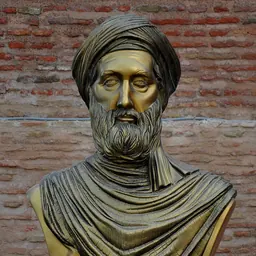

Related people
Same field, nearest in time



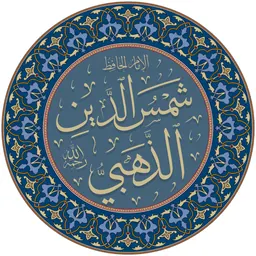

Contemporaries
People whose lives overlapped Muḥammad ibn Aḥmad Fāsī's




Frequently asked questions
Who was Muḥammad ibn Aḥmad Fāsī?
Arab historian
When was Muḥammad ibn Aḥmad Fāsī born?
Muḥammad ibn Aḥmad Fāsī was born on 8 September 1373 in Mecca.
When did Muḥammad ibn Aḥmad Fāsī die?
Muḥammad ibn Aḥmad Fāsī died on 6 July 1429 in Mecca.
What was Muḥammad ibn Aḥmad Fāsī's occupation?
Muḥammad ibn Aḥmad Fāsī was a muhaddith, historian, islamic jurist, writer, theologian and qadi.
Sources & further reading
· Wikipedia: Muḥammad ibn Aḥmad Fāsī
· DBpedia: Taqi al-Din al-Fasi
Cite this page
APA: Biography.guide. (2026). Muḥammad ibn Aḥmad Fāsī. https://biography.guide/muhammad-ibn-ahmad-fasi/
MLA: "Muḥammad ibn Aḥmad Fāsī." Biography.guide, https://biography.guide/muhammad-ibn-ahmad-fasi/.
Chicago: "Muḥammad ibn Aḥmad Fāsī." Biography.guide. https://biography.guide/muhammad-ibn-ahmad-fasi/.
Data last updated: 2026-09-20 · Spot an error? Report a correction.
Page generated 2026-09-27 05:28 UTC