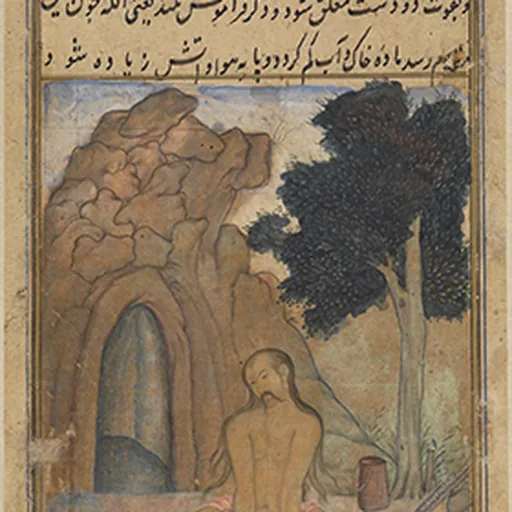
Muhammad Ghawth
16th-century Sufi master of the Shattari order and Sufi saint, a musician, and the author of Jawahir-i Khams
About Muhammad Ghawth
Lived 1500 – 1562. Muhammad Ghawth was a writer.
Muhammad Ghawth (Ghouse, Ghaus or Gwath ) Gwaliyari (1500–1562) was a 16th-century Sufi master of the Qadri Shattari order and Sufi saint, a musician, and the author of Jawahir-i Khams (Arabic: al-Jawahir al-Khams, The Five Jewels). The book mentioning the life and miracles of Gaus named " Heaven's witness" was written by Kugle.
Biography
Muhammad Ghawth was born in Gwalior, India in 1500; the name Gwaliyari means "of Gwalior". One of his ancestors was Fariduddin Attar of Nishapur. In the preface of al-Jawahir al-Khams, he states that he wrote the book when he was 25 years old. In 1549 he travelled to Gujarat, when he was 50 years old. He stayed in Ahmedabad for ten years where he founded Ek Toda Mosque and preached.
Ghawth translated the Amrtakunda from Sanskrit to Persian as the Bahr al-Hayat (The Ocean of Life), introducing to Sufism a set of yoga practices. According to the scholar Carl W. Ernst, in this "translation", Ghawth intentionally reframed these practices with great subtlety to identify "points of contact between the terminologies of Yoga and Sufism".
Ghawth died in Gwalior in 1562. His followers believed that he ascended to heaven and from there was able to direct help down to them; and further, that he was the "axial saint, the pivot of the universe".
"Among Ghawth's disciples is Fazl Allah Shattari (also known as Shah Fazl Shattari), who wrote a biography or monograph in praise of his teacher. Akbar's court musician Tansen was also familiar with Sufism. The entire structure is enclosed on all sides by the carved stone lattice work.
Sufi saeed Ali Shah was the former caretaker of the shrine.
Works
Jawahir-i-Khamsa (The Five Jewels) which was later translated to Arabic, al-Jawahir al-Khams, by the Mecca-based Shattari teacher Sibghat Allah (d. 1606 CE). Bahr al-Hayat (The Ocean of Life), his translation and extension of Hawd al-Hayat (The Pool of Life), an Arabic translation of a lost Sanskrit text on yoga, the Amrtakunda.
Don’t just read it —
keep it.
Full-length biographies made to live with: read them, listen on the way to work, watch them tonight.
- E-book
- Audio
- Video
Instant download · yours to keep · every purchase keeps this site free
Important facts
People in Muhammad Ghawth's life
Named in this biography and alive at the same time
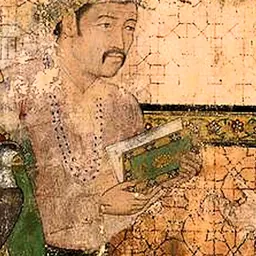
Related people
Same field, nearest in time
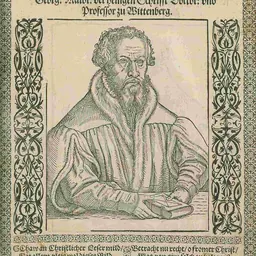
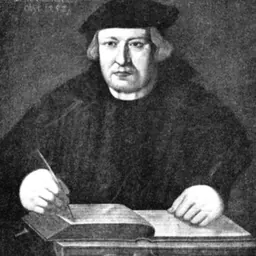


Contemporaries
People whose lives overlapped Muhammad Ghawth's


Frequently asked questions
Who was Muhammad Ghawth?
16th-century Sufi master of the Shattari order and Sufi saint, a musician, and the author of Jawahir-i Khams
When was Muhammad Ghawth born?
Muhammad Ghawth was born in 1500 in Gwalior, India.
When did Muhammad Ghawth die?
Muhammad Ghawth died in 1562 in Gwalior.
What was Muhammad Ghawth's occupation?
Muhammad Ghawth was a writer.
Sources & further reading
Cite this page
APA: Biography.guide. (2026). Muhammad Ghawth. https://biography.guide/muhammad-ghawth/
MLA: "Muhammad Ghawth." Biography.guide, https://biography.guide/muhammad-ghawth/.
Chicago: "Muhammad Ghawth." Biography.guide. https://biography.guide/muhammad-ghawth/.
Data last updated: 2026-09-20 · Spot an error? Report a correction.
Portrait: Wikimedia Commons · author & licence
Page generated 2026-09-27 04:57 UTC