
About Muhammad Ali Chamseddine
Lived 1942 – 2022 (aged 79). Muhammad Ali Chamseddine was a Lebanese poet, literary scholar and writer.
Muhammad Ali Chamseddine (15 October 1942 – 11 September 2022; in Arabic: محمد علي شمس الدين) was a Lebanese poet and writer. His work was influenced by the poet Khwāja Shams-ud-Dīn Muḥammad Ḥāfeẓ-e Shīrāzī (1315–1390). Chamseddine is regarded as one of the pioneers of modern poetry in the Arab world since 1973. He participated in various Arab poetry festivals and was a member of the administrative board of the Arab Writer's Union. Chamseddine has a strong spiritual relationship with poetry and his works are recognized worldwide.
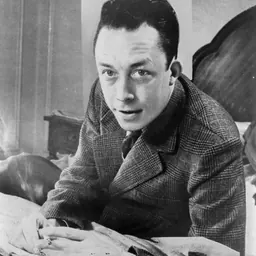
Biography Early life Muhammad Ali Chamseddine was born in 1942 in Beit Yahoun, a village located in Bint Jbeil District in Nabatieh Governorate in Lebanon. He was raised in a Muslim family and used to listen to his grandparents' voices reciting Qur'an verses and Karbala'iyat which are poetic verses related to Ashura. Numerous poets inspired Chamseddine in his childhood including Al ma'arri, Abū Hayyān al-Tawhīdī, and Albert Camus. He read various poetry books that were found in his grandparents' library, which inspired him to start writing his own short stories at the age of twelve. Then, he began writing short sayings and quotes and finally wrote his first poem at the age of fourteen. He was a member of the Arab Writers' Union, of the administrative board of the Lebanese Writers' Union, and the Honor of the Jordanian Writers' Association.
Influence of Hafez
Overview of Hafez's world wide influence Khwāja Shams-ud-Dīn Muḥammad Ḥāfeẓ-e Shīrāzī has a prominent status among Arab writers and poets who praised him and chanted for him a variety of poems. The fame and popularity of this great Persian poet exceeded all limits. He became one of the most popular poets in the Arab region. Many literature poets believe that Al Shirazi is an expert in love poems specifically, due to the spiritual pleasure a reader can feel upon reading them. Al Shirazi’s poems are compared to a festival due to their capability to cheer and entertain readers; they are full of real-life comparisons, literary devices, imagery, and imagination; he was even able to add his sense of humor to such poems. Having his poems being spread all around the world, poets and translators of different nationalities tended to translate them into all languages.
Many studies were done on Hafez and his impact, including a study on Arabic translations of his divan (ديوان). Concerning Hafez’s influence on Arab writers, studies appeared at the level of articles, including:
Chamseddine's knowledge of Hafez al-Shirazi dates back not long ago, and that was prominent during his visit to Iran as requested by the Iranian Ministry of Culture. What most caught Chamseddine’s attention was the strong dominance of the Iranian poet Hafiz al-Shirazi on the popular cultural mood despite his death centuries before. He bought various editions from the Divan of Hafez, which he carried with him from Shiraz to Beirut. He worked on these editions for five consecutive years to read, understand, interpret, and compare.
After that, he felt ill and was away from social life for several months. He suffered from immense pain. During that time, he read Hafez’s diwan, and he says: "Then suddenly, while I was on the bed of sickness, poems began to be born, one after the other, as if they were coming out from (The Home of the Secrets), and without direct reference, I wrote them from inside myself, and for the first time... I swam in that beautiful sea ... and it's over".
Later in 2003, Chamseddine issued his book of Malik Malikss, at the end of which there are eight poems under the title "Shiraziyat" that are poems dedicated to Hafiz al-Shirazi and was issued by The Union of Lebanese Arab Writers on 1 May 2005. The "Shiraziyat" included 8 poetry compositions, which are ((Al-Hirah)), ((Shiraz)), ((Circumambulation around the waist)), ((My heart is far)), ((The Sign of Magic)), ((Modify the drink)), ((Wandering)) and ((Before the world shattered)).
The aspects of Muhammad Ali Chamseddine's influence on Hafiz al-Shirazi are evident in various topics, which Hafiz wrote about such as:
Longing for God and fusion for the sake of truth:
Hafez talks in one of his poetic verses about his old diligent work to reach God and know more about him.
Also, Chamseddine says in a poetic verse "I wish you look at me once, your look emulates that of all creatures and nations"
The demise of the world:
Hafez assures in one of his verses that this world has no fulfillment and will end. No need for a person to mourn the loss of something.
And In his poem "My House Has Two Doors", Chamseddine says "Don't mind thinking about things that will vanish, all creatures are on their way to an end"
Acknowledgment of sins and the remorse for them:
Hafez admits in a verse that he committed sins, and continues to say that he is sure he is on the right path to The Holy Heaven in the end.
Influenced by Hafez, Chamseddine says "I drowned in sins, but God's generosity will carry me to The Holy Heaven"
Relation with poetry Chamseddine started the search for his passion at a young age. He started dreaming of conducting an orchestra at the age of 10. He even got an accordion and started learning music. After some time playing and learning the instrument, he felt that he wasn’t meant to pursue a musical career. He tried writing short stories, but he felt that “it didn’t fulfill the void in his soul”, until he finally started writing Arabic poetry. Chamseddine described poetry as “the answer to his mysterious internal questions” and “the only thing that can satisfy his passion”. about his view on the role of poetry in the current times. He answered by saying: “poetry has a lot of roles yet no roles, Poetry is used for celebration, entertainment, appreciating beauty, activating one’s imagination, awakening one’s soul, enjoying music, chanting, expressing the meaning of freedom, questioning existence and inexistence, satisfying one’s soul, describing pain, and countless other roles.” In 1974, Chamseddine introduced his first collection of poems ’’Qasa’id moharaba 'ila habibati asya’’ in “Al-Marbad” the fourth Arabic poetry in Basra, Iraq. Several famous Arabic poets attended the event including Nizar Qabbani, Mahmoud Darwish, Saadi Youssef, and Muhammad Mahdi al-Jawahiri. His poetry collection was considered one of the best in the festival as it caught the attention of Suhail Idris, who was an attendant that helped him in printing his first edition in “Dar Al Adab” Beirut. This collection ’’Qasa’id moharaba was very successful and renowned.
Chamseddine published several collections including:
Poems
Literature
The Quiet Reform (Historical Research) Sing Sing (children’s stories) Colorful story (children's stories)
Two years after introducing his first collection of poems, Chamseddine published ghym li'ahlam almalik almakhlooa. He published a book, a collection of poems or stories for children.
Honours, decorations, awards and distinctions
Chamseddine was honored in Lebanon and other Arabic countries.
In 2006, he was honored by “Diwan Al’arabi’’, where he was awarded the shield of the magazine in Cairo in recognition of his efforts and poetic generosity.
In 2011, he won the "Owais" poetry prize.
In 2015, he won the "Sharqa" award for Arabic poetry.
Several Arab universities taught his poetry including the Lebanese University. Numerous master's and doctoral theses were written about him. A Spanish Orientalist, Dr. Pedro Martin, wrote a study about him in a booklet called “Al Manara Publishing 77 Madrid “. The series Modern Literature also known as “Al Reef Cultural Movement“ included a book named “Studying the Poetic Language of Mohammad Shams Al Din” published by Dr. Ali Nahdi Zaitoun in Lebanon in 1996.
Don’t just read it —
keep it.
Full-length biographies made to live with: read them, listen on the way to work, watch them tonight.
- E-book
- Audio
- Video
Instant download · yours to keep · every purchase keeps this site free
Important facts
People in Muhammad Ali Chamseddine's life
Named in this biography and alive at the same time




Related people
Same field, nearest in time
Contemporaries
People whose lives overlapped Muhammad Ali Chamseddine's


Frequently asked questions
Who was Muhammad Ali Chamseddine?
Lebanese poet
When was Muhammad Ali Chamseddine born?
Muhammad Ali Chamseddine was born on 15 October 1942 in Beit Yahoun.
When did Muhammad Ali Chamseddine die?
Muhammad Ali Chamseddine died on 11 September 2022 in Arabsalim.
What was Muhammad Ali Chamseddine's occupation?
Muhammad Ali Chamseddine was a poet, literary scholar and writer.
What nationality was Muhammad Ali Chamseddine?
Muhammad Ali Chamseddine was Lebanese.
Sources & further reading
· Wikipedia: Muhammad Ali Chamseddine
· DBpedia: Muhammad Ali Chamseddine
Cite this page
APA: Biography.guide. (2026). Muhammad Ali Chamseddine. https://biography.guide/muhammad-ali-chamseddine/
MLA: "Muhammad Ali Chamseddine." Biography.guide, https://biography.guide/muhammad-ali-chamseddine/.
Chicago: "Muhammad Ali Chamseddine." Biography.guide. https://biography.guide/muhammad-ali-chamseddine/.
Data last updated: 2026-09-22 · Spot an error? Report a correction.
Page generated 2026-09-27 05:02 UTC