
About Muchtar Pakpahan
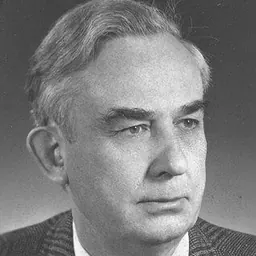
Lived 1953 – 2021 (aged 67). Muchtar Pakpahan was an Indonesian politician, journalist, trade unionist, jurist and union member.
Muchtar Pakpahan (21 December 1953 – 21 March 2021) was an Indonesian labor leader who founded the first independent trade union in Indonesia. Pakpahan was active as a lawyer at Muchtar Pakpahan & Associates Law Firm and taught at the law faculty of the Indonesian Christian University (UKI).
Early life Pakpahan was born on 21 December 1953, in Bah Jambi village, Tanah Jawa, Simalungun, as the son of Sutan Johan Pakpahan and Victoria Silalahi. His father was a farm laborer and a member of the Peasants Front of Indonesia. His father died when he was eleven years old, while his mother died when he was eighteen years old. His parents' deaths made him and his brothers and sisters orphans, and he had to work as a pedicab driver and as a paperboy during his studies in high school.
After Muchtar Pakpahan finished high school, he continued his studies at the Medical Faculty of the University of North Sumatra. However, according to Pakpahan, he decided to move into the law faculty following the Malari incident. He stated that he was inspired by activists, such as Hariman Siregar, Muslim Tampubolon, Nelson Parapat, and Sufri Helmi Tanjung, who were highly involved in the movement. He graduated from the university in 1978. He was a faculty member and law professor at Indonesia Christian University.
Career as a lawyer Following his graduation from the university, Pakpahan opened a law office in Medan. Most of his clients were relatively powerless and poor people, such as laborers and farmers. He rarely won the cases when defending them, due to the intimidation directed at him including accusations that he was a communist.
Indonesian Workers Welfare Union After working as a lawyer for several decades, Pakpahan went on to form the Indonesian Workers Welfare Union (Serikat Buruh Sejahtera Indonesia, SBSI) in May 1992. Before the establishment of the SBSI, the government-backed All Indonesian Workers Union (Serikat Pekerja Seluruh Indonesia, SPSI) was the only legal trade union at that time. However, SPSI was often criticized for its indifference to the persecution of labor workers. Pakpahan was then elected the chairman of SBSI. On 11 December of the same month, Pakpahan led an SBSI delegation to the People's Consultative Assembly and proposed several changes relating to workers' welfare and working conditions. The delegation was received by members of the People's Consultative Assembly from the Indonesian Democratic Party.
Workers strike and first arrest On 3 February 1994, Pakpahan delivered a public letter to the Minister of Labor at that time, Abdul Latief, and put forward four demands regarding labor welfare. He demanded to remove restrictions on labor unions by repealing the Minister of Labor Decree No. 1 of 1994, confirming the basic income of laborers to 173.500 rupiahs/month or 7.000 rupiahs/day, approving the existence of SBSI as a legal trade union, and that all of these demands shall be fulfilled before 1 April 1994. He also encouraged workers all over Indonesia to conduct a strike on 11 February from 08.00 to 09.00.
In response to his letter, regional military commanders all over Indonesia conducted precautions to prevent any strikes. The Diponegoro (Central Java) military commander, Major-General Soeyono, went to industrial plants to conduct dialogues with workers and laborers. The Jaya (Jakarta) military commander, Major-General Abdullah Mahmud Hendropriyono, collected data and intelligence on workers and concluded that the strike would not threaten the productivity of factories. He also doubted whether the workers would comply with Pakpahan's invitation to conduct a workers' strike. Abdul Latief himself responded to the letter, stating that SBSI is not a workers' union and that the methods of workers' strike were outdated.
Several days after the letter was published, Pakpahan and a colleague from SBSI were arrested by the Semarang police on the grounds of subversion and hate speech. He was arrested after attending an SBSI event, in which the police found folders containing posters relating to the strike. His arrest was criticized by Amnesty International, Indonesian Legal Aid Foundation, Human Rights Defenders Institute, Infight, and Women's Solidarity.
According to Kompas, Pakpahan's encouragement of workers' strikes received little interest. Although SBSI claimed that around three-quarters of a million workers joined the strike, the only workers' strike during that period occurred at the Tyfountex Factory in Solo, with 7000 workers participating. The workers demanded the rise of minimum wage from 2,500 rupiahs to 3,800 rupiahs.
Medan riots and second arrest On 16 April, Pakpahan went to Semarang. Two days after his arrival, a series of workers strikes and riots occurred all over Java and Sumatra. About ten strikes occurred at the Famoes Shoes Factory, Simoplas, Damatex and Sinar Pantja Daya, with the longest one being at the Famoes Shoes Factory for more than two days.
The most significant strike occurred in Medan, North Sumatra, on 14 April, with between 6 and 20 thousand workers from all over the province joining the strike. Initially, the strike was a peaceful one, with some of the workers even requesting permission from their bosses to join the demonstration. However, the demonstration soon turned violent after the Governor of North Sumatra, Raja Inal Siregar, only send his assistant to meet with the protesters. The riots continued for about a month and spread to other regions in the province, such as in Tanjung Morawa and Pematang Siantar. During the riots, a factory owner named Yuri Kristianto was killed after being beaten by an angry mob. A worker, named Rusli, died during the protests. Pakpahan himself oversaw the giving of compensation from the Industri Karet Deli Company—Rusli's company—to his widow. As of 22 April, an estimated 33 offices and factories, 43 cars, 4 motorcycles, 9 computers, 4 televisions, and 2 antennas were either broken or destroyed during the riots. and he was investigated for about a day since 14 June. He was tried on charges of subversion at the Medan Court on 7 November. The trial was criticized by Bill Jordan, general secretary of the International Confederation of Free Trade Unions, who stated that the trial was a "patently trumped up" and that it was a "further attempt by the Indonesian government to muzzle independent trade-union activity". His trial was observed by Guy Ryder, who was sent by International Confederation of Free Trade Unions. Muchtar was deemed guilty and was sentenced to jail for three years. His arrest was criticized by the Indonesian Legal Aid Foundation (Yayasan Lembaga Bantuan Hukum Indonesia, YLBHI), who stated that the state misused criminal codes on social political affairs.
He was detained in the Tanjung Gusta prison. About five months into his sentence, he criticized the inadequate conditions of the prison and attempted to sue the Minister of Justice. During his time in prison, he claimed to be dragged by the guards, stripped, and threatened to be killed. He also prayed for the repentance of Soeharto. He created about 25 songs and poems with themes varying from political situations at that time to religion.
Pakpahan was given parole on 20 May 1995. The Supreme Court of Indonesia on 29 September 1995 decided that Pakpahan was innocent, therefore freeing him unconditionally.
Political party After the fall of Suharto, Pakpahan founded the National Labour Party (PBN) and became its chairman. PBN took part in the 1999 legislative election, as one of three parties with strong labor union links. However, PBN won just 0.13 percent of votes and failed to qualify for a seat at the House of Representatives. The party was renamed and reconstituted for the 2004 election, becoming the Social Democratic Labour Party (PBSD). It won several seats at local legislatures, winning 0.56 percent of votes.
After another poor electoral showing in 2009, Pakpahan resigned from the party in February 2010.
Personal life
Muchtar Pakpahan's body laid out at the Gatot Subroto funeral home. Pakpahan was married to Rosintan Marpaung, a teacher from the state high school in Jakarta and the daughter of Nicolaus Marpaung, a retired policeman, and Maria Pasaribu. They were married on 17 November 1979. The marriage resulted in one girl, Ruth Damai Hati (Iyuth) in 1985, an amateur actor, and two boys, Binsar Pakpahan, a reverend, and Johannes Darta, a lawyer. Despite his religion, he wore the peci, which is typically associated with Islam. This was referenced by Fahri Hamzah, deputy speaker of the Indonesia House of Representatives at that time, during an interview. His use of peci actually originated in 1994 due to his baldness during his time in prison, which led him to wear peci as a head cover. Due to his likeness to his idol, Sukarno, when wearing a peci, he continued to wear it on many occasions for the remainder of his life.
Don’t just read it —
keep it.
Full-length biographies made to live with: read them, listen on the way to work, watch them tonight.
- E-book
- Audio
- Video
Instant download · yours to keep · every purchase keeps this site free
Important facts
People in Muchtar Pakpahan's life
Named in this biography and alive at the same time

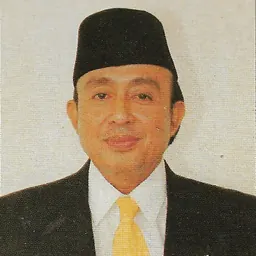


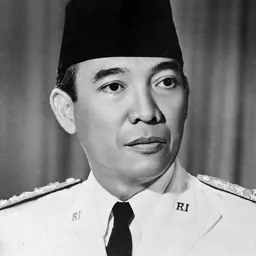



Related people
Same field, nearest in time

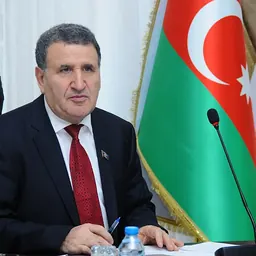



Contemporaries
People whose lives overlapped Muchtar Pakpahan's


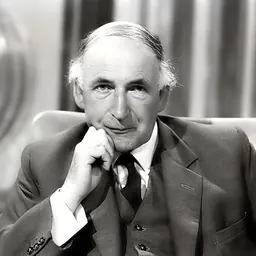

Frequently asked questions
Who was Muchtar Pakpahan?
Indonesian labor leader (1953–2021)
When was Muchtar Pakpahan born?
Muchtar Pakpahan was born on 21 December 1953 in Simalungun.
When did Muchtar Pakpahan die?
Muchtar Pakpahan died on 21 March 2021 in Jakarta.
What was Muchtar Pakpahan's occupation?
Muchtar Pakpahan was a politician, journalist, trade unionist, jurist and union member.
What nationality was Muchtar Pakpahan?
Muchtar Pakpahan was Indonesian.
Sources & further reading
Cite this page
APA: Biography.guide. (2026). Muchtar Pakpahan. https://biography.guide/muchtar-pakpahan/
MLA: "Muchtar Pakpahan." Biography.guide, https://biography.guide/muchtar-pakpahan/.
Chicago: "Muchtar Pakpahan." Biography.guide. https://biography.guide/muchtar-pakpahan/.
Data last updated: 2026-09-20 · Spot an error? Report a correction.
Page generated 2026-09-27 05:28 UTC