
About Motiur Rahman Nizami
Lived 1943 – 2016 (aged 73). Motiur Rahman Nizami was a Bangladeshi, Indian and Pakistani politician.
Motiur Rahman Nizami (; 31 March 1943 – 11 May 2016) was a Bangladeshi politician, Islamic scholar, and former ameer of Bangladesh Jamaat-e-Islami, who served as the Minister of Agriculture and Minister of Industry. He was also a member of parliament from the Pabna-1 constituency from 1991 to 1996 and again from 2001 to 2006. On 29 October 2014, he was convicted of masterminding the Demra massacre by the International Crimes Tribunal. While various political entities had originally welcomed the trials, in November 2011, Human Rights Watch criticised the government for aspects of their progress, lack of transparency, and purported harassment of defense lawyers and witnesses representing the accused. Nizami was the last high-profile suspect to be tried for war crimes of the 1971 Bangladesh genocide; the court delayed his verdict in June 2014 because of the state of his health.
In 2004, Nizami was convicted under separate charges for arms trafficking to Assam, India, and was sentenced to death, along with 13 other men, in January 2014. On 18 December 2024, the HC acquitted Nizami in the arms smuggling case filed over the sensational 10-truck arms haul in Chattogram, observing that there was nothing in the police report regarding who had smuggled the arms, from whom, and where.
On 29 October 2014, he was convicted and sentenced to death for his role in masterminding the Demra massacre, in which 800–900 unarmed Hindu civilians were killed and the rape of women. He was executed by hanging at Dhaka Central Jail on 11 May 2016. He is the third minister of Bangladesh to be hanged. He was frequently listed on The 500 Most Influential Muslims.
Early life and education Maulana Nizami was born in Pabna District on 31 March 1943. He completed his primary education in his home village of Manmathpur, and then studied at Boailmari Madrasah, Santhia. He passed the 'Dakhil' examination with first class in 1955. Afterwards he stood sixteenth at the 'Alim' (equivalent to Matriculation) examination from the then East Pakistan Madrasah Education Board in 1959. Then he passed the 'Fazil' (Honours) examination with first class in 1961. He obtained a 'Kamil' (Masters) in Fiqh (Islamic Law) degree with first class from Madrasah-e-Alia, Dhaka, in 1963,f where he secured the second place in the Education Board. He also graduated from Dhaka University (DU) in 1967. such as Ghulam Azam and Nizami, to return to Bangladesh in 1978; they revived Jamaat-e-Islami, which became the largest Islamist party in the country. Nizami emerged as a key leader of the Jamaat, organising the Islami Chhatra Shibir, which serves as the student wing of Jamaat.
In 1991, he was elected as a member of parliament, representing Jamaat-e-Islami for the constituency of Pabna-1; he was Jamaat's Parliamentary Party leader until 1994. During the June 1996 elections, he lost to the candidates of both the Bangladesh Nationalist Party (BNP), an ally of Jamaat, and the Awami League in his constituency. Professor Abu Sayed of the Awami League gained his seat.
In 1971, Nizami was a chief of the infamous Al-Badr militia. Along with the Pakistan Army, this militia abducted and massacred 989 Bengali intellectuals, including professors, journalists, litterateurs, doctors and activists in general.
Leader of Jamaat-e-Islami Nizami took over as the leader of Jamaat from Ghulam Azam in 2001. In the same year, representing his party as part of a four-party alliance including BNP, Nizami won a seat in Parliament in Pabna-1, receiving 57.68% of the votes. From 2001 to 2003, he served as the Minister of Agriculture, then as the Minister of Industry from 2003 to 2006.
Nizami was defeated in the December 2008 general election as a candidate of the Four-Party Alliance, losing his seat for Pabna-1 to Md. Shamsul Haque of the Awami League. Nizami received 45.6% of the votes. The Awami League took two-thirds of the seats in Parliament.
Controversies Allegations of corruption In May 2008, the Anti-Corruption Commission of Bangladesh indicted Nizami in the GATCO Corruption case, in which he, along with several other politicians, was alleged to have illegally granted a container-depot contract to the local firm GATCO. A warrant was issued to arrest Nizami along with 12 others on 15 May 2008. Nizami was charged with conspiring with 12 other politicians to award the contract to GATCO, although the company did not meet the conditions of the tender. The prosecution alleged that the deal with GATCO caused a total loss of more than 100 million Bangladeshi Taka to the government. Nizami denied the charges and said they were "politically motivated". He was released after two months on bail.
Blasphemy charges In a public speech on 17 March 2010, the Dhaka Jamaat chief, Rafiqul Islam, compared Nizami's life to that of the Islamic prophet Muhammad, persisting in the face of persecution. On 21 March, the Bangladesh Tariqat Federation sued Rafiqul, Nizami and other Jamaat members "for hurting Islamic sentiments of the masses by comparing Nizami with the Prophet".
Nizami, along with three other senior Jamaat leaders, was arrested on charges on 29 March 2010. He secured bail the next day and appealed for dismissal of the case on 14 February 2011. The High Court adjourned the case for four months in March 2011. His bail petition on 7 September 2011 was denied.
On 30 January 2014, Nizami and 13 co-conspirators were sentenced to death by hanging after being found guilty of smuggling arms. On 18 December 2024, the HC acquitted Nizami in the arms smuggling case filed over the sensational 10-truck arms haul in Chattogram, observing that there was nothing in the police report regarding who had smuggled the arms, from whom, and where. Nizami was the last high-profile suspect to be tried for 1971 war crimes; the court delayed his verdict in June 2014 because of the state of his health.
Death On 11 May 2016, Nizami was hanged at Old Dhaka Central Jail, just days after the nation's highest court dismissed his final appeal to overturn the death sentence for atrocities committed during the country's 1971 war for liberation. He was hanged just before midnight (18:00 GMT) after he refused to seek mercy from the President of Bangladesh. He was executed between 11:50 pm and 12:01 am midnight. He was buried at his family's home in northern Bangladesh.
Reaction Pakistan: Pakistan's foreign office said in a statement the following: "Pakistan is deeply saddened over the hanging of the emir of Jamaat-i-Islami Bangladesh, Mr Motiur Rahman Nizami, for the alleged crimes committed before December 1971. His only sin was upholding the constitution and laws of Pakistan".
Turkey: Turkey condemned the execution of Motiur Rahman Nizami and withdrew the Turkish ambassador from Bangladesh.
Don’t just read it —
keep it.
Full-length biographies made to live with: read them, listen on the way to work, watch them tonight.
- E-book
- Audio
- Video
Instant download · yours to keep · every purchase keeps this site free
Important facts
People in Motiur Rahman Nizami's life
Named in this biography and alive at the same time

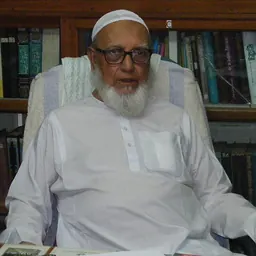
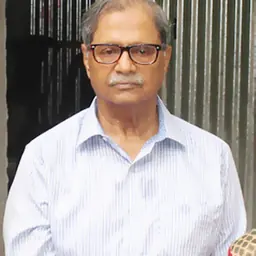


Related people
Same field, nearest in time


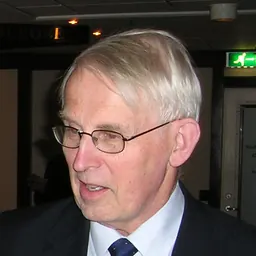
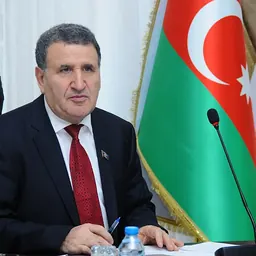

Contemporaries
People whose lives overlapped Motiur Rahman Nizami's

Frequently asked questions
Who was Motiur Rahman Nizami?
Bangladeshi politician (1943-2016)
When was Motiur Rahman Nizami born?
Motiur Rahman Nizami was born on 31 March 1943 in Santhia Upazila.
When did Motiur Rahman Nizami die?
Motiur Rahman Nizami died on 11 May 2016 in Dhaka.
What was Motiur Rahman Nizami's occupation?
Motiur Rahman Nizami was a politician.
What nationality was Motiur Rahman Nizami?
Motiur Rahman Nizami was Bangladeshi, Indian and Pakistani.
Sources & further reading
· Wikipedia: Motiur Rahman Nizami
· DBpedia: Motiur Rahman Nizami
Cite this page
APA: Biography.guide. (2026). Motiur Rahman Nizami. https://biography.guide/motiur-rahman-nizami/
MLA: "Motiur Rahman Nizami." Biography.guide, https://biography.guide/motiur-rahman-nizami/.
Chicago: "Motiur Rahman Nizami." Biography.guide. https://biography.guide/motiur-rahman-nizami/.
Data last updated: 2026-09-20 · Spot an error? Report a correction.
Page generated 2026-09-27 05:26 UTC