
Mother Mary Alphonsa
(1851-1926) Roman Catholic sister and social worker
About Mother Mary Alphonsa
Lived 1851 – 1926 (aged 75). Mother Mary Alphonsa was an American poet, writer, social worker, nun and nurse.
Rose Hawthorne Lathrop, OP, religious name Mary Alphonsa, (May 20, 1851 – July 9, 1926), was an American Dominican religious sister, writer, social worker, and founder of the Dominican Sisters of Hawthorne.
Early life and education
Rose Hawthorne was born on May 20, 1851, in Lenox, Massachusetts, to the author Nathaniel Hawthorne and his wife, the artist Sophia Peabody. Sophia's father, the physician Nathaniel Peabody, assisted in the birth. Nathaniel wrote about the baby to his friend, the US Navy officer Horatio Bridge, comparing her birth to the publication of a book: "Mrs. Hawthorne published a little work, two months ago, which still lies in sheets; but, I assure you, it makes some noise in the world, both by day and night. In plain English, we have another little red-headed daughter—a very bright, strong, and healthy imp, but, at present, with no pretentions to beauty." In July 1851, Sophia took Rose and her older sister, Una, to visit relatives in West Newton, Massachusetts. That same year, the Hawthorne family moved to Concord, Massachusetts, Nathaniel's former home. When Rose turned three, her father was named as the American consul in Liverpool, England. During this time in Europe, the family made several trips to Rome, along with visits to London, Florence and the German states. Rose was very impressed at seeing Pope Pius IX speak from the balcony of his apartment in Vatican City.
The Hawthorne family returned to Concord in 1860. Rose was very closed to her father and shared his sadness at the plight of the poor. Her mother told Rose once It is not what you want to do for the sick poor, but what they want to do or have you do that matters. And you must never make them feel that there is anything distressing to you in their appearance or actions. Two years after Nathaniel's death in 1864, Sophia enrolled Rose at a boarding school run by the physician Diocletian Lewis in Lexington, Massachusetts; she disliked the experience and did not remain there very long. Dealing with a loss of income from Nathaniel's death, Sophia took the children to Dresden in the Kingdom of Saxony (present-day Germany) in 1865 complete their education. While in Dresden, the family met the future poet George Parsons Lathrop, the son of a doctor from New York City. The start of the Franco-Prussian War in 1870 forced the Hawthorne and Lathrop families to move to London.
In early 1879, the couple purchased her family's former home in Concord, The Wayside, with borrowed funds. In 1881, Francis died of diphtheria at age five. Soon after his death, they returned to New York. Lazarus died from cancer in 1887. In 1883, Julian planned to publish Dr. Grimshawe's Secret, allegedly a manuscript left unfinished by their father. However, Hawthorne suspected Julian of forgery or perpetrating a hoax.
New York was not good for Lathop's health, so they built a new house in New London, Connecticut, in 1887. One of Rose's closest friends was the poet Emma Lazarus, whom she had befriended in 1881. Lazarus died of cancer in 1887, her suffering having a great affect on his friend. While in New London, Hawthorne and Lathrop met the businessman Alfred Hebard Chappell, who had recently converted to Catholicism. He had many discussions with the couple about his conversion. During this time period, Lathrop had become an alcohol abuser and was dealing with depression. Una had suspected that he abused her sister years before. Lathrop competed with Julian for control of Nathaniel Hawthorne's legacy. She published a book of poems, Along the Shore, in 1888.
They collaborated on a book, A Story of Courage: A History of the Georgetown Visitation Convent, a Catholic monastery in Washington D.C. During this period, the couple started reading Catholic writings such as Cardinal James Gibbons’ The Faith of Our Fathers (1876), Thomas John Capel’s The Faith of Catholics and Cardinal Nicholas Wiseman's Lectures on the principal doctrines and practices of the Catholic Church (1836). Hawthorne and Lathrop converted to Roman Catholicism in 1891, the ceremony being held at St. Paul the Apostle Church in Manhattan. Though "To many of their old friends this conversion came as a shock", her decision to convert had been years in the making. Their travels through England, Portugal, France and Italy [had] exposed the Hawthornes to the 'Roman Church,' often misunderstood in the Protestant circles of New England … Hawthorne would write of her experience at the age of seven of seeing Pope Pius IX during Holy Week from his balcony: "I became eloquent about the Pope, and was rewarded by a gift from my mother of a little medallion of him and a gold scudo with an excellent likeness thereon, both always tenderly reverenced by me." Hawthorne and Lathrop were involved in the establishment of the Catholic Summer School of America project, located in New London and Plattsburgh, New York. Attendees had the benefits of university-level courses on Catholicism in resort settings.
Nursing cancer patients
At this stage in her life, Hawthorne sought greater purpose. She spent time with the Sisters of Charity of Saint Vincent de Paul in Wellesley Hills, Massachusetts, becoming inspired by their motto, "I am for God and for the poor." Hawthorne recalled that her friend Lazarus had received nursing care while she was dying, unlike other cancer sufferers who were poor. Hawthorne later wrote, "Though I grieved deeply for her [Lazarus], I would not pity her, for she never knew unaided suffering, but every amelioration."
In the summer of 1896, at age 45, Hawthorne trained for three months as a nurse at the New York Cancer Hospital. Today this is Memorial Sloan Kettering Cancer Center. This was the first hospital in the United States to provide training in treating cancer. At that time, the general hospitals in New York City would not admit patients with cancer, which then had a very high death rate.
In October 1896, Hawthorne rented a three-room apartment in a tenement on Grant Street on the Lower East Side of Manhattan, a poor immigrant neighborhood. Cancer patients, both men and women, would come to the apartment for Hawthorne to change dressings on leg ulcers. She also visited them at their homes, with the help of her assistant, Alice Huber. They also help the sick pay rent and cooked food and did housework for women suffering from tuberculosis. During this period, she also published a biography of her father, Memories of Hawthorne. After receiving donations from some wealthy individuals, Hawthorne with more helpers opened St. Rose's Free Home for Incurable Cancer on Cherry Street in Manhattan, a larger facility for female cancer patients. It was placed under the patronage of Rose of Lima. After the American entry into World War I in 1917, the sisters struggled with decreased donations and increased costs; Hawthorne battled a serious illness during this period.
By 1922, the sisters had received large donations from people across the country. A new building was erected at Rosary Hill. Hawthorne had speaking engagements throughout the region. In June 2026, she began planning for another building at Rosary Hill, She was buried at the motherhouse at Rosary Hill.
Hawthorne received a medal from the National Institute of Social Sciences for notable achievement in 1914 In 1925, she was awarded an honorary Master of Arts degree from Bowdoin College in Brunswick, Maine. As of 2026, Rosary Hill Home is still a hospice for cancer patients, operated by the Dominican Sisters of Hawthorne.
Veneration The Rose Hawthorne Guild was established in 2003 to promote her beatification. That same year, Cardinal Edward Egan, archbishop of New York, approved the cause for Hawthorne's beatification. On March 14, 2024, Pope Francis declared her Venerable, the final step before beatification.
Publications Miss Dilletante, 1878 Along the Shore, 1888 A Story of Courage: A History of the Georgetown Visitation Convent Memories of Hawthorne
Don’t just read it —
keep it.
Full-length biographies made to live with: read them, listen on the way to work, watch them tonight.
- E-book
- Audio
- Video
Instant download · yours to keep · every purchase keeps this site free
Important facts
People in Mother Mary Alphonsa's life
Named in this biography and alive at the same time


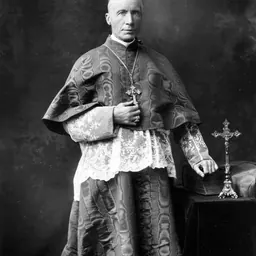
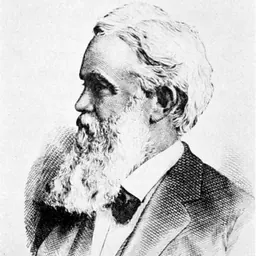
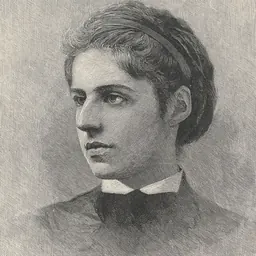

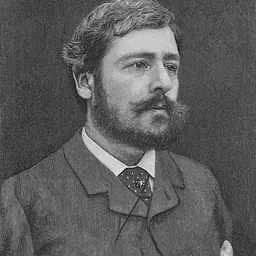
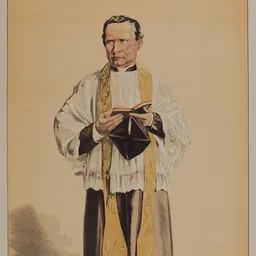
Related people
Same field, nearest in time
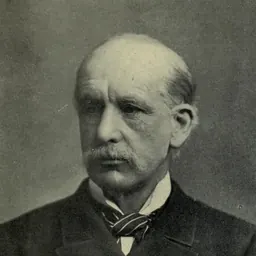

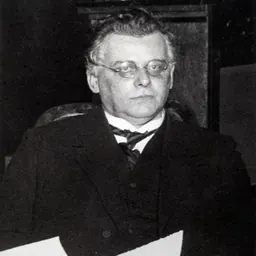
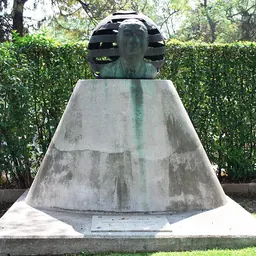
Contemporaries
People whose lives overlapped Mother Mary Alphonsa's



Frequently asked questions
Who was Mother Mary Alphonsa?
(1851-1926) Roman Catholic sister and social worker
When was Mother Mary Alphonsa born?
Mother Mary Alphonsa was born on 20 May 1851 in Lenox.
When did Mother Mary Alphonsa die?
Mother Mary Alphonsa died on 9 July 1926 in New York City.
What was Mother Mary Alphonsa's occupation?
Mother Mary Alphonsa was a poet, writer, social worker, nun and nurse.
What nationality was Mother Mary Alphonsa?
Mother Mary Alphonsa was American.
Sources & further reading
· Wikipedia: Mother Mary Alphonsa
· DBpedia: Rose Hawthorne Lathrop
Cite this page
APA: Biography.guide. (2026). Mother Mary Alphonsa. https://biography.guide/mother-mary-alphonsa/
MLA: "Mother Mary Alphonsa." Biography.guide, https://biography.guide/mother-mary-alphonsa/.
Chicago: "Mother Mary Alphonsa." Biography.guide. https://biography.guide/mother-mary-alphonsa/.
Data last updated: 2026-09-20 · Spot an error? Report a correction.
Page generated 2026-09-27 05:21 UTC