
About Moshe Safdie
Born 1938. Moshe Safdie is a Canadian, Israeli and American architect, urban planner, author and university teacher.
Moshe Safdie (; born July 14, 1938) is an architect, urban planner, educator, and author. He is well known for incorporating principles of socially responsible design throughout his six-decade career. Safdie is most identified with designing Marina Bay Sands and Jewel Changi Airport, both in Singapore, as well as his debut project, Habitat 67 in Montreal, which was originally conceived as his thesis at McGill University. His projects include cultural, educational, and civic institutions such as neighbourhoods and public parks, housing, mixed-use urban centers, and airports. He has also designed master plans for existing communities and entirely new cities in the Americas, the Middle East, and Asia. He is a citizen of Canada, Israel, and the United States.
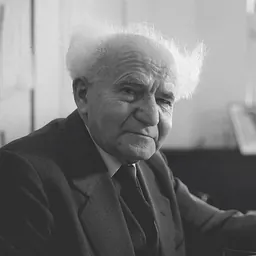
Early life and education Safdie was born in the city of Haifa, Mandatory Palestine, to a family of Syrian Jews. His father was from Aleppo, and his mother, whose family had its origins in Aleppo, was from Manchester. He studied at the Hebrew Reali School in Haifa. He was nine years old when the Israeli Declaration of Independence was issued by David Ben-Gurion. where he tended goats and kept bees. In 1953, the Israeli government restricted imports in response to an economic and currency crisis, severely affecting Safdie's father's textile business. Consequently, when Safdie was 15, his family emigrated from Israel to Canada and settled in Montreal, where he attended Westmount High School.
In September 1955, Safdie registered for the six-year architectural degree program at the McGill University Faculty of Engineering. In his fifth year, Safdie was named University Scholar. The following summer, he was awarded the Canada Mortgage and Housing Corporation (CMHC) scholarship. He traveled across North America to observe housing developments in the continent's major cities. He received his degree in 1961.
Career In 1964, Safdie established Safdie Architects in Montreal to undertake work on Habitat 67, an adaptation of his thesis at McGill University. Habitat 67 was selected by Canada as a central feature of Expo 67. The project launched the design and implementation of three-dimensional, prefabricated units for living. Safdie designed the complex as a neighborhood with open spaces, garden terraces, and many other amenities typically reserved for the single-family home and adapted to a high-density urban environment.
In 1970, Safdie established a branch office of his practice in Jerusalem. He worked on the restoration of the Old City and the construction of Mamilla Mall, linking old and new cities. Other significant works in Israel include the New City of Modi’in, the Yad Vashem Holocaust History Museum, Yitzhak Rabin Center for Israel Studies, Ben Gurion International Airport, National Campus for the Archeology of Israel, multiple projects for Hebrew Union College, and others. During this period, Safdie also worked with leaders in Senegal and Iran.
Later, Safdie received commissions for public buildings in Canada: the National Gallery of Canada, the Quebec Museum of Civilization, and Vancouver Library Square. Other notable cultural works include the Khalsa Heritage Memorial Complex, the national museum of the Sikh people in Punjab, India; the United States Institute of Peace Headquarters on the Mall in Washington, DC; the Kauffman Center for the Performing Arts in Kansas City, Missouri; and the Crystal Bridges Museum of American Art in Bentonville, Arkansas.
Safdie has worked on projects in emerging markets, and brought projects to completion in shorter periods, at larger scales. Safdie and his team have used sky bridges and multi-level connectivity in other projects to make skyscrapers more accessible.
Practice Today, Safdie Architects is headquartered in Somerville, Massachusetts, near Harvard University, with additional offices in Jerusalem, Toronto, Shanghai, and Singapore. The business is organized as a partnership.
Safdie formed a research program within his office to pursue the advanced investigation of design topics. The practice-oriented fellowship explores speculative ideas outside normal business practice constraints. Fellows work independently with Safdie and firm principals to formulate specific proposals and research plans. The salaried position is in-residence, with full access to project teams and outside consultants. Past fellowships include Habitat of the Future, Mobility on Demand, and Tall Buildings in the city.
In December 2023, Safdie Architects announced it was suspending its involvement in controversial hotel development in Jerusalem's Armenian quarter, citing "controversy surrounding the land lease agreement". This followed an attack by some 30 armed masked individuals on Armenian community members holding a vigil at the site. The Armenian Patriarchate in Jerusalem accused Danny Rothman, Safdie Architects' client for the project, of organizing the attack.
Academia In 1978, after teaching at McGill, Ben Gurion, and Yale universities, Safdie was appointed Director of the Urban Design Program at Harvard University's Graduate School of Design (GSD) and moved to Boston, Massachusetts. He served as Director until 1984. From 1984 to 1989, he was the Ian Woodner Professor of Architecture and Urban Design at Harvard. Safdie continues to work closely with the GSD, frequently teaching design studio; Notably, Rethinking the Humanist High-Rise (2019) and Rethinking Hudson Yards (2017).
Personal life In 1959, Safdie married Nina Nusynowicz, a Polish-Israeli Holocaust survivor. Safdie and Nusynowicz have two children, a daughter and a son. Both were born during the inception and erection of Habitat 67. Just before its opening, Safdie and his young family moved into the development. Safdie and Nusynowicz divorced in 1981. His daughter Taal is an architect in San Diego, a partner of the firm Safdie Rabines Architects; His son Oren is a playwright who has written several plays about architecture. Safdie's great-nephews are independent filmmakers, Josh and Benny.
In 1981, Safdie married Michal Ronnen, a Jerusalem-born photographer and daughter of artist Vera Ronnen. Safdie and Ronnen have two daughters, Carmelle and Yasmin. Carmelle is an artist, and Yasmin is a social worker.
Recognition 2026: American Academy of Achievement, 2025: President's Design Award for the Surbana Jurong Campus 2020: Genius Award, Liberty Science Center 2024: Surbana Jurong Campus, Singapore Safdie. Mulgrave, Victoria: Images Publishing Group, 2014. Reaching for the Sky: The Marina Bay Sands Singapore. Singapore: ORO Editions, 2013. Peace Building: The Mission, Work, and Architecture of the United States Institute of Peace. Dalton, MA: The Studley Press, 2011. Valentin, Nilda, ed. Moshe Safdie. Rome: Edizione Kappa, 2010. Moshe Safdie I. Mulgrave, Victoria: Images Publishing Group, 2009. Moshe Safdie II. Mulgrave, Victoria: Images Publishing Group, 2009. Global Citizen: The Architecture of Moshe Safdie. New York:Scala Publishers, Ltd., 2007. Yad Vashem: Moshe Safdie – The Architecture of Memory. Baden, Switzerland: Lars Müller Publishers, 2006. Moshe Safdie, Museum Architecture 1971–1988. Tel Aviv: Genia Schreiber University Art Gallery, Tel Aviv University, 1998. Kohn, Wendy, ed. Moshe Safdie. London: Academy Editions, 1996. Moshe Safdie: Buildings and Projects, 1967–1992. Montreal: McGill-Queens University Press, 1996. Rybczynski, Witold. A Place for Art: The Architecture of the National Gallery of Canada. Ottawa: National Gallery of Canada, 1993. Montreal Museum of Fine Arts: Jean-Noël Desmarais Pavilion. Montreal: Montreal Museum of Arts, 1991.
Gallery
Don’t just read it —
keep it.
Full-length biographies made to live with: read them, listen on the way to work, watch them tonight.
- E-book
- Audio
- Video
Instant download · yours to keep · every purchase keeps this site free
Important facts
People in Moshe Safdie's life
Named in this biography and alive at the same time







Related people
Same field, nearest in time




Contemporaries
People whose lives overlapped Moshe Safdie's



Frequently asked questions
Who is Moshe Safdie?
Israeli-Canadian architect (born 1938)
When was Moshe Safdie born?
Moshe Safdie was born on 14 July 1938 in Haifa.
What is Moshe Safdie's occupation?
Moshe Safdie is an architect, urban planner, author and university teacher.
What nationality is Moshe Safdie?
Moshe Safdie is Canadian, Israeli and American.
Sources & further reading
Cite this page
APA: Biography.guide. (2026). Moshe Safdie. https://biography.guide/moshe-safdie/
MLA: "Moshe Safdie." Biography.guide, https://biography.guide/moshe-safdie/.
Chicago: "Moshe Safdie." Biography.guide. https://biography.guide/moshe-safdie/.
Data last updated: 2026-09-20 · Spot an error? Report a correction.
Page generated 2026-09-27 05:25 UTC