
About Mosco Carner
Lived 1904 – 1985 (aged 80). Mosco Carner was an Austrian conductor, musicologist, music critic and conducting, known for Alban Berg and Giacomo Puccini.
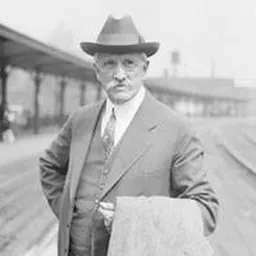
Mosco Carner (born Mosco Cohen) (15 November 1904 – 3 August 1985) was an Austrian-born British musicologist, conductor and critic. He wrote on a wide range of music subjects, but was particularly known for his studies on the life and works of the composers Giacomo Puccini and Alban Berg.
Biography Born in Vienna to Rudolf and Selma Cohen, Carner was educated at the Vienna Conservatory and at the University of Vienna, where he studied musicology under Guido Adler. He received his doctorate there in 1928, with a dissertation on the sonata form in the works of Robert Schumann. He then worked as an opera conductor in Opava (now in the Czech Republic) from 1929 to 1930 and in the Free City of Danzig from 1930 to 1933. In 1933, he settled in London (using a tourist visa to get there) where he was to live for the rest of his life. In London, he initially worked as a guest conductor for the Royal Philharmonic Orchestra, BBC Symphony Orchestra, and London Symphony Orchestra and as a free-lance music correspondent for several continental European papers. For a brief period in 1948 he was guest conductor with the Radio Éireann Symphony Orchestra. He went on to become the music critic for the British magazine Time and Tide (1949–1962) and the London Evening News (1957 to 1961). He was also a frequent contributor to The Times and the Daily Telegraph. In the 1950s he wrote a music column for ArtReview, then titled Art News and Review.
Like many émigré musicians at the time, Carner was interned as an 'enemy alien' in 1939. But a year later he became a naturalised British subject, and in 1944 married the composer and pianist Helen Lucas Pyke (1905–1954). In the 1940s he also began publishing scholarly articles and monographs, most notably Volume 2 of A Study of Twentieth-Century Harmony in 1944 (Volume 1 was written by René Lenormand). In 1958, he published one of his most important works, Puccini: a Critical Biography. The book was dedicated to the memory of his wife, Helen, who had died four years before. Translated into several languages, and published in multiple editions (the last revised edition was published posthumously in 1992), it was described by Stanley Sadie in the 2001 edition of The New Grove Dictionary of Music and Musicians as having "long stood as the most important book on Puccini in English."
Mosco Carner died of a heart attack at the age of 80 while on vacation in Stratton, Cornwall. He was survived by his second wife, Hazel Carner (née Sebag-Montefiore), whom he had married in 1976. Hazel Carner wrote the preface to and helped prepare the third edition of Puccini: a Critical Biography which contains the revisions and additions that Carner had left at the time of his death.
Selected bibliography Dvořák in Biographies of Great Musicians series, Novello, n.d. "The Church Music" in Antonin Dvořák: his Achievement, V. Fischl (ed.), Lindsay Drummond, 1942 A Study of Twentieth-Century Harmony, Vol. 2, Joseph Williams, 1944 Of Men and Music (collection of essays), Joseph Williams, 1944 The Waltz (Vol. 5 of The World of Music), Parrish, 1948 "Béla Bartók" in The Concerto, Ralph Hill (ed.), Pelican Press, 1952 "Béla Bartók" in Chamber Music, A. Robertson (ed.), The White Friars Press. 1957 Puccini: a Critical Biography, Gerald Duckworth, 1958; second edition, Holmes & Meier, 1974; third edition, Holmes & Meier, 1992 "The Mass from Rossini to Dvořák c.1835–1900" in Choral Music, A. Jacobs (ed.), Pelican Press, 1963 "The Church Music", in Anton Dvořák: His Achievement, Viktol Fischl (ed.), Greenwood (1970) "Music in the Mainland of Europe: 1918–1939" in New Oxford History of Music, Martin Cooper (ed.), Oxford University Press, 1974 Letters of Giacomo Puccini (as editor), Harrap, 1974 Alban Berg: the Man and his Work, Gerald Duckworth, 1975 Major and Minor, Gerald Duckworth, 1980 Hugo Wolf Songs, BBC Music Guides, 1982 Giacomo Puccini: Tosca, Cambridge University Press, 1985
Notes and references
Don’t just read it —
keep it.
Full-length biographies made to live with: read them, listen on the way to work, watch them tonight.
- E-book
- Audio
- Video
Instant download · yours to keep · every purchase keeps this site free
Important facts
People in Mosco Carner's life
Named in this biography and alive at the same time

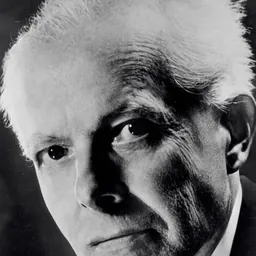




Related people
Same field, nearest in time

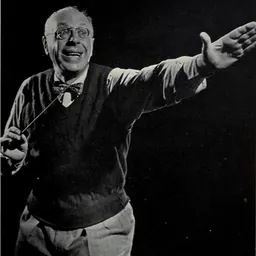

Contemporaries
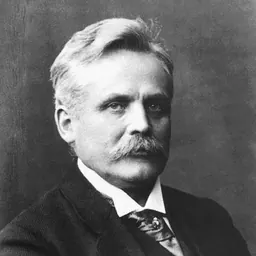
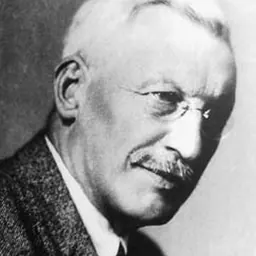
People whose lives overlapped Mosco Carner's

Frequently asked questions
Who was Mosco Carner?
Austrian musicologist
When was Mosco Carner born?
Mosco Carner was born on 15 November 1904 in Vienna.
When did Mosco Carner die?
Mosco Carner died on 3 August 1985 in Stratton, London.
What was Mosco Carner's occupation?
Mosco Carner was a conductor, musicologist, music critic and conducting.
What was Mosco Carner known for?
Mosco Carner was known for Alban Berg and Giacomo Puccini.
What nationality was Mosco Carner?
Mosco Carner was Austrian.
Sources & further reading
Cite this page
APA: Biography.guide. (2026). Mosco Carner. https://biography.guide/mosco-carner/
MLA: "Mosco Carner." Biography.guide, https://biography.guide/mosco-carner/.
Chicago: "Mosco Carner." Biography.guide. https://biography.guide/mosco-carner/.
Data last updated: 2026-09-22 · Spot an error? Report a correction.
Page generated 2026-09-27 05:33 UTC