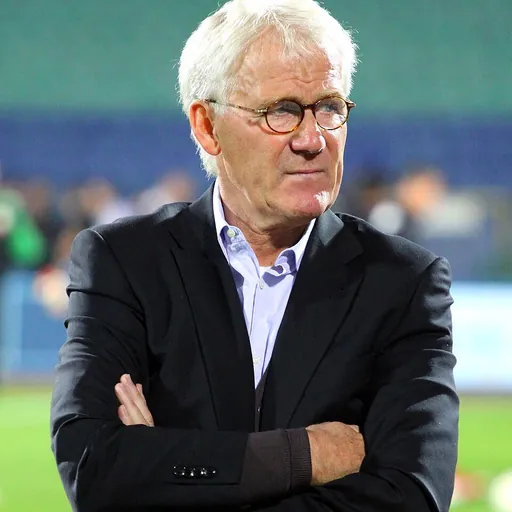
Morten Olsen
Danish footballer
About Morten Olsen
Born 1949. Morten Olsen is a Danish association football player, association football national coach, association football coach and athlete.
Morten Per Olsen (; born 14 August 1949) is a Danish former football manager and former player. He was the head coach of the Denmark national team for 15 years from 2000 until 2015, guiding Denmark to the 2002 FIFA World Cup, 2004 European Championship, 2010 FIFA World Cup and 2012 European Championship. He has also managed Brøndby to two Danish Superliga championships and Ajax to the Double of the 1998 Eredivisie championship and Dutch Cup trophy. He is one of only two persons ever in football, alongside Didier Deschamps, to achieve 100 national matches for his country both as player as well as coach.
In his active career, Olsen started as a striker but did not make a mark until he at age thirty moved back and played defensive midfielder and libero. He played professionally in Belgium and Germany, and won the 1983 UEFA Cup and three Belgian First Division championships with Anderlecht. Olsen played a total 102 matches and scored four goals for the Danish national team from 1970 to 1989, and was named 1983 and 1986 Danish Player of the Year. He captained the Danish national team in 50 games during the 1980s, and represented Denmark at the 1984 European Championship, 1986 FIFA World Cup, and 1988 European Championship. Towards the end of his active career, Olsen was characterized as the most important player in the history of Danish football. He started his career playing as a right winger. At B 1901, Olsen was moved from right winger to central midfielder, in order to accommodate another right winger in the squad. In Olsen's first year with the club, Cercle Brugge finished in eleventh place in the 1972–73 Belgian First Division and went on to establish itself in the mid-table. While at Brugge, Olsen was used as a multi-purpose player, playing every position except from goalkeeper. His time at Molenbeek featured even better league results, and consistent finishes in the top third of the league.
In 1980, Olsen moved to 16-time Belgian champions Anderlecht, During most of 1982, Olsen suffered from a severe shin injury, which prompted Anderlecht manager Tomislav Ivic to move him back from the midfield into the libero position.
Olsen was a part of the Anderlecht team which beat Portuguese team Porto and Spanish team Valencia, among others, to reach the final game of the international 1982–83 UEFA Cup tournament. Anderlecht faced Portuguese team Benfica in the final, and won 2–1 on aggregate score. Olsen was subsequently named 1983 Danish Player of the Year. Anderlecht also reached the 1983–84 UEFA Cup final against Tottenham Hotspur from England. Olsen scored a goal in the first leg, but missed his shot in the deciding penalty shoot-out which Tottenham won.
Aged 36 years old, Olsen left Anderlecht following the 1986 World Cup. He helped Köln reach third and second-place finishes in the 1987–88 and 1988–89 Bundesliga seasons respectively. Olsen played 80 games and scored two goals for Köln in the Bundesliga, before retiring from his active career in June 1989, 39 years of age. but eventually settled as a defensive midfielder. For Olsen's 53rd national team game in April 1983, the Germany national team manager of Denmark, Sepp Piontek, named Olsen permanent national team captain, as Olsen replaced the retiring Per Røntved as both libero and team captain. Olsen played as an attacking libero, and had defensive midfielder Jens Jørn Bertelsen cover for him when he was on the attack. Olsen, alongside defender Søren Busk, persuaded Piontek to implement the aggressive off-side trap they practiced at Anderlecht.
Olsen captained the Danish team that qualified for the 1984 European Championship; Denmark's first international tournament participation since the 1972 Olympics. Denmark reached the semi-finals, before being eliminated by Spain in a penalty shootout. He captained Denmark at the 1988 European Championship, which ended in the preliminary group stage. Morten Olsen ended his international career following the 1988 European Championship, having played 99 national team games, but was called up again 10 months later. Olsen became the first Dane to play 100 games for the national team in April 1989, before ending his national team career in June 1989. His team captain record was broken by Lars Olsen in 1992, while his game tally was bested by Peter Schmeichel in 1998. In his entire international career, Morten Olsen only got one yellow card. central midfielder, and libero. In his youth, Olsen's strengths were his acceleration, agility, and play intelligence and he played as a winger. In his first senior years, Olsen played all positions except goalkeeper, maturing him into a versatile team-player. He eventually found his place as a central midfielder. Though initially filling the role of playmaker rather than a ball-winning tackler, Olsen eventually excelled as a defensive midfielder possessing great determination, dedicated professionalism, and organisational skills. He gradually took on a strong leadership role, a trait he worked hard to develop. Olsen employed a wide variety of skills for a defensive player, including attacking surges and technical dribbling, taking advantage of his acceleration and vision of the game. He was a consummate professional, known as a gentleman of the game. and guided the club to two Danish championships. He put the team through tough fitness training which, even though it disgruntled some players, elevated the team into European top class, as Brøndby reached the semi-final of the 1990–91 UEFA Cup with Olsen at the helm. With the notable exception of Nigerian international defender Uche Okechukwu, his dabblings in the transfer market were not equally successful. This caused anger among the amateur department of the club, whose youth scheme they felt Olsen overlooked. As the club faced financial hardship and results began to lack in 1992, Olsen was fired from the club in May.
In April 1993, In his time in Germany, he would become a certified coach, earning his "Fußball-Lehrer-Lizenz" diploma in 1993. For two seasons, he had the club positioned somewhat safely from relegation, despite not having any especially good players. At the start of the 1995–96 season, Köln were eliminated in the DFB-Pokal by an amateur team from Beckum, and Olsen was fired in August 1995. He attracted Danish national team captain Michael Laudrup to the club, and together they won the Double of the Eredivisie championship and Dutch Cup trophy, as well as reaching the quarter-finals in the UEFA Cup. In his second year at the club, tension arose in the Ajax dressing room, as Dutch internationals Ronald de Boer and Frank de Boer boycotted training in order to leave the club in favour of Barcelona. As results began to suffer, Olsen was sacked in December 1998.
Olsen as national team manager, attending the 2011 European Under-21 Championship. Assistant manager Peter Bonde is to his left. In the fall of 1999, Olsen signed a two-year contract with the Danish Football Association (DBU) to manage the Danish national team, effective after Denmark's participation at the 2000 European Championship. In July 2000, he replaced Swedish coach Bo Johansson as the manager of the Denmark national football team. As his assistant coach, Olsen chose Michael Laudrup. The duo guided Denmark to qualification for the 2002 FIFA World Cup tournament, a campaign which ended in the round of 16 match against England in a 0–3 defeat after Denmark won the initial stage group. Prior to the 2002 World Cup, Olsen signed a new four-year contract until June 2006. A part of the new deal, which ran until and including the 2010 FIFA World Cup, was the added responsibility of defining a "red thread", or common denominator, in the talent work of the Danish national youth teams, thus giving Olsen a large influence on the future football being played by Denmark. Olsen did not qualify Denmark for the 2008 European Championship, and in August 2008 Olsen stated that he planned to let his contract expire in 2010, in order to return to coaching on club level. On 10 October 2009 he coached his 100th match as national team coach, as Denmark won 1–0 against Sweden and qualified for the 2010 FIFA World Cup. In January 2010, Olsen extended his contract until and including the 2012 European Championship. Denmark failed to qualify for the 2014 World Cup in Brazil. "Many of us are disappointed that we didn't make it through this time after making the finals in the past two competitions," Olsen said in the press release. On 17 March 2015, Olsen stated that he would step down when his contract with Denmark ends, after the Euro, in 2016. However, his contract was mutually terminated immediately after the Danish national team failed to qualify for Euro 2016, beaten by Sweden 4–3 on aggregate on 17 November 2015. With 15 years of tenure, Morten Olsen is the longest-serving manager of Denmark.
Personal life Morten Olsen has been married to his Belgian wife and lived in Beersel near Brussels. In addition to Danish he speaks also Dutch, German, French and English.
Career statistics
International
Scores and results list Denmark's goal tally first, score column indicates score after each Olsen goal.
Manager
Honours
Player Anderlecht Belgian First Division: 1980–81, 1984–85, 1985–86 Belgian Supercup: 1985 UEFA Cup: 1982–83; runner-up 1983–84 Jules Pappaert Cup: 1983, 1985 Bruges Matins: 1985
Individual Danish Football Player of the Year: 1983, 1986 UEFA Euro Team of the Tournament: 1984 Man of the Season (Belgian First Division): 1980–81, 1984–85 World XI: 1984, 1985, 1986 Danish Football Hall of Fame
Manager Brøndby Danish 1st Division / Danish Superliga: 1990, 1991
Ajax Eredivisie: 1997–98 KNVB Cup: 1997–98
Don’t just read it —
keep it.
Full-length biographies made to live with: read them, listen on the way to work, watch them tonight.
- E-book
- Audio
- Video
Instant download · yours to keep · every purchase keeps this site free
Important facts
People in Morten Olsen's life
Named in this biography and alive at the same time

Related people
Same field, nearest in time
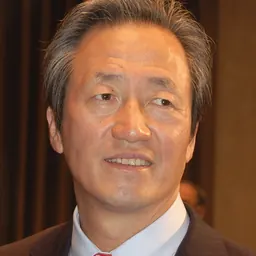
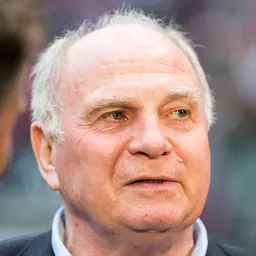
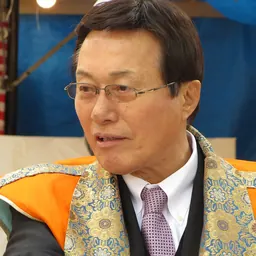

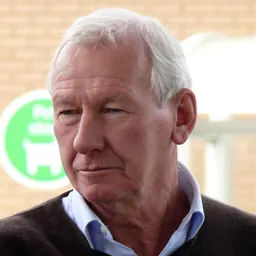
Contemporaries
People whose lives overlapped Morten Olsen's
Frequently asked questions
Who is Morten Olsen?
Danish footballer
When was Morten Olsen born?
Morten Olsen was born on 14 August 1949 in Vordingborg.
What is Morten Olsen's occupation?
Morten Olsen is an association football player, association football national coach, association football coach and athlete.
What nationality is Morten Olsen?
Morten Olsen is Danish.
Sources & further reading
Cite this page
APA: Biography.guide. (2026). Morten Olsen. https://biography.guide/morten-olsen-association-football-player-1949/
MLA: "Morten Olsen." Biography.guide, https://biography.guide/morten-olsen-association-football-player-1949/.
Chicago: "Morten Olsen." Biography.guide. https://biography.guide/morten-olsen-association-football-player-1949/.
Data last updated: 2026-09-30 · Spot an error? Report a correction.
Portrait: Wikimedia Commons · author & licence
Page generated 2026-10-05 02:48 UTC