
Mort Garson
Canadian-born composer, arranger, songwriter, and pioneer of electronic music
About Mort Garson
Lived 1924 – 2008 (aged 83). Mort Garson was an American composer, songwriter, session musician, music arranger, conductor and arrangement.
Morton Sanford Garson (20 July 1924 – 4 January 2008) was a Canadian composer, arranger, songwriter, and pioneer of electronic music. He is best known for his albums in the 1960s and 1970s, such as Mother Earth's Plantasia. He also co-wrote several hit songs, including "Our Day Will Come", a hit for Ruby & the Romantics. According to Allmusic, Mort Garson boasts one of the most distinctive and outright bizarre resumés in popular music, spanning from easy listening to occult-influenced space-age electronic pop. He later moved to New York City where he studied music at the Juilliard School of Music. He worked as a pianist and arranger before being called into the Army near the end of World War II.
Early career After leaving the forces he became an active session musician, with an ability to carry out any or all of the musical chores on any given session: composer, arranger, orchestrator, conductor, and pianist as required. In 1957, he co-wrote Brenda Lee's minor hit "Dynamite" with Tom Glazer, and he also co-wrote Cliff Richard's 1961 UK hit "Theme for a Dream". In 1963, with lyricist Bob Hilliard, he wrote one of the great lounge hits of the 1960s, "Our Day Will Come", a hit for Ruby & The Romantics.
Garson spent the mid-1960s on a rapid succession of accompaniment and arrangement jobs: two Doris Day albums (Doris Day's Sentimental Journey and Latin for Lovers), Mel Tormé's Right Now! album of contemporary covers like "Secret Agent Man," and Glenn Yarborough's highly successful cover of Rod McKuen songs, The Lonely Things. He also arranged for the Lettermen on Capitol Records, provided background to Laurence Harvey reading poetry on Atlantic Records, and provided arrangements for Esther Phillips, Julie London, Nancy Wilson, Chris Montez, Leslie Uggams, Joanie Sommers, Paul Revere and the Raiders, and many others. He was a favorite of producers when the job involved soft pop vocal groups and string ensembles, and was responsible for a wide variety of easy listening records, including Bossa Nova for All Ages by the Continentals, Symphony for the Soul by the Total Eclipse, and Sea Drift by the Dusk 'Til Dawn Orchestra. In 1967, he arranged and produced Bill Withers' early single "Three Nights and a Morning". He arranged The Sandpipers' 1966 hit "Guantanamera", and co-wrote its B-side "What Makes You Dream, Pretty Girl?" with lyricist Jacques Wilson, with whom he worked on later projects.
Later career In 1967, Garson met Robert Moog at a music engineers' convention, and became one of the first arrangers and composers to work with the early Moog synthesizer; In 1968, he was responsible for the string arrangements on Glen Campbell's international hit "By the Time I Get to Phoenix," Despite its extremely limited distribution, the album became a cult hit in the late 2010s when it was circulated online. Plantasia 's popularity was boosted by its sampling in Pharcyde's track "Guestlist", from the 2000 album "Plain Rap".
In 2018, independent reissue label Rubellan Remasters licensed and released on CD for the first time Garson's two occult-themed albums, remastered from original studio tapes. In 2019 and 2020, a further set of Garson albums, including Plantasia, which is now seen as his best-known album, and a set of previously unreleased recordings, Music from Patch Cord Productions, were issued both on CD and vinyl by Sacred Bones.
Films, television and theatre work Garson also worked in television and film, scoring a wide variety of music for many different movies and TV shows, from Beware! The Blob! to Kentucky Fried Movie to National Geographic specials, although it is Elmer Bernstein who is credited with composing the well-known National Geographic orchestral theme that first appeared in on the magazine's TV specials in 1966.
Garson's music was used as incidental music during the television transmissions of the Apollo 11 crewed Moon landing by Neil Armstrong and Buzz Aldrin in 1969. He said:
In 2002, Garson composed the score for When Garbo Talks! a musical with book and lyrics by Buddy Kaye that had its world premiere 15 October 2010 at the Long Beach Performing Arts Center, International City Theatre.
Garson was closely associated with Heatter-Quigley Productions, creating the theme songs and music cues for the following TV game shows: Amateur's Guide to Love Gambit Runaround Baffle The Magnificent Marble Machine Battlestars The music for the first five featured Garson playing synthesizers, but the Battlestars package used more conventional marching band orchestration.
Death Garson died of renal failure in San Francisco in 2008, at the age of 83.
In popular culture A sample from Garson's "Planetary Motivations (Cancer)" was incorporated into DJ Shadow's 1996 song "Building Steam with a Grain of Salt," from the album Endtroducing...... In the 1994 Peter Lynch short film Arrowhead, Ray Bud (played by Don McKellar) manipulates a dead fish while singing Mort Garson's closing theme of the 1970s Canadian nature program Untamed World. The song "Plantasia" from the album Mother Earth's Plantasia is used in the documentary Lil Bub & Friendz and in the German TV show Böhmi brutzelt with Jan Böhmermann. It was also included in an advertisement for Intuit TurboTax in the United States.
"Deja Vu" was used as the main theme for most of "Balance", the first arc of the Maximum Fun podcast The Adventure Zone, with "The Unexplained," "Astral Projection," "Cabala," "Wind Dance," "Tarot," and "Music to Soothe the Savage Snake Plant" also being used later on the series as an alternate theme and as background music, respectively, along with a cover version of "Plantasia," arranged by Griffin McElroy. The song was also sampled on Kid Cudi’s 2016 song "Baptized in Fire", from his album Passion, Pain & Demon Slayin', which also features Travis Scott. Canadian-American indie pop artist Curtis Waters has cited Mother Earth's Plantasia as an influence on his own work.
Discography Studio albums
Posthumous releases
Mini-albums
Singles and EPs
Don’t just read it —
keep it.
Full-length biographies made to live with: read them, listen on the way to work, watch them tonight.
- E-book
- Audio
- Video
Instant download · yours to keep · every purchase keeps this site free
Important facts
People in Mort Garson's life
Named in this biography and alive at the same time


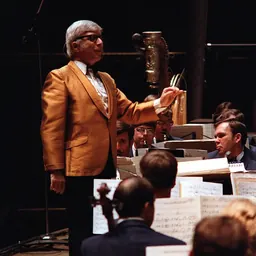

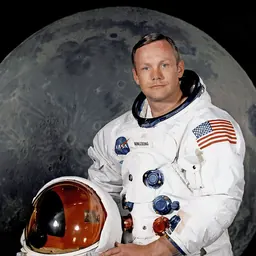

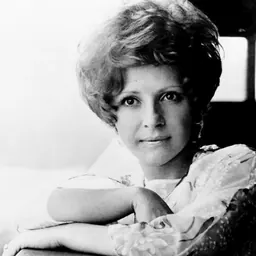

Related people
Same field, nearest in time
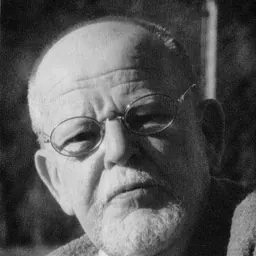


Contemporaries
People whose lives overlapped Mort Garson's




Frequently asked questions
Who was Mort Garson?
Canadian-born composer, arranger, songwriter, and pioneer of electronic music (1924-2008)
When was Mort Garson born?
Mort Garson was born on 20 July 1924 in Saint John.
When did Mort Garson die?
Mort Garson died on 4 January 2008 in San Francisco.
What was Mort Garson's occupation?
Mort Garson was a composer, songwriter, session musician, music arranger, conductor and arrangement.
What nationality was Mort Garson?
Mort Garson was American.
Sources & further reading
Cite this page
APA: Biography.guide. (2026). Mort Garson. https://biography.guide/mort-garson/
MLA: "Mort Garson." Biography.guide, https://biography.guide/mort-garson/.
Chicago: "Mort Garson." Biography.guide. https://biography.guide/mort-garson/.
Data last updated: 2026-09-20 · Spot an error? Report a correction.
Page generated 2026-09-27 05:19 UTC