
About Morris Ernst
Lived 1888 – 1976 (aged 87). Morris Ernst was an American lawyer and jurist, known for Civil liberties in the United States.
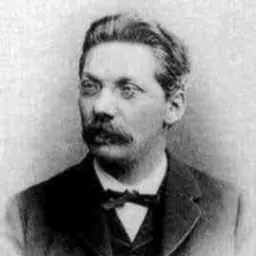
Morris Leopold Ernst (August 23, 1888 – May 21, 1976) was an American lawyer and prominent attorney for the American Civil Liberties Union (ACLU). In public life, he defended and asserted the rights of Americans to privacy and freedom from censorship, playing a significant role in challenging and overcoming the banning of certain works of literature (including James Joyce's Ulysses and Radclyffe Hall's The Well of Loneliness) and in asserting the right of media employees to organize labor unions. He also promoted an anti-communist stance within the ACLU itself, and was a member of the President's Committee on Civil Rights.
Background
Morris Leopold Ernst was born in Uniontown, Alabama, on August 23, 1888, into a Jewish family. His father, Carl Ernst, had been born in Plzeň, Bohemia (in what is now the Czech Republic), and had worked as a peddler and shopkeeper; while his mother, Sarah Bernheim, was the daughter of German immigrants and had graduated from Hunter College. The family moved to New York when Morris was two, and lived in several locations in Manhattan where Carl ran a general store.
In 1937, as attorney for the American Newspaper Guild, he argued successfully in the Supreme Court that it should uphold the constitutionality of the National Labor Relations Act (the Wagner Act) as applied to the press. The case established the right of media employees to organize labor unions.
Personal life In 1912, he married Susan Leerburger, with whom he had a son (who died in infancy) and a daughter. Susan died in 1922. Ernst married Margaret Samuels in 1923, and together they had a son and a daughter. Margaret died in 1964. Ernst kept a summer home on Nantucket, Massachusetts, and enjoyed sailing small boats. He died at home in New York City on May 21, 1976. He was survived by his son, both daughters, and five grandchildren.
Published works Authored
Ernst, Morris L., If I Were a (Constitutional) Dictator (January 13, 1932) Hold your tongue!: Adventures in Libel and Slander (1932) America's Primer (1931) The Ultimate Power (1937) Too Big (1940) Foreword to Ulysses (1942) The Best is Yet: Reflections of an Irrepressible Man (1945) The First Freedom (1946) So Far, So Good (1948) Report on the American Communist (1952) Touch Wood: A Year's Diary (1960) Untitled: The Diary of my 72nd Year (1962) The Pandect of C.L.D. (1965) The teacher, (editor, 1967) The Comparative International Almanac (1967) A Love Affair with the Law (1968) Utopia 1976 (1969) The Great Reversals: Tales of the Supreme Court (1973)
Co-author or contributor
with William Seagle, To the Pure: A Study of Obscenity And the Censor (1928) with Pare Lorentz, Censored: The Private Life of the Movies (1930) with Alexander Lindey Hold Your Tongue!: Adventures in Libel and Slander (1932) contributor to Sex in the Arts (1932) contributor to The Sex Life of the Unmarried Adult (1934) with Alexander Lindey The Censor Marches On: Recent Milestones in the Administration of the Obscenity Law in the United States (1940) with David Loth American Sexual Behavior and the Kinsey Report (1948) with David Loth The People Know Best: The Ballot vs. the Poll (Washington: Public Affairs Press, 1949) Introduction to This Deception, The Story of a Woman Agent, by Hede Massing (1951) with David Loth, For Better Or Worse: New Approach to Marriage & Divorce (1952) with Alexander Lindy, Hold Your Tongue! The Layman's Guide to Libel and Slander (1950) with David Loth, Report on the American Communist (1952, 1962) with Alan Schwartz Privacy: The Right to be Let Alone (1962) with Alan Schwartz Censorship: The Search for the Obscene (1964) with David Loth How High Is Up?: Modern Law for Modern Man (1964) with Alan Schwarz Lawyers and What They Do (1965) with Eleanora B. Black Triple Cross Tricks (1968) with Malcolm A. Hoffmann Back and Forth: An Occasional, Casual Communication (1969) with David Loth The Taming of Technology (1972) contributor to Newsbreak (1974)
Don’t just read it —
keep it.
Full-length biographies made to live with: read them, listen on the way to work, watch them tonight.
- E-book
- Audio
- Video
Instant download · yours to keep · every purchase keeps this site free
Important facts
People in Morris Ernst's life
Named in this biography and alive at the same time
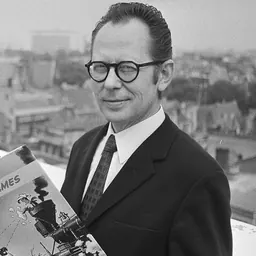

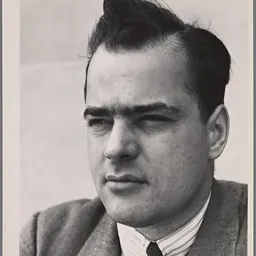

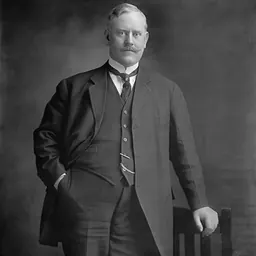


Related people
Same field, nearest in time
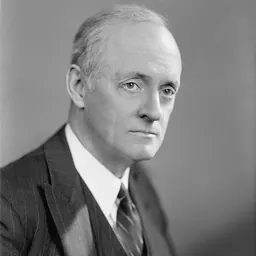
Contemporaries
People whose lives overlapped Morris Ernst's




Frequently asked questions
Who was Morris Ernst?
American attorney (1888–1976)
When was Morris Ernst born?
Morris Ernst was born on 23 August 1888 in Uniontown.
When did Morris Ernst die?
Morris Ernst died on 21 May 1976 in New York City.
What was Morris Ernst's occupation?
Morris Ernst was a lawyer and jurist.
What was Morris Ernst known for?
Morris Ernst was known for Civil liberties in the United States.
What nationality was Morris Ernst?
Morris Ernst was American.
Sources & further reading
Cite this page
APA: Biography.guide. (2026). Morris Ernst. https://biography.guide/morris-ernst/
MLA: "Morris Ernst." Biography.guide, https://biography.guide/morris-ernst/.
Chicago: "Morris Ernst." Biography.guide. https://biography.guide/morris-ernst/.
Data last updated: 2026-09-25 · Spot an error? Report a correction.
Page generated 2026-09-27 05:12 UTC