
About Monte Pearson
Lived 1908 – 1978 (aged 69). Monte Pearson was an American baseball player.
Montgomery Marcellus Pearson (September 2, 1908 – January 27, 1978) was an American professional baseball pitcher who played ten seasons in Major League Baseball (MLB). Nicknamed "Hoot", he played for the Cleveland Indians, New York Yankees and Cincinnati Reds from 1932 to 1941. He batted and threw right-handed and served primarily as a starting pitcher.
Pearson played minor league baseball for three different teams until 1932, when he signed with the Cleveland Indians. After spending four seasons with the organization, Pearson was traded to the New York Yankees, where he spent the next five years. At the conclusion of the 1940 season, he was traded to the Cincinnati Reds, with whom he played his last game on August 5, 1941. A four-time World Series champion, Pearson holds the MLB record for lowest walks plus hits per inning pitched (WHIP) in the postseason. He is noted for pitching the first no-hitter at the original Yankee Stadium.
Early life Pearson was born on September 2, 1908, in Oakland, California. and was one of the first Mormons to find success in the major leagues. He later moved to Fresno, California and studied at Fresno High School, where he started playing baseball at catcher and third base and was a letterman in four sports. After graduating, he attended college at the University of California, Berkeley, where he played two seasons of baseball for the California Golden Bears from 1928 to 1929. He worked as a mechanic as one of his first jobs, and his ability to sing and play the guitar helped develop his reputation as a positive influence on the clubhouse throughout his major league career.
Professional career
Minor leagues Pearson began his professional baseball career in 1929 with the Bakersfield Bees, a Minor League Baseball team that were members of the California State League. He was signed by the Oakland Oaks of the Pacific Coast League the following year, and was optioned to the Arizona State League's Phoenix Senators after recording a 5.77 earned run average (ERA) in 24 games pitched. However, he established himself in the Oaks' pitching rotation in 1931 and compiled a 17–16 win–loss record and a 4.46 ERA in 234 innings pitched. His subsequent games were disappointing and, after compiling a 10.13 ERA in 8 innings from 8 games pitched, His pitching during the first half of the season prompted the Indians to bring him back up to the first team in early July.
Pearson followed up his impressive 1933 season with another strong showing in . That year, he finished second in the AL in games started (33), fifth in strikeouts (140) and complete games (19) and sixth in wins (18). this was considered one of his best seasons.
New York Yankees (1936–1940) Pearson's trade to the New York Yankees was initially unpopular among fans, with Joe McCarthy receiving heavy criticism for dealing Allen—who had a 13–6 record in 1935 —for Pearson. However, Pearson repaid his manager's faith in him by churning out the best statistical year in his career. His .731 winning percentage (19–7 record) was third best in the AL; he finished fifth in ERA (3.71) and strikeouts (118) and sixth in wins, though he also recorded the third-highest number of walks in the AL with 135. In the postseason, the Yankees advanced to the World Series, where they defeated the New York Giants 4–2. In Game 4, Pearson—who insisted on being included in the rotation even after falling ill with pleurisy just before the Series —limited the Giants to just two runs while striking out seven in a complete game win. Offensively, he managed to get two hits, including a double. The 5–2 victory ended Carl Hubbell's streak of 17 consecutive regular and postseason wins. |group=lower-alpha
During spring training of , Pearson injured his right ankle after accidentally stepping onto a rolling ball. He was still able recover in time for the start the season and pitched solidly. In arguably his best start of the year, he threw a one-hit shutout against the Chicago White Sox on May 10; he also recorded three hits and drove in two runs in the 7–0 win. However, other health problems —began to affect him, limiting his season to just innings pitched in 20 games started and 2 games finished in relief. taking a commanding 3–0 lead in the Series. The Yankees eventually triumphed in 5 games, giving Pearson his second World Series ring in as many years with the team. By not giving up any home runs in the game, he halted the Tigers' quest of breaking the MLB record for most consecutive games with a home run for a team. The highlight of his season came on August 27, when he pitched a no-hitter against the Cleveland Indians in the second game of a doubleheader. Facing his former team on only two days of rest, Pearson struck out seven, allowed just two baserunners through walks and retired the last 18 consecutive batters in a 13–0 victory, marking his 13th win of the season and 10th consecutive win. This was the first Yankee no-hitter in fifteen years (pitched by Sad Sam Jones), as well as first no-hitter at Yankee Stadium. In October, Pearson suffered from a dead arm. Doctors advised him to undergo surgery after X-rays revealed a spur on his elbow. Up against the Chicago Cubs, he kept them to two runs (one earned) while striking out nine in a complete game, 5–2 win. The Yankees completed their Series sweep over the Cubs in the next game, giving them their third straight championship.
During the 1938–39 offseason, Pearson became a contract holdout after he rejected the Yankees' initial offer. Reportedly the same amount he had earned the season before ($10,000), Pearson's sublime pitching performance is considered one of the greatest in World Series history; with a game score of 90, it is one of only eight Fall Classic starts to record a game score of 90 or above. The Yankees proceeded to sweep the Reds two games later, resulting in their fourth consecutive championship and giving Pearson the distinction of winning a World Series ring in every season of his Yankees tenure. About a week after the game, on July 17, he tore his shoulder ligament which prematurely shortened his playing career. —ended his season; he finished with a 7–5 record and 3.69 ERA in only innings pitched and 16 games started. and at the end of the season, he was placed on waivers However, Reds manager Bill McKechnie made the gamble, remarking how Pearson "showed [the Reds] more that day than any National League right-hander showed [them] that season" However, he was unable to rediscover his pre-injury form; in his first start for the Reds, Pearson was battered by the opposing team, giving up six earned runs and five walks to the Chicago Cubs before being pulled out of the game after only innings. In a total of 7 games pitched–4 starts and 3 games finished—for the Reds, he pitched poorly, posting a 1–3 record with a 5.18 ERA in just innings pitched.
Pearson's sojourn in the minor leagues was brief, lasting just one game. In his only start for the Stars, he pitched a complete game, giving up six hits and three walks in five innings. One son, Larry, was signed by the Washington Senators in . Pearson remarried to Nellie. Pearson, who escaped uninjured, described the incident as "the thrill of [his] life." In 1942, during a leave of absence away from baseball to recover from injury, Pearson worked at the Fresno Air National Guard Base as a firefighter. After his Major League career ended, he planned on switching to a career in boxing, but returned to Fresno State College and graduated with a degree in chemistry. He became the chief sanitarian of Madera County. He unsuccessfully ran for a seat on the Fresno County Board of Supervisors in 1952.
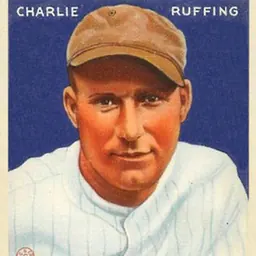
On May 15, 1962, Pearson was arrested and charged with accepting bribes in exchange for approving shoddy septic tanks. After a long battle with cancer, Pearson died on January 27, 1978 in Fowler, California. He was 69 years old and cremated. He won all four of his World Series starts, finishing with a 4–0 win–loss record. Opposing batters hit only .151 (19-126) against him. Together with teammate Red Ruffing, they held a combined 8–1 record and a 1.79 ERA spanning from the 1936–39 World Series, and the two are viewed as one of the most dominant postseason pitching duos of all time.
Pearson appeared on the Baseball Hall of Fame ballot in 1958. He received just one vote—0.4% of the vote—and was not included on any subsequent ballots. He was inducted into the Fresno Athletic Hall of Fame in 1967.
Pearson was a better than average hitting pitcher in his 10-year major league career, compiling a .228 batting average (117-for-513) with 58 runs, 24 doubles, 2 home runs, 62 runs batted in (RBIs) and 39 base on balls. For the 1939 Yankees, he hit .321 (17-for-53), his best year for average. He had 10 RBIs for the Indians in 1934 and 20 RBIs in 1936 for the Yankees. In the post-season, in 4 World Series games, he batted .250 (3-for-12) with a run scored.
Don’t just read it —
keep it.
Full-length biographies made to live with: read them, listen on the way to work, watch them tonight.
- E-book
- Audio
- Video
Instant download · yours to keep · every purchase keeps this site free
Important facts
People in Monte Pearson's life
Named in this biography and alive at the same time



Related people
Same field, nearest in time
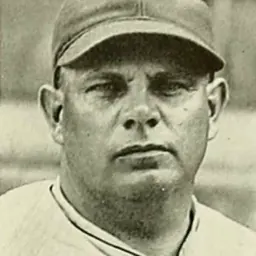
Contemporaries
People whose lives overlapped Monte Pearson's


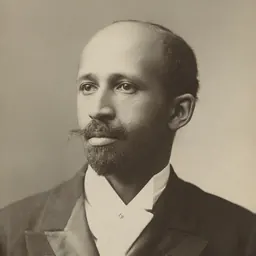

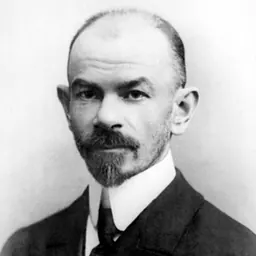
Frequently asked questions
Who was Monte Pearson?
American baseball player
When was Monte Pearson born?
Monte Pearson was born on 2 September 1908 in Oakland.
When did Monte Pearson die?
Monte Pearson died on 27 January 1978 in Fresno.
What was Monte Pearson's occupation?
Monte Pearson was a baseball player.
What nationality was Monte Pearson?
Monte Pearson was American.
Sources & further reading
Cite this page
APA: Biography.guide. (2026). Monte Pearson. https://biography.guide/monte-pearson/
MLA: "Monte Pearson." Biography.guide, https://biography.guide/monte-pearson/.
Chicago: "Monte Pearson." Biography.guide. https://biography.guide/monte-pearson/.
Data last updated: 2026-09-20 · Spot an error? Report a correction.
Page generated 2026-09-27 05:20 UTC