
About Montague James Mathew
Lived 1773 – 1819 (aged 45). Montague James Mathew was a British politician.
Lieutenant-General Montague James Mathew (18 August 1773 – 19 March 1819) was a British Army officer and politician who was a member of the Irish House of Commons for Ballynakill until 1800 and of the House of Commons of the United Kingdom for County Tipperary from 1806 until his death in 1819. In politics, he was both a Whig and a supporter of Catholic emancipation and other Roman Catholic causes, which brought him into conflict with many members of his class in Ireland.
Life Mathew was the second son of Francis Mathew, 1st Earl Landaff. He was commissioned into the British Army as a cornet in 1792, became a lieutenant in 1793, and on 13 September 1794 was promoted lieutenant-colonel in the 114th Foot, a new regiment raised that year by his father. He was further promoted colonel in 1800, major general on 25 April 1808, and lieutenant general on 4 June 1813.
From 1797 to 1800, Mathew was a member of the Irish House of Commons for Ballynakill in what was then Queen's County, succeeding Eyre Coote.
In 1806, Mathew was proposed as a member of Dublin's Kildare Street Club but was blackballed by no fewer than eighty-five members, so was rejected. His brother Francis Mathew, 2nd Earl Landaff, denounced the "eighty-five scoundrels", who he claimed had all promised him they would give his brother their support, and stalked out of the club, never to return.
Mathew was first elected as a Member of the House of Commons of the United Kingdom for County Tipperary in November 1806, succeeding his brother Francis when he became an Irish representative peer in the House of Lords, and held the seat until his death in 1819. In politics, he was a Whig. On 22 January 1808, the Tory Sir Arthur Wellesley, Chief Secretary for Ireland, wrote to the Duke of Richmond: Quote|The Parlt. met yesterday... a drunken speech from Sheridan towards morning, and a blackguard one from Montague Mathew, who, with the figure of an Irish giant and the voice of a stentor, charged Perceval with treason to 5 millions of Irish Catholics & me with corruption at the Tipperary election....
In 1809, the magazine Select reviews reported that
On 6 June 1811 Mathew was appointed Colonel of the 99th Foot.
Mathew never married. He died suddenly, and intestate, at Castle Fogerty, Thurles, County Tipperary, on 19 March 1819. He was buried at his ancestral home, Thomastown in the parish of Kilfeacle. Of his death it was later recorded that he was "one of the last of the four-bottle men in the county", and that he had died at dinner.
A distant relation noted in 1890:
Don’t just read it —
keep it.
Full-length biographies made to live with: read them, listen on the way to work, watch them tonight.
- E-book
- Audio
- Video
Instant download · yours to keep · every purchase keeps this site free
Important facts
People in Montague James Mathew's life
Named in this biography and alive at the same time
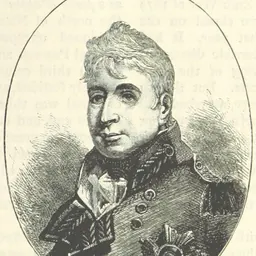
Related people
Same field, nearest in time

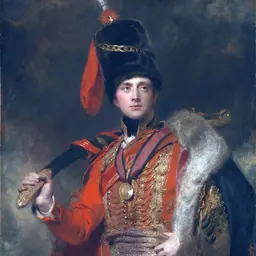

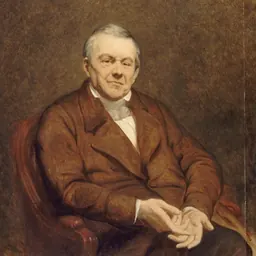

Contemporaries
People whose lives overlapped Montague James Mathew's



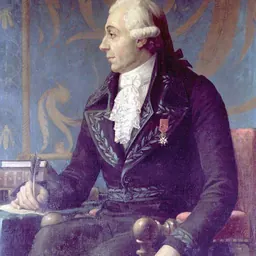
Frequently asked questions
Who was Montague James Mathew?
British Army general (1773-1819)
When was Montague James Mathew born?
Montague James Mathew was born on 18 August 1773 in County Tipperary.
When did Montague James Mathew die?
Montague James Mathew died on 19 March 1819 in Thurles.
What was Montague James Mathew's occupation?
Montague James Mathew was a politician.
What nationality was Montague James Mathew?
Montague James Mathew was British.
Sources & further reading
· Wikipedia: Montague James Mathew
· DBpedia: Montague James Mathew
Cite this page
APA: Biography.guide. (2026). Montague James Mathew. https://biography.guide/montague-james-mathew/
MLA: "Montague James Mathew." Biography.guide, https://biography.guide/montague-james-mathew/.
Chicago: "Montague James Mathew." Biography.guide. https://biography.guide/montague-james-mathew/.
Data last updated: 2026-09-20 · Spot an error? Report a correction.
Page generated 2026-09-27 05:30 UTC