
Monique Skidmore
Australian medical and political anthropologist
About Monique Skidmore
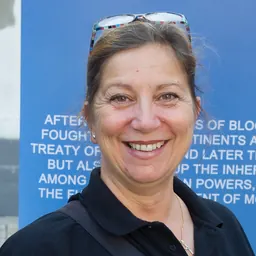
Born 1968. Monique Skidmore is an anthropologist and university teacher.
Monique Maree Skidmore (born 11 May 1968) is an Australian medical and political anthropologist of Myanmar. She has served as a deputy vice-chancellor at the University of Queensland (2014-2016) and the University of Tasmania (2016-2018).
Biography Skidmore was born in Canberra, Australia and went on to earn a Bachelor of Arts and Bachelor of Science from the Australian National University and a Master of Arts and PhD in anthropology from McGill University, Canada.
Skidmore's work in anthropology began in Cambodia and combined religious, political and medical anthropology, exploring the psychological strategies Cambodians used to survive in the aftermath of the Khmer Rouge genocide. This work was awarded the international H.B.M. Murphy Prize in Medical Anthropology.
Skidmore moved to Montreal to pursue graduate studies in Southeast Asia and also studied the Burmese language at the University of Wisconsin. She received the Wenner Gren Foundation funding for doctoral fieldwork in Myanmar and in 1996 was given the first unrestricted fieldwork research visa for Burma (Myanmar) since the advent of military dictatorship in 1988.
Skidmore's work revealed the depths of fear, repression and self-censorship Burmese people suffered under successive Burmese military regimes and meticulously documents the many survival strategies used to remain hopeful for the future when terror and fear threaten to overwhelm the population. Karaoke Fascism: Burma and the Politics of Fear was published by University of Pennsylvania Press (a shorter article appeared in American Ethnologist ), a book-length expose of living under a repression of fear in contemporary Myanmar.
Skidmore's work in Burma covered diverse cultural, medical, political, and religious aspects of everyday life at a time when the world was largely excluded from entering Myanmar and when foreigners were heavily restricted in their interactions with Burmese people and places. Skidmore worked and lived in peri-urban slums in Mandalay and Rangoon (Yangon) as well as the Yangon Psychiatric Hospital, Yangon Drug Rehabilitation Hospital, and the Yangon Traditional Medicine Clinic. Much of this work centred on the cultural beliefs and practices as well as structural inequalities and state repression that impact the psychological and psychiatric health of women and children.
Academic career Skidmore began academic life as a tenured lecturer at the University of Melbourne and then as a senior postdoctoral research fellow in the Joan B. Kroc Institute for International Peacekeeping Studies at the University of Notre Dame. After winning several Australia Research Council Grants, Skidmore returned to Australia to work as a research and Associate Dean Research at the Australian National University. It was here that she developed an interest in the relevance of public anthropology to her ongoing interest in contemporary conflicts.
Skidmore went on to hold executive leadership positions in Australian universities including Dean and Pro Vice-Chancellor International at the University of Canberra from 2008, Deputy Vice-Chancellor International and Vice-President of the University of Queensland from 2014, and Deputy Vice-Chancellor Global and Vice-President of the University of Tasmania in 2016. In 2021 she became a Research Professor in the Alfred Deakin Institute for Citizenship and Globalisation, Deakin University and a Board Member and the Director of the Australia Myanmar Institute.
Publications Ware, Anthony; Skidmore, Monique (2023). After the Coup: Myanmar's Political and Humanitarian Crises. Canberra: Asia Pacific Press: Australian National University E Press. ISBN 9781760466138
Don’t just read it —
keep it.
Full-length biographies made to live with: read them, listen on the way to work, watch them tonight.
- E-book
- Audio
- Video
Instant download · yours to keep · every purchase keeps this site free
Important facts
Related people
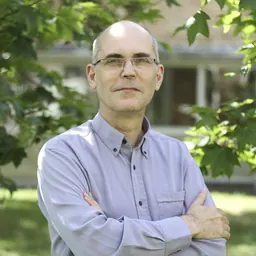
Same field, nearest in time



Contemporaries
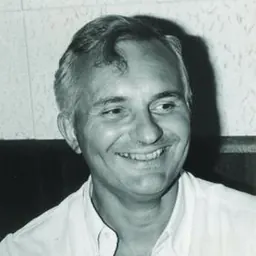
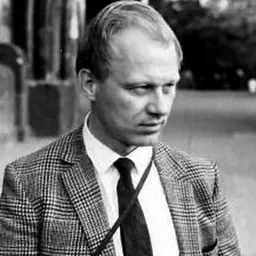
People whose lives overlapped Monique Skidmore's




Frequently asked questions
Who is Monique Skidmore?
Australian medical and political anthropologist
When was Monique Skidmore born?
Monique Skidmore was born on 11 May 1968.
What is Monique Skidmore's occupation?
Monique Skidmore is an anthropologist and university teacher.
Sources & further reading
Cite this page
APA: Biography.guide. (2026). Monique Skidmore. https://biography.guide/monique-skidmore/
MLA: "Monique Skidmore." Biography.guide, https://biography.guide/monique-skidmore/.
Chicago: "Monique Skidmore." Biography.guide. https://biography.guide/monique-skidmore/.
Data last updated: 2026-09-20 · Spot an error? Report a correction.
Page generated 2026-09-27 05:32 UTC