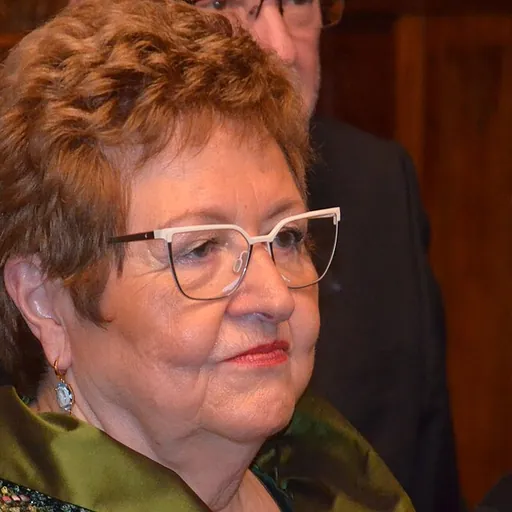
About Monika Wulf-Mathies
Born 1942. Monika Wulf-Mathies is a German politician and trade unionist.
Monika Wulf-Mathies (born 17 March 1942) is a German politician, who was European Commissioner for Regional Policy.
Early life Wulf-Mathies was born in the rural town of Wernigerode in 1942 after her family was evacuated from wartime Hamburg.
Career In 1971, at the age of 29, Wulf-Mathies joined the then German Chancellor Willy Brandt’s office in Bonn. In the government of Chancellor Helmut Schmidt, she later led the Federal Chancellery’s department of social affairs.
In 1976, Wulf-Mathies left the chancellor’s office to join the managing board of the public service trade union ÖTV. Four years later, and to many observers’ surprise, she was elected as the first woman ever to lead one of Germany's most powerful unions, succeeding Heinz Kluncker. In this capacity, she also served as president of Public Services International (PSI) from 1989 until 1995.
In 1994, Wulf-Mathies was – again unexpectedly – appointed as one of Germany's two European Commissioners by Chancellor Helmut Kohl; she succeeded Peter Schmidhuber. From 1994 until 1998, she served as European Commissioner for Regional Policy in the administration of President Jacques Santer.
After leaving the European Commission, Wulf-Mathies served as Executive Vice President Head of Corporate Public Policy and Sustainability at Deutsche Post from 2001 until 2009, working under the leadership of the company's CEO Klaus Zumwinkel. From 2009 until 2011 she worked as policy advisor to the Board of Management, this time under Frank Appel.
In 2018, Wulf-Mathies was appointed by intendant Tom Buhrow to lead an internal investigation into allegations of sexual harassment at German public broadcaster Westdeutscher Rundfunk (WDR).
Other activities Leibniz Association, Member of the Senate (since 2010) Beethoven Foundation, Chairwoman of the Board of Trustees (since 2004) Friedrich Ebert Foundation (FES), Member of the Board of Trustees Gegen Vergessen – Für Demokratie, Member of the Advisory Board University of Bonn, Deputy Chairwoman of the University Council (2008-2013) Deutsche Lufthansa, Member of the Supervisory Board (1978-1995) European Movement Germany, Honorary President
Controversy When Home Affairs Minister Friedrich Zimmermann published memoirs in which he described trying to dampen her negotiating ardour by putting his hand on her knee, Wulf-Mathies demanded and obtained a retraction of the offending work from circulation.
Don’t just read it —
keep it.
Full-length biographies made to live with: read them, listen on the way to work, watch them tonight.
- E-book
- Audio
- Video
Instant download · yours to keep · every purchase keeps this site free
Important facts
People in Monika Wulf-Mathies's life
Named in this biography and alive at the same time



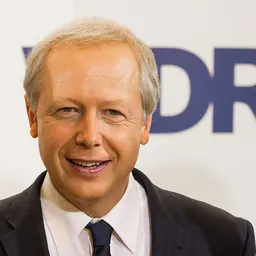
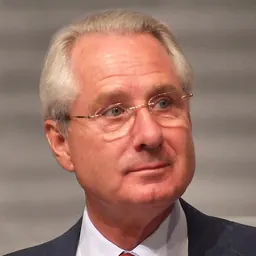
Related people
Same field, nearest in time
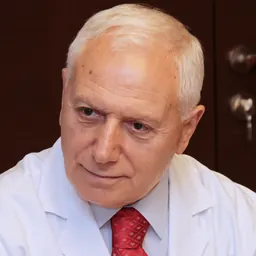

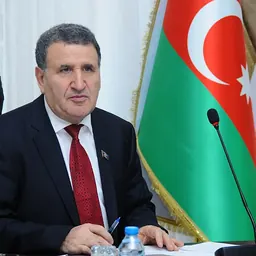

Contemporaries
People whose lives overlapped Monika Wulf-Mathies's


Frequently asked questions
Who is Monika Wulf-Mathies?
German politician
When was Monika Wulf-Mathies born?
Monika Wulf-Mathies was born on 17 March 1942 in Wernigerode.
What is Monika Wulf-Mathies's occupation?
Monika Wulf-Mathies is a politician and trade unionist.
What nationality is Monika Wulf-Mathies?
Monika Wulf-Mathies is German.
Sources & further reading
· Wikipedia: Monika Wulf-Mathies
· DBpedia: Monika Wulf-Mathies
Cite this page
APA: Biography.guide. (2026). Monika Wulf-Mathies. https://biography.guide/monika-wulf-mathies/
MLA: "Monika Wulf-Mathies." Biography.guide, https://biography.guide/monika-wulf-mathies/.
Chicago: "Monika Wulf-Mathies." Biography.guide. https://biography.guide/monika-wulf-mathies/.
Data last updated: 2026-09-22 · Spot an error? Report a correction.
Portrait: Wikimedia Commons · author & licence
Page generated 2026-09-27 05:02 UTC