
About Molara Ogundipe
Lived 1940 – 2019 (aged 78). Molara Ogundipe was a Nigerian academic, activist and writer.
Omolara Ogundipe-Leslie (27 December 1940 – 18 June 2019), also known as Molara Ogundipe and Omolara Leslie, was a Nigerian poet, critic, editor, feminist, and activist. Considered one of the foremost writers on African feminism, gender studies and literary theory, she was a social critic who came to be recognized as a viable authority on African women among black feminists and feminists in general. She contributed the piece "Not Spinning on the Axis of Maleness" to the 1984 anthology Sisterhood Is Global: The International Women's Movement Anthology, edited by Robin Morgan. She is most celebrated for coining the term STIWA, or Social Transformation in Africa Including Women.
Life Abiodun Omolara Ogundipe was born in Lagos, Nigeria, to a family of educators and clergy. Her mother was a Teachers' College professor who taught English and Math. Her father was an educator and missionary who followed the teachings of Emmanuel Swedenborg, and raised his family as Swedenborgians. She attended Swedenborg Memorial School for her primary school education. The school had a radical curriculum that included African history and compulsory education in the local language until the fourth year of primary school. She later earned a doctorate in Narratology (the theory of narrative) from Leiden University. She taught English Studies, Writing, Comparative Literature, and Gender from the perspectives of cultural studies and development at universities in several continents. She was also a Professor of English and Comparative Literature at the University of Port Harcourt, Rivers State, Nigeria. She was married to Mr. Leslie, a Jamaican-born scholar and mathematician who hailed from a Garveyite family; they later divorced. She had two daughters. . She had a powerful and deeply ingrained cultural understanding of the dynamics of gender relations in the pre-colonial and colonial Yoruba society as a pivot for theory. She was very intentional in demystifying the role of the Yoruba women in a pre-colonial setting, countering Western depictions of the African woman as subservient, unintelligent, and oppressed, prior to Western feminism ideologies. She stated that Yoruba women during pre-colonial times were treated equally with men as human beings. She, however, insisted on an understanding of the complexity of the statuses of African women in their pre-colonial and indigenous cultures for any useful discussion or study of African women.
STIWANISM Molara Ogundipe-Leslie founded STIWA (Social Transformation of Africa Including Women), a theoretical framework grounded in the social transformation of Africa through the inclusion and engagement of African women in the continent's social, political, and economic progress. STIWA is another branch of the African women's feminist movement. In examining the multi-layered responsibilities of African women, STIWAnism, an African feminist theory, describes the indigenous and contemporary African woman.
"The reason for the acronym was to move us away from defining feminism and feminisms in relation to Euro-America or elsewhere and from declaiming loyalties or disloyalties.”
Activism Ogundipe was a leader in feminist activism for decades. She was a founding member of AAWORD (Association of African Women in Research and Development), founded in 1977. She particularly inspired a number of graduates of that department, who went on to be successful creative writers in their own right. She spoke with an impeccable English accent, even though born and bred in Nigeria and was regarded as, perhaps, the best African indigenous speaker of the English language in her own time. She lived and worked in West Africa, where she set up writing centres at universities, in addition to her work on literature, gender, and film, in contribution to her commitment to inter-generational education and mentoring.
Molara Ogundipe was in the leadership of feminist and gender studies in Africa since graduating in 1963 from the University of London. She argued for an African-centred feminism that she termed "Stiwanism" (Social Transformation in Africa Including Women) in her book Recreating Ourselves. Earlier in her career, she had posited that a true feminist writer had to understand or describe effectively a woman's viewpoint and how to tell the story about a woman. She strongly believed that rediscovering the role of women in Nigeria's social and political institutions may be the best way to improve those institutions. She was known as a writer whose works capture most vividly the complexities of African life. In Re-Creating Ourselves: African Women and Critical Transformations, she wrote brilliantly about the dilemma of writing in her traditional language and men's resistance to gender equality. She was also critical of the Nigerian government's women-funded programs, which inhibited genuine women's mobilization and democracy, due to male-dominated self-interests and hierarchical policies.
Ogundipe-Leslie, Molara, and Carole Boyce Davies. “Introduction.” Research in African Literatures, vol. 25, no. 3, 1994, pp. 1–6. JSTOR. Accessed 22 Mar. 2026.
Don’t just read it —
keep it.
Full-length biographies made to live with: read them, listen on the way to work, watch them tonight.
- E-book
- Audio
- Video
Instant download · yours to keep · every purchase keeps this site free
Important facts
People in Molara Ogundipe's life
Named in this biography and alive at the same time


Related people
Same field, nearest in time

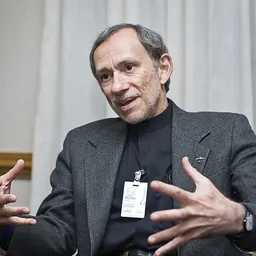
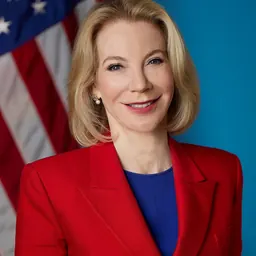

Contemporaries
People whose lives overlapped Molara Ogundipe's

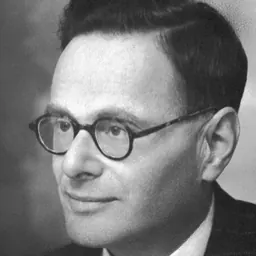
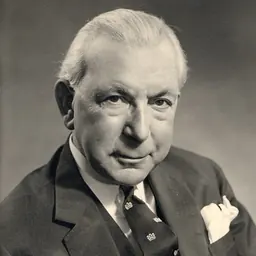

Frequently asked questions
Who was Molara Ogundipe?
Nigerian writer
When was Molara Ogundipe born?
Molara Ogundipe was born on 27 December 1940 in Lagos.
When did Molara Ogundipe die?
Molara Ogundipe died on 18 June 2019 in Nigeria, Ijebu Igbo.
What was Molara Ogundipe's occupation?
Molara Ogundipe was an academic, activist and writer.
What nationality was Molara Ogundipe?
Molara Ogundipe was Nigerian.
Sources & further reading
Cite this page
APA: Biography.guide. (2026). Molara Ogundipe. https://biography.guide/molara-ogundipe/
MLA: "Molara Ogundipe." Biography.guide, https://biography.guide/molara-ogundipe/.
Chicago: "Molara Ogundipe." Biography.guide. https://biography.guide/molara-ogundipe/.
Data last updated: 2026-09-22 · Spot an error? Report a correction.
Page generated 2026-09-27 05:22 UTC