
About Moïse Kisling
Lived 1891 – 1953 (aged 62). Moïse Kisling was a Polish and French painter.
Moïse Kisling (born Mojżesz Kisling; 22 January 1891 – 29 April 1953) was a Polish painter. Born in Kraków, then part of Austria-Hungary, to Jewish parents, Kisling studied at the Academy of Fine Arts. He left for Paris in 1910 at the age of 19. After moving to Montmartre, Kisling became a member of the Parisian avant-garde known also as the School of Paris, and developed close professional relationships with painters Amedeo Modigliani and Jules Pascin, among others. Kisling gained recognition for portraying the female form and completed numerous nudes and portraits during his career.
He became a French national in 1924, after serving and being wounded with the French Foreign Legion in World War I. In 1940, despite being 49, Kisling rejoined the army for World War II but moved to the United States following the French Army's surrender and the impending threat to Jews in occupied France. In the U.S., he exhibited his works in New York City and Washington and settled in Southern California. After World War II and the defeat of Nazi Germany, Kisling returned to France. He lived his later years continuing his artwork until his death in 1953, after a brief illness.
His works are held by museums globally, including the Harvard Art Museums, British Museum, and the Metropolitan Museum of Art, among other institutions.
Early life and education Born in Kraków, Austria-Hungary on 22 January 1891 to Jewish parents. He studied at the Academy of Fine Arts in Krakow with Jozef Pankiewicz. His teachers encouraged the young man to go to Paris, France, considered the international center for artistic creativity in the early 20th century. In 1910, Kisling moved to Montmartre in Paris initially living on Rue des Beaux-Arts, and a few years later to Montparnasse.
At the outbreak of World War I, he volunteered for service in the French Foreign Legion. He was seriously wounded in 1916 in the Battle of the Somme. He married Renée Kisling (née Gros) in 1916, and together they had two sons, Jean (1922) and Guy Kisling (1922). He acquired French nationality by naturalization in 1924.
Career
Kisling lived and worked in Montparnasse and as part of its renowned artistic community, he joined an émigré community of Americans, British and Eastern European artists. and later Amedeo Modigliani lived in the same building.
He became close friends with many of his contemporaries, including Amedeo Modigliani, who painted a portrait of him in 1916 (in the collection of the Musée d'Art Moderne de la Ville de Paris). His style in painting landscapes is similar to that of Marc Chagall. A master at depicting the female body, his surreal nudes and portraits earned him the widest acclaim.
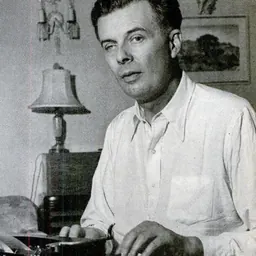
Kisling volunteered for army service again in 1940 during World War II, although he was 49. When the French Army was discharged after the surrender to the Germans, Kisling emigrated to the United States. He rightly feared for his safety as a Jew in occupied France. He exhibited in New York City and Washington. He settled in Southern California, and had his first art exhibition there in 1942. The Kisling family lived next door to Aldous Huxley and his family in Southern California, Their comments were part of a rise in anti-Semitism during the German occupation, resulting in French cooperation in the deportation and deaths of tens of thousands of foreign and French Jews in concentration camps. Kisling returned to France after the war and defeat of Germany.
Death and legacy Moïse Kisling died at his house in Bandol, Var, Provence-Alpes-Côte d'Azur, France on 29 April 1953. He had been ill with stomach issues for ten days, prior to his death. British Museum, the Metropolitan Museum of Art, Tokyo Fuji Art Museum, the Israel Museum, Ikeda 20 Seiki Museum, amongst others.
Gallery
Selected exhibitions
Galerie Jean Pascaud (Paris), with Jacques Henri Lartigue, Paul Colin, Marie Laurencin, Henri Lebasque, and Marcel Roche from November 14 to 29, 1934. "The Last Works of Kisling," Museum of Old Marseille (Marseille), from September 13 to 30, 1953. "Kisling, Major Figure of the School of Paris," Tokyo Metropolitan Teien Art Museum (Tokyo), from April 20 to July 7, 2019
Don’t just read it —
keep it.
Full-length biographies made to live with: read them, listen on the way to work, watch them tonight.
- E-book
- Audio
- Video
Instant download · yours to keep · every purchase keeps this site free
Important facts
more
Kiki Kisling, Maurice KislingPeople in Moïse Kisling's life
Named in this biography and alive at the same time




Related people
Same field, nearest in time

Contemporaries
People whose lives overlapped Moïse Kisling's


Frequently asked questions
Who was Moïse Kisling?
Polish-French artist (1891-1953)
When was Moïse Kisling born?
Moïse Kisling was born on 22 January 1891 in Kraków.
When did Moïse Kisling die?
Moïse Kisling died on 29 April 1953 in Sanary-sur-Mer.
What was Moïse Kisling's occupation?
Moïse Kisling was a painter.
What nationality was Moïse Kisling?
Moïse Kisling was Polish and French.
Sources & further reading
Cite this page
APA: Biography.guide. (2026). Moïse Kisling. https://biography.guide/moise-kisling/
MLA: "Moïse Kisling." Biography.guide, https://biography.guide/moise-kisling/.
Chicago: "Moïse Kisling." Biography.guide. https://biography.guide/moise-kisling/.
Data last updated: 2026-09-27 · Spot an error? Report a correction.
Page generated 2026-09-27 05:16 UTC