
About Mohsen Moghaddam
Lived 1900 – 1987. Mohsen Moghaddam was an Iranian archaeologist.
Mohsen Moghaddam (; 2 December 1900 – 10 November 1987) was an Iranian archaeologist, art historian, painter, professor and art collector. He was among the figures involved in the establishment of the Faculty of Fine Arts at the University of Tehran and became one of the university's early professors of archaeology and art history.
Moghaddam also designed the emblem of the University of Tehran, basing it on a Sasanian stucco motif from Ctesiphon. Together with his wife, Selma Kuyumjian, he assembled a substantial collection of Iranian art and archaeological material in his family home in Tehran. In 1972 he endowed the house and its collections to the University of Tehran for use by students and researchers; it later became the Moghadam House and Museum.
Early life and education Moghaddam was born in Tehran in 1900, the son of Mohammad-Taqi Khan Ehtesab al-Molk, a Qajar official. His elder brother was the playwright and writer Hasan Moqaddam.
His archaeological work formed part of a period in which Iranian scholars increasingly assumed responsibility for field research that had previously been dominated by foreign archaeological missions.
Moghaddam was also involved in debates over the preservation and authentication of Iranian antiquities. Archival research published in Iranian Studies records his criticism of André Godard's acquisition of bronze objects for the Ancient Iran Museum, some of which Moghaddam regarded as forgeries.
Several members of the next generation of Iranian archaeologists, including Negahban, worked within the academic environment in which Moghaddam taught and carried out research.
University of Tehran emblem Moghaddam designed the emblem of the University of Tehran. According to the university, the design was adapted from a Sasanian stucco relief from Ctesiphon consisting of two stylised wings surrounding a central element. Moghaddam adapted the motif and incorporated lettering inspired by Sasanian Pahlavi script.
Rather than keeping all of the material in cabinets, Moghaddam incorporated architectural fragments, tiles and stonework into the fabric and gardens of the house, creating historical and architectural settings in which objects from different periods of Iranian art were displayed.
His collection has subsequently been cited in scholarship on Iranian architectural decoration. A 2024 study published by the Getty Research Institute referred to medieval tiles preserved in the Moghaddam Museum and to Moghaddam's own published description of the house and its collections.
In October 1972, Moghaddam formally endowed the property and its contents to the University of Tehran. The endowment stipulated that the house should serve students of the faculty of fine arts, the university's Archaeological Institute and other researchers. After the deaths of Moghaddam and Kuyumjian, the university assumed direct responsibility for the property, which was eventually opened to the public as the Moghaddam House Museum.
Painting Although best known for archaeology and teaching, Moghaddam was also trained as a painter and remained active in the visual arts. His early artistic education included study under Kamal-ol-molk in Tehran and further training in Paris.
His paintings have been discussed in studies of the development of modern art in Iran and of the generation of Iranian artists active during the first half of the twentieth century.
Honours Moghaddam was appointed an Officer of the French Legion of Honour. Iranian sources associate the distinction with his cultural and scholarly activities and his contribution to relations between Iran and France.
Selected publication
Moghaddam, Mohsen (1967). “An Old House in Tehran: Its Gardens, Its Collections.” In Arthur Upham Pope and Phyllis Ackerman (eds.), A Survey of Persian Art from Prehistoric Times to the Present, vol. 14.
Legacy Moghaddam's legacy combines archaeology, art-historical teaching, collecting and institutional development. The house and collection he and Kuyumjian assembled remain part of the University of Tehran and serve as a museum and research resource.
His role in the early development of the Faculty of Fine Arts and Archaeological Institute also places him among the generation that contributed to the institutionalisation of archaeology and art history within Iranian universities.
Don’t just read it —
keep it.
Full-length biographies made to live with: read them, listen on the way to work, watch them tonight.
- E-book
- Audio
- Video
Instant download · yours to keep · every purchase keeps this site free
Important facts
People in Mohsen Moghaddam's life
Named in this biography and alive at the same time

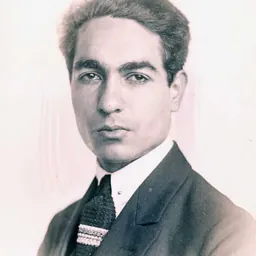


Related people
Same field, nearest in time
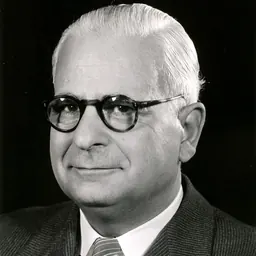
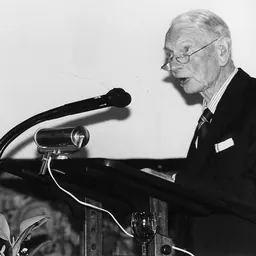
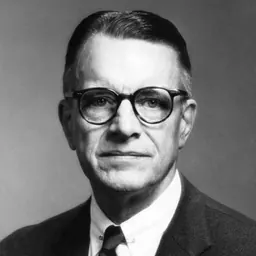

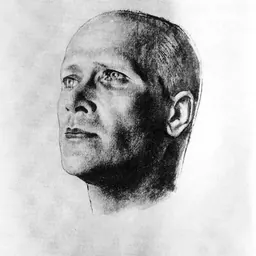
Contemporaries
People whose lives overlapped Mohsen Moghaddam's
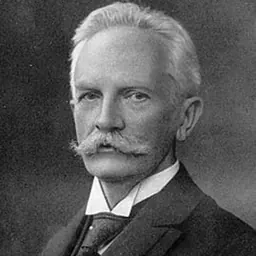




Frequently asked questions
Who was Mohsen Moghaddam?
Iranian archaeologist (1900–1987)
When was Mohsen Moghaddam born?
Mohsen Moghaddam was born in 1900 in Tehran.
When did Mohsen Moghaddam die?
Mohsen Moghaddam died in 1987.
What was Mohsen Moghaddam's occupation?
Mohsen Moghaddam was an archaeologist.
What nationality was Mohsen Moghaddam?
Mohsen Moghaddam was Iranian.
Sources & further reading
Cite this page
APA: Biography.guide. (2026). Mohsen Moghaddam. https://biography.guide/mohsen-moghaddam/
MLA: "Mohsen Moghaddam." Biography.guide, https://biography.guide/mohsen-moghaddam/.
Chicago: "Mohsen Moghaddam." Biography.guide. https://biography.guide/mohsen-moghaddam/.
Data last updated: 2026-09-20 · Spot an error? Report a correction.
Page generated 2026-09-27 05:24 UTC