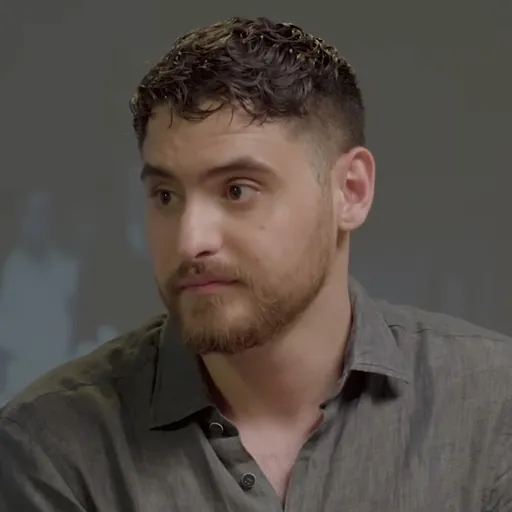
About Mohammed el-Kurd
Born 1998. Mohammed el-Kurd is a writer, poet and journalist, known for Israeli–Palestinian conflict.
Mohammed el-Kurd (; born 15 May 1998) is a Palestinian writer, poet, and journalist who gained prominence for his descriptions of Palestinians' lives under occupation in East Jerusalem and the rest of the West Bank. El-Kurd has referred to evictions as a form of ethnic cleansing, and has also accused Israel of imposing apartheid-style laws and regulations on Palestinians in the occupied territories.
Biography
Early life El-Kurd was born on 15 May 1998 into a Palestinian Muslim family in Sheikh Jarrah, East Jerusalem, in the Israeli-occupied West Bank. In 2009, when he was 11, part of his family's home in Sheikh Jarrah was taken over by Israeli settlers. The episode was the subject of the 2013 documentary film My Neighbourhood, directed by Julia Bacha and Rebekah Wingert-Jabi.
El-Kurd wrote poetry as a teenager, sometimes in both Arabic and English, and performed in Sheikh Jarrah and elsewhere in Jerusalem. In 2021, while pursuing graduate study at Brooklyn College in New York City, he returned to East Jerusalem to protest Israel's eviction of Palestinians from their homes in East Jerusalem, including in Sheikh Jarrah.
Return to East Jerusalem (2021)
Since his return to the Israeli-occupied West Bank during the Sheikh Jarrah controversy, El-Kurd has documented and spoken against Palestinian displacement in East Jerusalem. He and his twin sister, Muna el-Kurd, used social media to draw attention to Israeli policies in East Jerusalem. A 2021 article in Tripodos said Muna's posts were usually in Arabic, while Mohammed often posted in English for a Western audience. they were released later that same day after being held for several hours. During the 2021 Israel–Palestine crisis, Mohammed appeared on American television channels including CNN, MSNBC, and CBSN.
Education El-Kurd earned a Bachelor of Fine Arts degree from the Savannah College of Art and Design and a Master of Fine Arts degree in creative writing from Brooklyn College.
Influences El-Kurd has cited Aimé Césaire, Frantz Fanon, Rashid Hussein, Amal Dunqul, and Suheir Hammad among writers who have influenced him and whom he admires.
Career In addition to his work in poetry and creative nonfiction, El-Kurd has worked as a journalist and editor. He is The Nation first Palestine correspondent. In 2023, Mondoweiss announced that he had joined its staff as culture editor; the publication later listed him as editor-at-large on its masthead.
Writing and spoken-word His debut poetry collection, Rifqa, was published by Haymarket Books in 2021. Reviews and critical essays have described Rifqa as concerned with family memory, dispossession, occupation, resistance, and humor.
In 2019, El-Kurd and oud musician Clarissa Bitar released the spoken-word album Bellydancing on Wounds through Rosewater Records. His nonfiction book Perfect Victims: And the Politics of Appeal was published by Haymarket Books in 2025. Reviews described the book as examining dehumanization and the expectation that Palestinians appeal to outside audiences to prove their humanity.
Views
Israel–Palestine conflict generally
El-Kurd is noted for "unapologetically" speaking out against Israeli oppression of Palestinians in East Jerusalem, the West Bank, and Gaza, both about the specific, immediate threat to, and constant stress for families like his of eviction, but also all forms of oppression. the 16-year Israeli and Egyptian land, air, and water Blockade of the Gaza Strip (which El-Kurd calls besieged) Israeli control of "every aspect of life in the Gaza Strip", including pharmaceuticals, food, water, travel, and freedom of movement
El-Kurd has spoken of racist remarks by Israeli officials, such as Itamar Ben-Gvir, or remarks he characterizes as "genocidal". El-Kurd states that paying attention to such remarks is "the very answer to everything" in understanding the Gaza situation in 2023–4. Dismantling and fragmenting Palestinian unity Overthrowing the fabric of Palestinian societies Creating disparate realities between Palestinians living in Israel proper (Israeli Arabs), East Jerusalem, the West Bank east of the Separation Barrier, and in the Gaza Strip.
He concluded that the collective protests against expulsion in his home neighborhood of Sheikh Jarrah showed unprecedented unity among the different groups, overcoming the delusions that separation had created. Topics: Activists should advocate for sanctions against Israel, and call out Israeli expansion and Zionism, which he calls a racist ideology. Vocabulary: mainstream Western news outlets camouflage the intensity of violence that Israeli forces inflict on Palestinians, e.g., using the phrase “forced eviction” instead of “ethnic cleansing.” "Flattening" humanization: those who empathize with Palestinians and humanize them may inadvertently "flatten" Palestinians' reality, i.e., fail to encapsulate the entire scope of Palestinians' humanity, by, for example, portraying them as helpless victims. El-Kurd is known for his willingness to tell the blunt reality of Palestinian existence in its full spectrum, including disdain, rage, hatred, joy, revolution, and fear, and encourages pro-Palestinian activists to do the same.
Shifting the narrative in global media El-Kurd has stated that the first step in achieving reparations of changing realities on the ground is to get people to understand "the correct" narrative and "on the right side of history", a grassroots narrative from Palestinian "street culture", not a narrative coöpted by Palestinians who are the elite or who have ties to U.S., Israeli institutions or the Palestinian Authority, which he says is corrupt and a "co-pilot of the Israeli occupation". in the eponymous 2021 book, contains a line in which "they" (i.e., Israelis) "harvest organs of the martyred, [and] feed their warriors our own." The poem contains a footnote referring the reader to the 2009 Aftonbladet Israel controversy about Israeli doctors allegedly harvesting organs from Palestinian and some Israeli corpses without the permission of their families. El-Kurd said, "It's a metaphor, it's not something I literally believe. I'm just now realizing that they actually think, or are pretending to think for purposes of exaggeration, that I actually believe Israelis eat Palestinian organs.... At first it was comical, but now it seems very sinister. The line is about the practice of withholding Palestinian bodies and [...] exploiting the bodies in ways that have been documented and are widely discussed." He spoke at a Harvard University event titled "Confronting State Violence" in October 2022 at which he told of his experience with "violence that is systematically, institutionally sponsored". More than 30 people protested his attendance by showing Israel’s flag and waving posters. The Anti-Defamation League called for Georgetown Law School to cancel an invitation for him to speak at the university in 2022.
London speech mentioning de-Zionization and massacres El-Kurd's speech on 14 January 2024 at the Palestine Solidarity Campaign "March for Palestine" demonstration in London was widely criticized as antisemitic for its mention of de-zionization as well as the mention of "massacres as the status quo", He described Hamas militants killed by Israel as "martyrs", which could potentially violate UK and Israeli laws. However, El-Kurd, whose native language is Arabic, later clarified multiple times on X that he had misspoken, by forgetting to negate the verb in the sentence: It is clear from the context of my speech on 13 January 2024 that I denounce massacres, murder, and genocide and that the closing of my speech was to state "we should NOT normalise massacres." I was also clearly referring to the massacres perpetrated by Israel against the Palestinian people. I reject the bad faith attempts to slander me as someone who would encourage or promote unlawful violence. I don't want to waste more time on this matter, because we all should be focusing on the horrors in Gaza He further stated that he was "obviously not an idiot" and "would never" call for violence.
London's Metropolitan Police launched a formal investigation.
Works El-Kurd, Mohammed (2021). Rifqa. Haymarket Books. . Foreword to Aranguren, Teresa, and Sandra Barrilaro, eds. (2024). Against Erasure: A Photographic Memory of Palestine Before the Nakba. Haymarket Books. . El-Kurd, Mohammed (2025). Perfect Victims: And the Politics of Appeal. Haymarket Books. .
Don’t just read it —
keep it.
Full-length biographies made to live with: read them, listen on the way to work, watch them tonight.
- E-book
- Audio
- Video
Instant download · yours to keep · every purchase keeps this site free
Important facts
People in Mohammed el-Kurd's life
Named in this biography and alive at the same time

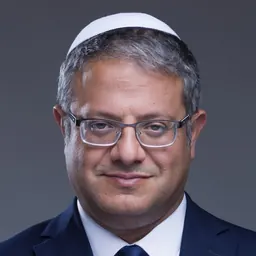
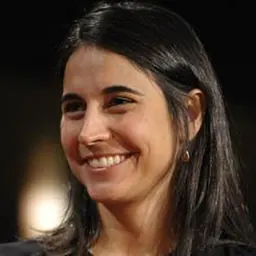
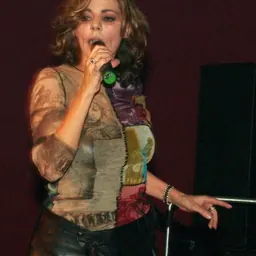
Related people
Same field, nearest in time

Contemporaries
People whose lives overlapped Mohammed el-Kurd's


Frequently asked questions
Who is Mohammed el-Kurd?
Palestinian poet and activist
When was Mohammed el-Kurd born?
Mohammed el-Kurd was born on 15 May 1998 in Jerusalem.
What is Mohammed el-Kurd's occupation?
Mohammed el-Kurd is a writer, poet and journalist.
What is Mohammed el-Kurd known for?
Mohammed el-Kurd is known for Israeli–Palestinian conflict.
What nationality is Mohammed el-Kurd?
Mohammed el-Kurd's recorded nationality: Palestine, Palestinians.
Sources & further reading
Cite this page
APA: Biography.guide. (2026). Mohammed el-Kurd. https://biography.guide/mohammed-el-kurd/
MLA: "Mohammed el-Kurd." Biography.guide, https://biography.guide/mohammed-el-kurd/.
Chicago: "Mohammed el-Kurd." Biography.guide. https://biography.guide/mohammed-el-kurd/.
Data last updated: 2026-09-24 · Spot an error? Report a correction.
Portrait: Wikimedia Commons · author & licence
Page generated 2026-09-27 05:09 UTC