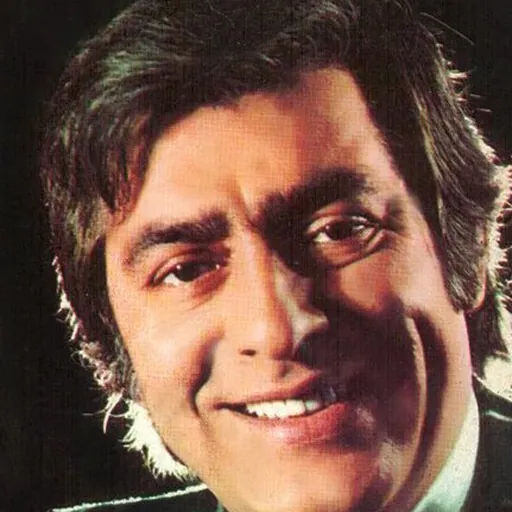
About Mohammad-Ali Fardin
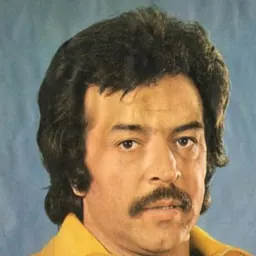
Lived 1930 – 2000 (aged 69). Mohammad-Ali Fardin was an Iranian actor, screenwriter and film director.
Mohammad-Ali Fardin (; 4 February 1931 – 6 April 2000) was a prominent Iranian actor, film director and freestyle wrestler and was the runner-up in world wrestling. He started his film career in the late 1950s and was a big star of Iranian cinema for two decades from the 1960s onwards. He was also active in wrestling and won a silver medal in the 1954 World Championship.
Fardin was mostly famous for portraying masculinity and chivalry in Persian films. The undisputed box office champion of the era, Fardin captivated millions of viewers in his 25-year career. Between 1961 and 1976, he acted in the most popular movies of the year in Iranian cinema. He then started his first professional appearance in the cinema with the invitation of Ismail Kushan by playing a role in Cheshme Ab Hayat (1959). Soltane Ghalbha, Alley of Men, Ganj-e Qarun, Midnight Cry, Mr. 20th Century, The Secret of the Elder Tree, The Waiting Beach, Baba Shamal, The Rendezvous of Khashm, The Crookes (film), Ayyub, Barzakhi, Hell + Me, and Jabar the corporal escapes are some of his prominent films. Fardin's popularity as an actor is mainly due to the characters he has portrayed in his films.
Biography Early life Fardin was born and raised in a poor area in southern Tehran. He was the eldest of three children. After graduating from high school, Fardin joined the Air Force and became a freestyle wrestler in his twenties; he won a silver medal at the 1954 World Wrestling Championships and placed fourth in 1957. (1972) starring alongside Waheeda Rehman, Sanjeev Kapoor, Simin Ghaffari and Azar. The film was directed by Tapi Chanakya. His voice in the film was dubbed by Satyen Kappu.
Post-Revolutionary Limitations Fardin was banned from working for almost the entire time that he lived through the post-revolutionary period. He could only act in one film, The Imperilled (Barzakhi-ha), which was released in 1982 and resulted in his life-time ban. The Imperilled was directed by Iraj Ghaderi and had four pre-revolutionary male stars in the lead roles. With its patriotic story about resisting foreign invasion, it was a chance for Fardin, Malek-Motiei, Ghaderi and Rad to renew their threatened careers as actors in the post-revolutionary atmosphere. The film was a hit and became the highest grossing Iranian film of all time in its short period of screening in theaters. But it was soon banned and consequently the four actors were banned from working. Saeed Motalebi, an established writer and director in the pre-revolutionary era, was the writer of the film. He is one of the people who has repeatedly recounted stories about how the film and the actors were banned. About how the film's success was turned into disaster Motalebi says: In one friday Mr. Mohsen Makhmalbaf gathered a couple of people and they started collecting signatures for a petition which was written on a scroll, stating that "We have made a revolution while these actors are transgressors." They did it right in front of that theater in the Revolution Square near the university of Tehran. They said "Look how theaters are crowded while friday events are deserted." That's how they stopped my film. Then a reporter who was queued to ask something about our film, went and told the then prime minister (Mir-Hossein Mousavi) "There is a film in theaters whose writer wants to convey that people who are fighting in the fronts are problematic persons." The prime minister replied "These are leftovers of junk intellectuals who will soon go to the dustbin of history." Malek-Motiei became jobless and turned his garage into a pastry shop. Ghaderi put some rice bags in his office and became a rice dealer. Fardin opened a pastry shop too and when I went to visit him, I used to wait outside as long as there were no customers so that he wouldn't feel ashamed when he saw me. These were all caused by those illogical efforts which I will never forgive.
Death Fardin died as a result of cardiac arrest on 6 April 2000 at the age of 69. He was buried in the Behesht-e Zahra cemetery in Tehran. More than 20,000 mourners attended his funeral.
Filmography
Director 1962 : Hungry Wolves (Gorg-haye Gorosneh) 1965 : Love and Revenge (Eshgh-o Entegham) 1965 : The Prettiest of All (Khoshgel-e Khoshgela) 1966 : The Beggars of Tehran (Gedayan-e Tehran) 1966 : The Most Bounteous (Hatam-e Tahei) 1968 : King of the Hearts (Solatan-e Ghalb-ha) 1969 : The Golden Castle (Ghasr-e Zarrin) 1972 : Hell + Me (Jahannam + Man) 1973 : Story of the Night (Ghesse-ye Shab) 1975 : The Great Promise (Gharar-e Bozorg) 1978 : Over the Clouds (Bar Faraz-e Aseman-ha)
Producer Gorg-haye Gorosne (1962) Khoshgel-e Khoshgela (1965) Sekke-ye Shans (1970) Jahanam + Man (1972) Ghesse-ye Shab (1973) Gharar Bozorg (1975) Bar Faraz-e Aseman-ha (1978)
Writer Eshgh-o Entegham (1965) Khoshgel-e Khoshgela (1965) Hatam-e Tahei (1966) Solatan-e Ghalb-ha (1968) Ghesse-ye Shab (1973)
Actor
Cheshme-ye Ab-e Hayat (1960) Farda Roshan Ast (1960) Faryad-e Nime Shab (1961) - Amir Bive-haye Khandan (1961) Dokhtari Faryad Mikeshad (1962) Tala-ye Sefid (1962) Gorg-haye Gorosne (1962) Zamin-e Talkh (1962) Zan-ha Fereshte-and (1963) Sahel-e Entezar (1963) - Ahmad Agha-ye Gharn-e Bistom (1964) - Dash Habib Masir-e Roodkhaneh (1964) - Mahmood Ensan-ha (1964) - Amir Tarane-haye Roostaei (1964) Jahanam Zir-e Pa-ye Man (1964) - Yargholi Dehkade-ye Talaei (1965) Ghahraman-e Gharamanan (1965) - Hassan Ferfere Babr-e Koohestan (1965) - Majid Eshgh-o Entegham (1965) Khoshgel-e Khoshgela (1965) Ganj-e Gharoon (1965) - Ali bigham Moo Tatalei-e Shahre Ma (1965) Hatam-e Taei (1966) - Jalal AmirArsalan-e Namdar (1966) - Amir Arsalan Mardi az Tehran (1966) Gadayan-e Tehran (1966) Jahan Pahlavan (1966) Wadi al mot (1967) Toofan-e Nooh (1967) Charkh-e Falak (1967) - Mamal Feshfesheh Toofan Bar Faraz-e Patra (1968) Ed ora... raccomanda l'anima a Dio! (1968) - Stanley Maserick Soltan-e Ghalb-ha (1968) - Saeed Shokooh-e Javanmardi (1968) Khashm-e Kowli (1968) Mardan-e Bokos (1968) Na’re Toofan (1969) - Toofan Donya-ye Por Omid (1969) Ghasr-e Zarrin (1969) - The Youngest Son Donya-ye poromid (1969) Behesht Door Nist (1969) Sekke-ye Shans (1970) Yaghoot-e Se Cheshm (1970) Mardi az Jonoob-e Shahr (1970) - Hadi Kooche Mard-ha (1970) - Ali Ayoob (1971) - Ayyoob Yek Khoshkel va Hezar Moshkel (1971) Mard-e Hezar Labkhand (1971) Baba Shamal (1971) - Baba Shamal Mi’adGah-e Khashm (1971) - Ghadam Mardan-e Khashen (1971) - Nasir Homa-ye Sa’adat (1971) - Aram Raze Derakhte Senjed (1971) Jahanam + Man (1972) Subah-O-Shaam (Persian: همای سعادت) is a 1972 Indo-Iranian film Jabbar, Sarjookhe Farari (1973) Ghesse-ye Shab (1973) - Mohsen Shekast Napazir (1974) - Akbar Salam bar Eshgh (1974) Najoor-ha (1974) Javanmard (1974) Movazebe Kolat Bash (1975) - Farhad Ta’asob (1975) Gharar-e Bozorg (1975) - Amir Ghazal (1976) - Hojjat Bar Faraz-e Aseman-ha (1978) - Ramin / Shahin Barzakhi-ha (1982) - Seyyed Yaqub (final film role)
Don’t just read it —
keep it.
Full-length biographies made to live with: read them, listen on the way to work, watch them tonight.
- E-book
- Audio
- Video
Instant download · yours to keep · every purchase keeps this site free
Important facts
People in Mohammad-Ali Fardin's life
Named in this biography and alive at the same time



Related people
Same field, nearest in time



Contemporaries
People whose lives overlapped Mohammad-Ali Fardin's



Frequently asked questions
Who was Mohammad-Ali Fardin?
Iranian wrestler and actor
When was Mohammad-Ali Fardin born?
Mohammad-Ali Fardin was born on 7 April 1930 in Tehran.
When did Mohammad-Ali Fardin die?
Mohammad-Ali Fardin died on 6 April 2000 in Tehran.
What was Mohammad-Ali Fardin's occupation?
Mohammad-Ali Fardin was an actor, screenwriter and film director.
What nationality was Mohammad-Ali Fardin?
Mohammad-Ali Fardin was Iranian.
Sources & further reading
· Wikipedia: Mohammad-Ali Fardin
· DBpedia: Mohammad Ali Fardin
Cite this page
APA: Biography.guide. (2026). Mohammad-Ali Fardin. https://biography.guide/mohammad-ali-fardin/
MLA: "Mohammad-Ali Fardin." Biography.guide, https://biography.guide/mohammad-ali-fardin/.
Chicago: "Mohammad-Ali Fardin." Biography.guide. https://biography.guide/mohammad-ali-fardin/.
Data last updated: 2026-09-21 · Spot an error? Report a correction.
Portrait: Wikimedia Commons · author & licence
Page generated 2026-09-27 04:59 UTC