
About Mohammad Abdul Ghafoor Hazarvi
Lived 1909 – 1970 (aged 61). Mohammad Abdul Ghafoor Hazarvi was a Pakistani philosopher.
Akhundzada Mohammad Abdul Ghafoor Hazarvi (1 January 1909 – 9 October 1970) was a Muslim theologian, jurist, and scholar of ahadith in Pakistan (South Asia). As a politically active figure engaged in Pakistan's independence movement, he was the first recipient of Nishan-e-Imtiaz (Order of Excellence) by the President of Pakistan.
Hazarvi was active in the Pakistan movement and served as a member of Council of Islamic Ideology. He was the companion of Pakistan's founder Muhammad Ali Jinnah and Maulana Zafar Ali Khan and was active in the independence movement of Pakistan against the British Raj.
A Sufi of the Chishti Sufi order, he was the founding member of the religious Barelvi Sunni strain political party Jamiat Ulema-e-Pakistan (JUP) and became its president in 1948. He was also the chairman of Majlis-e-Tahaffuz-e-Khatme Nabuwwat, an organisation opposed to the Ahmadiyya Movement that waged a campaign against Mirza Ghulam Ahmed's claim of prophethood.
Early life Hazarvi was born in Chamba Village, Kot Najeebullah, North-West Frontier Province, British India. His father Abdul Hameed Hazarvi, an Islamic scholar, belonged to the Hazarewal Karlal tribe. He was a follower of the Chishti Order. He was the elder of his four brothers and sisters. He started studies of Islamic law, Urdu, Persian and Arabic languages at the local maktab in Chamba Village, Hazarvi studied from scholars including Muhib-un-Nabi. He was the student of Mushtaq Ahmad Kanpuri, where he learned Islamic Jurisprudence and traditional Dars-i-Nizami. He completed the Dawra Hadith and Qur'anic exegesis with Hamid Raza Khan the elder son of Ahmad Raza Khan in Madrasa Manzar-e-Islam, Bareily. Hamid Raza Khan gave this student of his khilafat, which is why Qadri is written on his gravestone. Hazarvi was attracted to mathematics, and studied the fundamental concepts in mathematics in depth.
Pledge of allegiance and services Hazarvi pledged allegiance to Meher Ali Shah at the age of 11 and asked him to pray that he could become a scholar. Pir Meher Ali Shah said to him that "jaao! eik din tum bohot barei moulvi bano gei" (Mawlawi was the title used for Alim in those days).
At the age of 28, in 1937 Abdul Ghafoor Hazarvi went to Jeendhar Sharif, Gujrat, at the service of Uwais-e-Waqat Khawaja Gohar Munir Jeendharvi which was a great Sufi of the Uwaisi order, who devoted everything to his followers, due to this immense fayz (blessing), Hazarvi progressed rapidly through the stages of spiritual training and Tasawwuf. He conferred khilafah upon Hazarvi thus giving him permission to speak on behalf of the Uwaisi Order.
After taking the education he started the teaching Quran and Hadith in Madrasa Manzar-e-Islam in Bareilly, India. After then he taught Dars-i-Nizami in Jamia Khudam-ul-Sufiya in Gujrat, where he performed his duties as Mudarris. On (1935), Hazarvi established Jamia Nizamia Ghousia in Wazirabad, where he served as the Mohatmim and Khatib. Hazarvi was a great Mudarris and in the month of Ramadan especially he would teach Dowra Qur'an to advanced students over the 30 days.
Hazarvi was involved with the Jamiat Ulema-e-Pakistan (JUP), Anjuman-e-Talaba-e-Islam (ATI), Majlis-e-Tahaffuz-e-Khatme Nabuwwat and All India Majlis-e-Ittehad-e-Millat which later on merged in All-India Muslim League in 1940.
Muslim League & Patriotism Hazarvi was one of the provincial delegates to the Lahore Resolution of the All India Muslim League session in which he participated on 22–24 March 1940. During the Pakistan Movement, Hazarvi was among the scholars who sided with Muhammad Ali Jinnah and the Muslim League, on the platform of "All India Sunni Conference″ held at Banaras in 1946.
In the Indo-Pakistani War of 1965, Abdul Ghafoor Hazarvi donated all the ornaments of his family to the Pakistan Army.
Opposition to other sects Mirza Ghulam Ahmad of Qadian claimed to be the Mahdi (messiah) awaited by Muslims, as well as a Ummati Nabi, a subordinate prophet to Muhammed who brings no new Sharia but instead restores Islam to its pure form. These claims proved controversial among many Muslims, and Hazarvi branded Mirza Ghulam Ahmad as a heretic and apostate and called him and his followers (Ahmadis) Kuffar. Hazarvi was also the founding member of Majlis-e-Tahaffuz-e-Khatme Nabuwwat, Pakistani nationalist Muslim political movement in Pakistan. He led a movement against Ahmadis and held a Khatme Nabuwwat Conference at Rabwah in 21–23 October 1953. Abdul Ghafoor Hazarvi was a central figure in the Khatme Nabuwwat Movement of 1953, which demanded that government of Pakistan declare the Ahmadis as non-Muslims. Hazarvi was active in the Khatme Nabuwwat movement.
Beliefs and Practices
Beliefs regarding Muhammad Hazarvi believed that: Muhammad is a human being but created from light like angels, rather than from clay like other human beings. He is present in many places at the same time. He is still witnessing all that goes on in the world. He has the authority to do whatever he desires as granted to him by God. Although human, he possessed a nūr (light) that predates creation. This contrasts with the Deobandi view that Muhammad was insan-e-kamil ("the complete man"), a respected but physically typical human. Veneration of the dead, specifically those who lead pious/righteous lives. This consists of the intervention of an ascending, linked and unbroken chain of holy personages claimed to reach ultimately to Muhammad, who Barelvis believe intercede on their behalf with God. Visiting the tombs of Muhammad, his companions and of pious Muslims, an act the Barelvis claim is supported by the Quran, Sunnah and acts of the companions, but which opponents call "shrine-worshipping" and Grave worshiping and consider to be un-Islamic. Use of devotional music. Leaving the beard to grow for men; the Hazarvis views a man who trims his beard to less than a fist-length as a sinner, and shaving the beard is considered abominable.
Works Hazarvi wrote and translated books on a variety of subjects, including his compilation of Manaqib-al-Jaleela, is a book on Islamic Jurisprudence.
Other works include:
Tahqiq-ul-Haq Fi Kalima-tul-Haq (The Truth about Kalima-tul-Haq) Shamsul Hidayah I'la Kalimatillah Fi Bayan-e-Wa Ma Uhilla Bihi Legharillah AlFatuhat-us-Samadiyyah (Divine Bounties) Tasfiah Mabain Sunni Wa Shi'ah Majmua Fatawa
Ideology Hazarvi's understanding of Islamic law has been presented concisely in his book Manaqib-al-Jaleela. Hazarvi's inspiration from his mentor, Ahmed Raza Khan Barelvi and non-traditionalist approach to the religion has parted him from traditionalist understanding on a number of issues, but he never goes out of the traditional framework.
Jihad Hazarvi believes that there are certain directives of the Qur'an pertaining to war which were specific only to Muhammad and certain specified peoples of his times (particularly the progeny of Abraham: the Ishmaelites, the Israelites, and the Nazarites). Thus, Muhammad and his designated followers waged a war against Divinely specified peoples of their time (the polytheists and the Israelites and Nazarites of Arabia and some other Jews, Christians, et al.) as a form of Divine punishment and asked the polytheists of Arabia for submission to Islam as a condition for exoneration and the others for jizya and submission to the political authority of the Muslims for exemption from death punishment and for military protection as the dhimmis of the Muslims. Therefore, after Muhammad and his companions, there is no concept in Islam obliging Muslims to wage war for propagation or implementation of Islam. The only valid basis for jihad through arms is to end oppression when all other measures have failed. According to him Jihad can only be waged by an organised Islamic state. No person, party or group can take arms into their hands (for the purpose of waging Jihad) under any circumstances. Another corollary, in his opinion, is that death punishment for apostasy was also specifically for the recipients of the same Divine punishment during Muhammad's times—for they had persistently denied the truth of Muhammad's mission even after it had been made conclusively evident to them by God through Muhammad.
The formation of an Islamic state is not a religious obligation per se upon the Muslims. However, he believes that if and when Muslims form a state of their own, Islam does impose certain religious obligations on its rulers as establishment of the institution of salat (obligatory prayer), zakah (mandatory charity), and 'amr bi'l-ma'ruf wa nahi 'ani'l-munkar (preservation and promotion of society's good conventions and customs and eradication of social vices; this, in Hazarvi's opinion, should be done in modern times through courts, police, etc. in accordance with the law of the land which, as the government itself, must be based on the opinion of the majority).
The Qur'an states norms for male-female interaction in surah An-Nur. While in surah Al-Ahzab, there are special directives for wives of Muhammad and directives given to Muslim women to distinguish themselves when they were being harassed in Medina. The Qur'an has created a distinction between men and women only to maintain family relations and relationships.
Penal laws The Islamic punishments of hudud (lit. "limit" or "boundary") are maximum pronouncements that can be mitigated by a court of law on the basis of extenuating circumstances. The shariah (Divine law) does not stipulate any fixed amount for the diyya (monetary compensation for unintentional murder); the determination of the amount—for the unintentional murder of a man or a woman—has been left to the conventions of society. Rape is hirabah and deserves severe punishments as mentioned in the . It doesn't require four witnesses to register the case as in the case of Zina (Arabic) (consensual sex). Those who were punished by stoning (rajm) in Muhammad's time were also punished under hirabah for raping, sexually assaulting women, and spreading vulgarity in society through prostitution. Just like Quran, Sunnah (the way of the prophet) is only what Muslim nation received through ijma (consensus of companions of the prophet) and tawatur (perpetual adherence of Muslim nation).
Don’t just read it —
keep it.
Full-length biographies made to live with: read them, listen on the way to work, watch them tonight.
- E-book
- Audio
- Video
Instant download · yours to keep · every purchase keeps this site free
Important facts
People in Mohammad Abdul Ghafoor Hazarvi's life
Named in this biography and alive at the same time







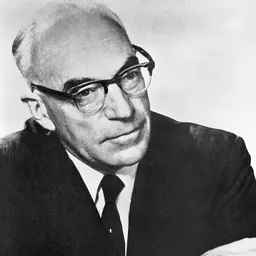
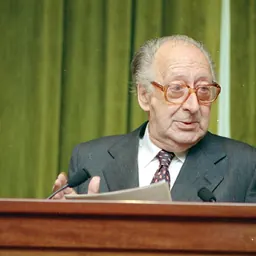
Related people
Same field, nearest in time


Contemporaries
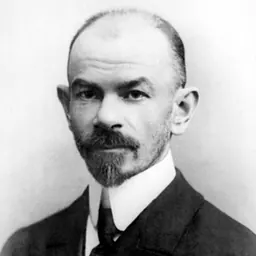
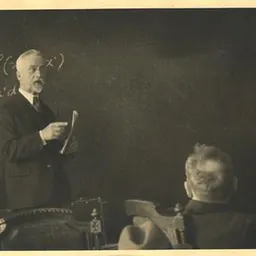
People whose lives overlapped Mohammad Abdul Ghafoor Hazarvi's


Frequently asked questions
Who was Mohammad Abdul Ghafoor Hazarvi?
philosopher
When was Mohammad Abdul Ghafoor Hazarvi born?
Mohammad Abdul Ghafoor Hazarvi was born on 1 January 1909 in Kot Najeebullah.
When did Mohammad Abdul Ghafoor Hazarvi die?
Mohammad Abdul Ghafoor Hazarvi died on 9 October 1970.
What was Mohammad Abdul Ghafoor Hazarvi's occupation?
Mohammad Abdul Ghafoor Hazarvi was a philosopher.
What nationality was Mohammad Abdul Ghafoor Hazarvi?
Mohammad Abdul Ghafoor Hazarvi was Pakistani.
Sources & further reading
· Wikipedia: Mohammad Abdul Ghafoor Hazarvi
· DBpedia: Mohammad Abdul Ghafoor Hazarvi
Cite this page
APA: Biography.guide. (2026). Mohammad Abdul Ghafoor Hazarvi. https://biography.guide/mohammad-abdul-ghafoor-hazarvi/
MLA: "Mohammad Abdul Ghafoor Hazarvi." Biography.guide, https://biography.guide/mohammad-abdul-ghafoor-hazarvi/.
Chicago: "Mohammad Abdul Ghafoor Hazarvi." Biography.guide. https://biography.guide/mohammad-abdul-ghafoor-hazarvi/.
Data last updated: 2026-09-20 · Spot an error? Report a correction.
Page generated 2026-09-27 05:28 UTC