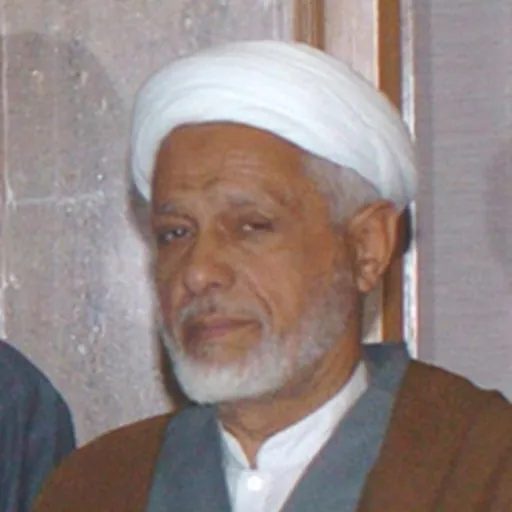
Mohammad Abbas Ansari
Political leader/Shia cleric:Indian-administered Jammu and Kashmir.
About Mohammad Abbas Ansari
Lived 1936 – 2022 (aged 86). Mohammad Abbas Ansari was an Indian politician and ulema.
Mohammad Abbas Ansari (Urdu: محمد عباس انصاری) (17 August 1936 – 25 October 2022) was a separatist political leader and a well known Shia Muslim scholar, reformer, preacher and cleric from Indian-administered Jammu and Kashmir. He was known for his religious lectures and as a Kashmiri separatist, ex-chairman of the All Parties Hurriyat Conference, also founder and chairman of the Ittihadul Muslimeen also known as Jammu & Kashmir Ittihadul Muslimeen (JKIM), a Kashmiri nationalist Shia separatist political party which aims for Shi'a–Sunni unity in Kashmir & independence of Jammu and Kashmir from India through peaceful struggle. He is considered a moderate and has called for an end to violence in that region. He is Succeeded by his son Maulana Masroor Abbas Ansari.
Early life and education Abbas was born on 18 August 1936, in Srinagar to the influential Ansari family. After his preliminary education at a local school in Srinagar, he graduated from the Oriental College in Srinagar. In 1950, he left for further studies in Lucknow, the centre of Islamic theological education in India. After spending years in Lucknow's Sultanul Madaris, he undertook higher studies in Najaf, Iraq, commencing in 1954.
Abbas appeared on the political scene of Kashmir in December 1963 amidst the Holy Relic Movement when people clandestinely lifted a relic of Muhammad from Hazratbal Shrine of Srinagar. The "Holy Relic Action Committee" was formed as a response to that incident and Abbas was named coordinator after the removal of Mirwaiz Farooq. The group dissolved after the return of the relic. Along with political leaders including Mohammad Farooq and Sofi Mohammad Akbar, he formed a political party named "Peoples Action Committee" in March 1964 to seek the right of self-determination for the people of Kashmir. Abbas opposed holding the state political convention in 1967 and 1968 and staged a walk out from the convention in protest against the policies of Sheikh Mohammad Abdullah. He was arrested several times during the Indo-Pakistani War of 1965 War under the National Security Act. Abbas represents Jammu & Kashmir Ittihadul Muslimeen in its seven-member Executive council, the chief policy making and executive body of A.P.H.C. The All Parties Hurriyat Conference kept up its campaign for a solution to the Kashmir issue. The leadership of the All Parties Hurriyat Conference was arrested once again in September 1999. Along with his colleagues, Abbas spent eight months in the prison.
On 12 July 2003, the APHC elected Abbas as its chairman at a meeting of Executive Committee members. Out of the seven constituents, representatives of six parties were present at the meeting. Abbas Ansari was the fourth chairman of the Hurriyat who replaced Abdul Ghani Bhat on the latter's completion of his two-year term. Ansari is the first Shiite head of the Hurriyat Conference.
On 21 May 2004 Abbas Ansari offered to resign his post in an effort to bring about the reunification of the coalition's factions and did so on July of that year. Organization's founder-chairman Mirwaiz Umar Farooq, was asked to work towards restoring the Hurriyat's original executive council and send invitations to all the pre-split executive council members. The APHC delegation stressed that an honorable and durable solution should be found through dialogue. It was agreed that meeting was the first significant step in the dialogue process and a step-by-step approach would lead to the resolution of all outstanding issues relating to Jammu and Kashmir. The APHC delegation was committed to the enlargement of the dialogue process to cover all regions of Jammu and Kashmir and concerns of all communities. Pakistan President Pervez Musharraf termed these talks as "a very good beginning". The next round of APHC discussion with Indian government took place in the latter part of March.
Srinagar-Muzaffarabad road During his tenure as APHC Chairman, Abbas advocated the re-opening of the Srinagar-Rawalpindi road so that the people of both parts of Kashmir could meet their kin and help survivors of the 2005 earthquake. "The people on both sides of the Line of Control (LoC) have been craving to meet each other. When India and Pakistan can resume the New Delhi-Lahore bus service, there is no harm in reopening the Srinagar-Rawalpindi road", Abbas said in an interview. On 7 April 2005, the first passengers from either side of the Line of Control cross divided Kashmir as the first Srinagar Muzaffarabad Bus Service was launched. Hurriyat leaders including Abbas visited Pakistan and Muzaffarabad in June 2005 crossing the Line of Control by bus.
Death Ansari died in Srinagar on the morning of 25 October 2022, at the age of 86. Thousands of people attended his funeral.
Don’t just read it —
keep it.
Full-length biographies made to live with: read them, listen on the way to work, watch them tonight.
- E-book
- Audio
- Video
Instant download · yours to keep · every purchase keeps this site free
Important facts
People in Mohammad Abbas Ansari's life
Named in this biography and alive at the same time


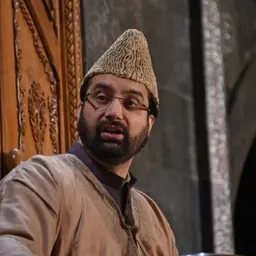
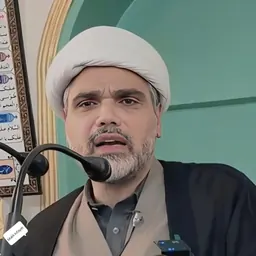


Related people
Same field, nearest in time
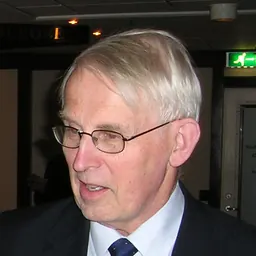


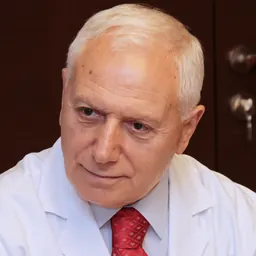

Contemporaries
People whose lives overlapped Mohammad Abbas Ansari's




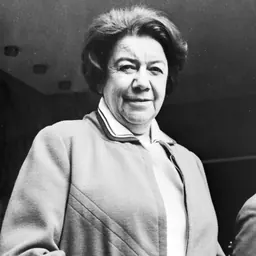
Frequently asked questions
Who was Mohammad Abbas Ansari?
Political leader/Shia cleric:Indian-administered Jammu and Kashmir.
When was Mohammad Abbas Ansari born?
Mohammad Abbas Ansari was born on 17 August 1936 in Srinagar.
When did Mohammad Abbas Ansari die?
Mohammad Abbas Ansari died on 25 October 2022 in Srinagar.
What was Mohammad Abbas Ansari's occupation?
Mohammad Abbas Ansari was a politician and ulema.
What nationality was Mohammad Abbas Ansari?
Mohammad Abbas Ansari was Indian.
Sources & further reading
· Wikipedia: Mohammad Abbas Ansari
· DBpedia: Mohammad Abbas Ansari
Cite this page
APA: Biography.guide. (2026). Mohammad Abbas Ansari. https://biography.guide/mohammad-abbas-ansari/
MLA: "Mohammad Abbas Ansari." Biography.guide, https://biography.guide/mohammad-abbas-ansari/.
Chicago: "Mohammad Abbas Ansari." Biography.guide. https://biography.guide/mohammad-abbas-ansari/.
Data last updated: 2026-09-22 · Spot an error? Report a correction.
Portrait: Wikimedia Commons · author & licence
Page generated 2026-09-27 05:03 UTC