
About Mohamed el-Maadi
Lived 1902 – 1954 (aged 51–52). Mohamed el-Maadi was a French journalist.
Mohamed El-Maadi (; 2 January 1902 – between 1954 and 1956) was an Algerian fascist, ardent anti-semite, and Germanophile.
A Sorbonne student, El-Maadi founded the first Algerian nationalist party, The "Algerian People's Party" in 1922. This initiative failed to garner significant support among Algerian diaspora in France. During the interwar period, El-Maadi's affiliations shifted, as he became associated with La Cagoule, a far-right conspiracy to overthrow the republic. by late 1930s, he was already described by security services as expressing a "ferocious hatred for communists and Jews". El-Maadi reenlisted in the French army during the 1939 campaign and became a highly decorated officer, he was awarded the legion of honour as well as the Ordre de la Division medal for his composure, energy, and uncommon courage. Later, he aligned himself with collaborationist efforts. Notably, El-Maadi played a pivotal role in the establishment of the North African Brigade, alongside Henri Lafont. However, with the conclusion of World War II, El-Maadi found himself a refuge in Egypt, where he eventually died.
Biography His paternal grandfather, Abdallah ben Messaoud El Maadi married Frenchwoman Marie Madeleine Thérèse Lacave. Muhammad El Maadi's two grandfathers were brothers—his father, lawyer Mahfoud El Maadi, married his first cousin, Melouka El Maadi.
Mohamed El-Maadi thus, a French by birth, came from a Chaoui Berber and Muslim family that was well assimilated into French culture.
Mohamed El-Maadi (alias: Mohamed SS) was, like the other Algerian nationalist Saïd Mohammedi, a member of the Gestapo, who actively collaborated with the Third Reich during the Vichy regime. Strongly imbued with the discourse of the Croix-de-Feu, military and an active militant of the French far-right, he encouraged Muslim anti-Semitism in French Algeria, and played a crucial role in the Constantine riots from 3 to 5 August 1934. In that event, Muslims killed twenty-five Jews (fourteen men, six women, and five children; fourteen of whom were beheaded).
He temporarily left the army in 1936 to avoid serving the leftist government of Léon Blum. He then formed an organisation called L'Algérie Française in Paris. He campaigned for reform, equality between colonist and colonised and more opportunities for Algerians.
El-Maadi became more militant as the 1930s ticked on, he joined the terrorist organization La Cagoule, for which he was arrested and sentenced to eight months in prison. Re-enlisting during the 1940 campaign, he was awarded the Legion of Honor.
After working with the Gestapo, El-Maadi finished the war with the rank of Captain within the Schutzstaffel SS.
Ideology El-Maadi's political evolution was driven by a consistent set of political aspirations rooted in a strongly ideological vision of North African history.
Six months after Algeria was occupied by the allies, El-Maadi authored a political manifesto entitled "L'Afrique du nord, terre d'histoire" in Paris. This publication, echoed the ideological stance he previously defended in Er Rachid. Within its pages, El-Maadi articulated his vision for a "Eurafrican" collaboration, envisaging a partnership between a fascist France and the indigenous "Arabo-Berber" communities of North Africa.
Central to El-Maadi's narrative was his reinterpretation of Numidian chivalry of antiquity, Christian Donatism of Aures, and themes of medieval Islamic pride from Iberia.
in 1942 the Legion of French Volunteers Against Bolshevism received 12,000 recruits, who were largely a mix of fascists, misfits and a number of North African immigrants who had been inspired by the anti-Communist rhetoric of El-Maadi.
In 1943, Mohamed El-Maadi met Henri Lafont, head of the Parisian bureau of the Gestapo, with whom he founded the North African Brigade. This brigade was made up of about 300 Algerians, although El-Maadi claimed that he could recruit three thousand men a month when needed, mainly from the Goutte d'Or neighborhood of Paris. The brigade was responsible for several massacres in Dordogne. In August 1944, he took refuge with his wife in Germany, where he was welcomed by the Grand Mufti, Amin al-Husseini, who helped him flee Europe to the Middle East. A French court sentenced him to life in prison in absentia.
Don’t just read it —
keep it.
Full-length biographies made to live with: read them, listen on the way to work, watch them tonight.
- E-book
- Audio
- Video
Instant download · yours to keep · every purchase keeps this site free
Important facts
People in Mohamed el-Maadi's life
Named in this biography and alive at the same time
Related people
Same field, nearest in time
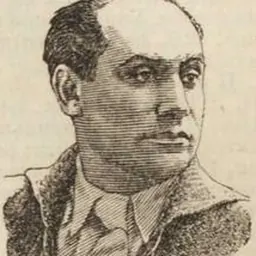




Contemporaries
People whose lives overlapped Mohamed el-Maadi's
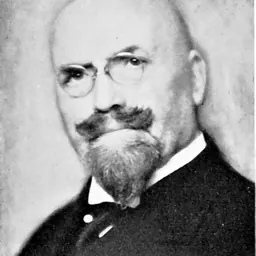





Frequently asked questions
Who was Mohamed el-Maadi?
Algerian fascist (1902–1954/56)
When was Mohamed el-Maadi born?
Mohamed el-Maadi was born on 2 January 1902 in Mechroha.
When did Mohamed el-Maadi die?
Mohamed el-Maadi died in 1954 in Egypt.
What was Mohamed el-Maadi's occupation?
Mohamed el-Maadi was a journalist.
What nationality was Mohamed el-Maadi?
Mohamed el-Maadi was French.
Sources & further reading
Cite this page
APA: Biography.guide. (2026). Mohamed el-Maadi. https://biography.guide/mohamed-el-maadi/
MLA: "Mohamed el-Maadi." Biography.guide, https://biography.guide/mohamed-el-maadi/.
Chicago: "Mohamed el-Maadi." Biography.guide. https://biography.guide/mohamed-el-maadi/.
Data last updated: 2026-09-24 · Spot an error? Report a correction.
Page generated 2026-09-27 05:04 UTC