
Mohamed Bouazizi
Tunisian street vendor
About Mohamed Bouazizi
Lived 1984 – 2011 (aged 26). Mohamed Bouazizi was a Tunisian street vendor, known for Self-immolation.
Tarek El-Tayeb Mohamed Bouazizi ( ; 29 March 1984 – 4 January 2011) was a Tunisian street vendor who, in response to the confiscation of his wares as well as the harassment and humiliation inflicted by municipal officials and their aides, set himself on fire on 17 December 2010 in Sidi Bouzid, Tunisia. His act of self-immolation was the most immediate cause of the Tunisian Revolution, which was the first revolution in the wider Arab Spring against autocratic regimes.
Simmering public anger and sporadic violence intensified following Bouazizi's death, leading the then-president of Tunisia Zine El Abidine Ben Ali to step down on 14 January 2011, after 23 years in power.
In 2011, Bouazizi was posthumously awarded the Sakharov Prize jointly along with four others for his and their contributions to "historic changes in the Arab world". The Tunisian government honored him with a postage stamp. The Times of the United Kingdom named Bouazizi as "Person of 2011", The Jerusalem Posts Amotz Asa-El named him "Person of the Jewish Year 5771" and "The Protester" was named Time 2011 Person of the Year.
Early life
Mohamed Bouazizi, who was known locally as "Babousa", was born in Sidi Bouzid, Tunisia, on 29 March 1984. His father, Tayeb, a construction worker in Libya, died of a heart attack when Bouazizi was three, and his mother, Manoubia, married Bouazizi's uncle some time later.
Along with his six siblings, Although several media outlets reported that Bouazizi had a university degree, his sister, Samia Bouazizi, stated that he had never graduated from high school, but that it was something he had wanted for both himself and his sisters. Bouazizi had worked various jobs since he was ten,
Bouazizi lived in a modest stucco home, a 20-minute walk from the centre of Sidi Bouzid, a rural town in Tunisia that was estimated to have an unemployment rate of 30%. but whether he even required one was initially unclear: Rania Abouzeid of Time claimed that street vending was outright illegal in Tunisia, Hamdi and her brother disputed this, maintaining that she did not slap Bouazizi or otherwise mistreat him, Hamdi did admit, however, that her colleagues may have kicked and beaten him after confiscating his fruit cart. before dousing himself and igniting himself with a match.
According to Bouazizi's sister and uncle, people immediately panicked when he caught fire, and one of them tried to douse him with water. Bouazizi had suffered burns on over 90% of his body before locals managed to stop the flames. He was taken by ambulance to a hospital, where he was placed in an intensive care unit. He was subsequently transferred to a second, larger hospital in Sfax, more than away, and then to the Ben Arous Burn and Trauma Centre in the capital, away. Bouazizi was visited in the hospital by then-President Zine El Abidine Ben Ali, who promised to send him to France for medical treatment according to Bouazizi's mother Benobia, but no such transfer ultimately occurred, leading to criticism. It is estimated that more than 5,000 people participated in the funeral procession that began in Sidi Bouzid and continued through to Bouazizi's native village, though police did not allow the procession to pass near the spot at which Bouazizi had burned himself. From the crowd, many were heard chanting "Farewell, Mohamed. We will avenge you. We weep for you today. We will make those who caused your death weep." He was buried at Garaat Bennour cemetery, 15 kilometres (10 mi) from Sidi Bouzid. His grave was described by Al-Jazeera as "simple" and surrounded by cacti, olive, and almond trees. Tom Chesshyre also describes his tomb after visiting it: small, white, by a row of cacti, and with a simple inscription: "Martyr Mohamed Bouazizi. Peace for his life. And in the next life, have peace as well".
Investigation An investigation was launched following Bouazizi's self-immolation to find the details leading up to his actions. On 20 December 2010, it was reported that Faida Hamdi, the officer who accosted Bouazizi the day of his immolation, was suspended along with the secretary-general (governor) of Sidi Bouzid, but this was subsequently denied by the latter. Some time later, Hamdi was arrested on orders from President Ben Ali and held in an unspecified town. A brother of Hamdi later stated that she had been arrested and detained twice, the first time following Ben Ali's visit to Bouazizi in the hospital and subsequent meeting with Bouazizi's mother and sister at his presidential palace. Hamdi's brother then says his sister and her aides were released following a short detention and the closing of the investigation which "confirmed her innocence".
Protests
Outraged by the events that led to Bouazizi's self-immolation, protests began in Sidi Bouzid within hours, In Tunisia, unrest persisted as a new regime took over, leaving many citizens of Tunisia feeling as though their needs were still being ignored.
Legacy
Many Arabs in the Middle East and North Africa regard Bouazizi as a hero and inspiration. He is credited with galvanising the frustrations of the region's youth against their governments into the mass demonstrations, revolts, and revolutions that have become known as the Arab Spring. One year on, Tunisian writer and academic Larbi Sadiki asserted that Bouazizi's self-immolation "changed the course of Arab political history", achieving the "breakthrough in the fight against autocracy". However, he also wrote it would take years before the act and the subsequent chain of events that followed were "profoundly grasped by historians and social scientists".
Bouazizi is considered a martyr by the Progressive Democratic Party (PDP) of Tunisia. the Mohamed-Bouazizi Square was unveiled four days later. On 17 February, the main square in Tunis that was previously called "November 7", after the date of Ben Ali's take-over in 1987, was renamed "January 14", though some had suggested it should honor Bouazizi (though a major roadway leading to the city's airport was renamed for him). Bouazizi was posthumously awarded the 2011 Sakharov Prize as one of "five representatives of the Arab people, in recognition and support of their drive for freedom and human rights". On 17 December, a cart statue was unveiled in Sidi Bouzid in honor of Bouazizi. Tunisia's first elected president Moncef Marzouki attended the ceremony, stating "Thank you to this land, which has been marginalised for centuries, for bringing dignity to the entire Tunisian people." Also, in Sidi Bouzid, as well as in the capital city of Tunis, both cities' respective main streets were renamed, "Boulevard Mohamed Bouazizi". The United Kingdom's The Times newspaper named Bouazizi person of the year for 2011.
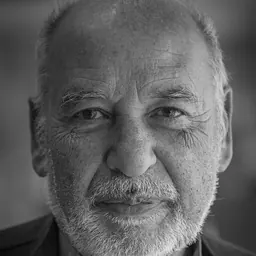
"By Fire", a story by Moroccan author Tahar Ben Jelloun inspired by this incident, was published in The New Yorker edition of 16 September 2013. It is a fictional treatment; some details in the story differ from the factual account. An interview with the author about his story was posted to The New Yorker "This Week in Fiction" on 9 September 2013. In 2011 Hamid Sadr, an Iranian author based in Austria, published the book "" ("The curse of the greengrocer Mohamed Bouazizi"), in which he speculated whether the ensuing protest movement would lead towards democracy or theocracy.
On 17 December 2015, the Tunisian National Dialogue Quartet, the Nobel Peace Prize laureates of that year, as well as other civil society organizations, celebrated Mohamed Bouazizi and the start of the Arab spring five years after his death in a ceremony in Sidi Bouzid.
A Guardian article in 2020 noted that many Tunisians had become disillusioned at the bleak economic situation in the country, and "cursed" Bouazizi's name and legacy.
Related incidents Bouazizi's actions triggered a number of self-immolations, in protests emulating his own, in several other countries in the Greater Middle East and Europe. In Algeria in particular, protests against rising food prices and spreading unemployment have resulted in many self-immolations. The first reported case following Bouazizi's death was that of Mohsen Bouterfif, a 37-year-old father of two, who set himself on fire when the mayor of Boukhadra, Tébessa Province refused to meet with him and others regarding employment and housing requests on 13 January 2011. According to a report in El-Watan, the mayor challenged him, saying if he had courage he would immolate himself by fire as Bouazizi had done. He died on 24 January. In nearby El Oued Province, Maamir Lotfi, a 36-year-old unemployed father of six, also denied a meeting with the governor, burned himself in front of the town hall of El Oued on 17 January, dying on 12 February. Abdelhafid Boudechicha, a 29-year-old day laborer who lived with his parents and five siblings, burned himself in Medjana on 28 January over employment and housing issues. He died the following day.
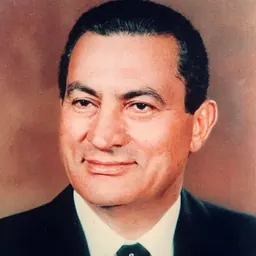
In the six months immediately after Mohamed Bouazizi's death on 4 January 2011, at least 107 Tunisians set themselves on fire. The men who immolated themselves were mostly young unmarried men from poor, rural areas, and had only basic education. His act of protest helped instigate weeks of protest and, later, the resignation of Egyptian President Hosni Mubarak on 11 February 2011. In Saudi Arabia, an unidentified 65-year-old man died on 21 January 2011 after setting himself on fire in the town of Samtah, Jizan. This was apparently the kingdom's first known case of self-immolation.
Although these cases, with the exception of Egypt, did not garner the same kind of popular reaction that Bouazizi's case did in Tunisia, the Algerian, Yemeni, and Jordanian governments experienced significant protests and made major concessions in response to them. He died five days later. In Amsterdam, the Netherlands, Kambiz Roustay, a 36-year-old asylum seeker from Iran, set himself on fire on Dam Square in protest of being refused asylum. Roustay had fled the country for publishing works undermining the regime, and feared being tortured by the Iranian government upon his return.
Don’t just read it —
keep it.
Full-length biographies made to live with: read them, listen on the way to work, watch them tonight.
- E-book
- Audio
- Video
Instant download · yours to keep · every purchase keeps this site free
Important facts
People in Mohamed Bouazizi's life
Named in this biography and alive at the same time





Related people
Same field, nearest in time




Contemporaries
People whose lives overlapped Mohamed Bouazizi's



Frequently asked questions
Who was Mohamed Bouazizi?
Tunisian street vendor
When was Mohamed Bouazizi born?
Mohamed Bouazizi was born on 29 March 1984 in Sidi Bouzid.
When did Mohamed Bouazizi die?
Mohamed Bouazizi died on 4 January 2011 in Ben Arous.
What was Mohamed Bouazizi's occupation?
Mohamed Bouazizi was a street vendor.
What was Mohamed Bouazizi known for?
Mohamed Bouazizi was known for Self-immolation.
What nationality was Mohamed Bouazizi?
Mohamed Bouazizi was Tunisian.
Sources & further reading
Cite this page
APA: Biography.guide. (2026). Mohamed Bouazizi. https://biography.guide/mohamed-bouazizi/
MLA: "Mohamed Bouazizi." Biography.guide, https://biography.guide/mohamed-bouazizi/.
Chicago: "Mohamed Bouazizi." Biography.guide. https://biography.guide/mohamed-bouazizi/.
Data last updated: 2026-09-22 · Spot an error? Report a correction.
Page generated 2026-09-27 05:28 UTC