
About Modibbo Raji
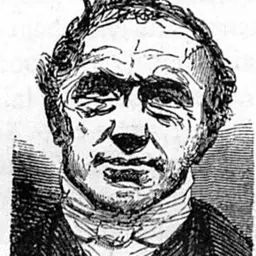
Lived 1790 – 1865 (aged 74–75). Modibbo Raji was a Nigerian scholar, writer and vizier.
Modibbo Raji (; 1790 – 1865) was a 19th-century Fulani Islamic scholar who was part of the community of Usman Dan Fodio, founder of the Sokoto Caliphate, and his brother Abdullahi dan Fodio. After a long career as a teacher, Qadi, Naib (deputy Imam) and Wazir (vizier) in the Gwandu Emirate under his mentor Abdullahi dan Fodio and his successors, Modibbo Raji emigrated in the 1850s and eventually settled in Adamawa. He is generally regarded as the founder of the Islamic scholarly tradition in Adamawa as well as one of the earliest exponents of the Tijjaniyya Islamic sect in the Sokoto Caliphate. He died c. 1865 and was buried in Yola leaving behind his writings both in Arabic and Fulfulde, and a large scholarly community of his sons, daughters, students and associates. After openly acknowledging his membership of Tijjaniyya, Modibbo Raji sought permission from Emir Khalil to emigrate. His intention was to travel to the Holy Land, perform the Hajj and eventually settle on the banks of the Nile. The Emir Khalil was initially opposed to the plan but later came around to grant permission. In c. 1855, accompanied by most of his family members, his students and their families, Modibbo Raji left Gwandu and travelled eastwards through Katsina and Kano where he met new companions (who were Islamic scholars in their own right) like Modibbo Nakashiri, Modibbo Sufyanu and Malam Muhammad Na Gano, who either travelled with him or joined him later in Yola. On arrival in Yola, Modibbo Raji was warmly welcomed by the emir Lamido Lauwal who sought to discourage him from proceeding to the East. The Lamido granted a piece of land just south of Yola for Modibbo Raji and his companions to settle, a location that has now grown into the settlement of Wuro Modibbo. Two years later, in c. 1857, Modibbo Raji left Yola to continue his eastward journey. In the 1980s, his descendants built a school in his memory at Wuro Modibbo.
Stay in Kalfou
At the eastern boundary of Adamawa Emirate, Modibbo Raji was unable to continue his journey because of troubles in the Sultanate of Bagirmi in the present-day Republic of Chad. He therefore remained in the sub-emirate of Kalfou (in the present-day Far North Region of Cameroon) and founded the settlement of Dinawo (religious town) while waiting for the return of peace to Bagirmi to continue his journey. In addition to his teaching, judicial and administrative careers, he was also renowned for his writings (in Arabic and Fulfulde) in a literary career that lasted for almost 60 years from 1806 up to his death in 1865. Apart from being a noted scholar and teacher, he held the posts of Chief Qadi of Girei and Chief Imam of Girei central mosque. As Chief Qadi, he was in charge of the northern sub-emirates of Adamawa from Maroua down to Ngaoundere. He died in 1906, a few years after the establishment of colonial rule in Nigeria. Among his students were Modibbo Girei Ahmadu, a onetime Chief Qadi of Yola. Modibbo Raji's companions Modibbo Nakashiri and Modibbo Sufyanu were also high-ranking members of the Girei scholastic community. One of Modibbo Raji's students Muhammad Tanu Mo’ililal was a prominent Islamic scholar and writer in the later part of the 19th century in Yola. Upon his return from Kano, Modibbo Dahiru became the first Native Treasurer in the then Yola Province. Later in 1919, he was appointed by Lamido Muhammad Abba as the fourth Galadima of Adamawa, and Madagali (Dan Galadima Dahiru Aminu, a great-grandson) at various times in the early to mid-20th century. Galadima Aminu, also a grandson of Modibbo Raji, was one of the longest serving senior councillors in Adamawa Emirate. He held the post of Galadima Adamawa from 1921 to 1967 during which he also doubled as the District Head of Yola (and Jimeta) between 1934 and 1958.
Later descendants of Modibbo Raji have played prominent roles in the civil service, politics, military, business, academia and various professions in post-independence Nigeria. In their home state of Adamawa, his hundreds of descendants are found mainly in Yola South, Yola North, Girei, Mayo Belwa, Gombi and Song local government areas. Over a century of intermarriage among the descendants of Modibbo Raji and those of his companions Modibbo Nakashiri, Modibbo Sufyanu and Malam Muhammad Na Gano
Writings Source:
In the name of God the Merciful and the Compassionate, may the blessing of God be upon the noble Prophet and his followers in the path of the upright religion.
From the slave of God Muhammadu Raji b. Ali to the emir of affairs, the wali of advice, the Wazir, the son of our noble sister Asma' the daughter of the Sheikh, most perfect peace and most perfect greetings and respect.
This is to let you know our news and that we, praise be to God, are well and in good health. We have reached the land of the Imam Adama peacefully in regard to both our religious and worldly affairs, all through your blessing (baraka). And indeed your messenger, the emir Kassan had exerted himself to fulfill your wishes and obey your commands, so much so that he executed all your instructions. We are grateful to you and him. May God place you on the Day of Resurrection among the leading or chosen people.
Next, convey our greetings to the amir-al-mu'minin (Ali b. Bello 1842-59) and convey to him our prayer and gratitude - may God increase his greatness and sovereignty. Indeed he has brought all of us under his authority through his bounty; verily, his Blessings never allowed us to be thirsty or hungry - praise be to God.
Next, I have learnt from numerous reports that the route to the Holy Places is impossible except through association with and befriending the unbelievers and obeying their orders all the way from here to the Holy Places. I did not accept bargaining with my religion in this manner though a number of the Ulama have done so. In fact, our Sheikh b. Fodiyo said "To have association with a Kafir - unbeliever, who is immoral and oppressive, is a sin even if done only outwardly." Because of this, I turned to the right-handside and stayed in the land of Lawal b. Adama.
Elegy Modibbo Raji's elegy Woyrude Modibbo Raji, also referred to as Fayaa Fukarabe, was composed by his student Muhammad Tanu Mo'Ililal. The 31-verses-long elegy was composed in the Fulfulde language and written in the Ajami script. In this audio file, the elegy is recited by Hadijatu Adda Yola a widow of Modibbo Raji's grandson Galadima Bello Ahmad.
Woyrude Modibbo Raji
Don’t just read it —
keep it.
Full-length biographies made to live with: read them, listen on the way to work, watch them tonight.
- E-book
- Audio
- Video
Instant download · yours to keep · every purchase keeps this site free
Important facts
Related people
Same field, nearest in time


Contemporaries
People whose lives overlapped Modibbo Raji's



Frequently asked questions
Who was Modibbo Raji?
Nineteenth century Islamic scholar in Gwandu and Adamawa
When was Modibbo Raji born?
Modibbo Raji was born in 1790 in Gobir.
When did Modibbo Raji die?
Modibbo Raji died in 1865 in Yola, Adamawa.
What was Modibbo Raji's occupation?
Modibbo Raji was a scholar, writer and vizier.
What nationality was Modibbo Raji?
Modibbo Raji was Nigerian.
Sources & further reading
Cite this page
APA: Biography.guide. (2026). Modibbo Raji. https://biography.guide/modibbo-raji/
MLA: "Modibbo Raji." Biography.guide, https://biography.guide/modibbo-raji/.
Chicago: "Modibbo Raji." Biography.guide. https://biography.guide/modibbo-raji/.
Data last updated: 2026-09-20 · Spot an error? Report a correction.
Page generated 2026-09-27 05:06 UTC