
About Moa Martinson
Lived 1890 – 1964 (aged 73). Moa Martinson was a Swedish writer and journalist.
Moa Martinson (born Helga Maria Swarts; 2November 18905August 1964) was one of Sweden's most noted authors of proletarian literature. Her ambition was to change society with her authorship and to portray the conditions of the working class, and also the personal development of women. Her works were about motherhood, love, poverty, politics, religion, urbanization and the hard living conditions of the working-class woman.
Early life Martinson was born on 2November 1890 in Vårdnäs, Linköping Municipality. Her mother was Kristina Swartz (sometimes spelt Christina Schwartz) who served as a maid wherever jobs were available. There are no legal records stating who her father was, Since she carried, what in those days was referred to as an illegitimate child, she had to go to her parents home for the birth. Swartz' father, Nils Peter Swartz, was a poor soldier who lived with his wife, Carin Olofsdotter, in a derelict croft in Vårdnäs. where two witnesses testified that they had seen her and Andersson in the same bed around the time the child would have been conceived.
The identity of her father was unknown to Martinson her entire life, but her speculations about who it could be were an inspiration for her work. In her book Pigmamma ("Maid Mother") she portrays her mother's situation as pregnant with a married man's child. At one point she thought that her father was a married man, whom her mother had worked for.
During the first years of her life, Martinson lived with her paternal grandparents and their youngest daughter Hulda while Swartz worked as a maid or in the textile mills in Norrköping. There are several discrepancies in the timeline of Martinson's early years between official records and her books. These are most likely due to that her stories built on the oral traditions of the family. During the summer of 1906, she worked as a kitchen maid in the main restaurant at the Norrköping Exhibition of Art and Industry. Situated at the top of Syltberget ("Sylt Hill"), the restaurant was accessed by an 80-steps stairway. In Kungens rosor (The King's Roses), Martinsson recounts her work in the restaurant and mentions the stairs. The novel got its name from a conversation that she had at the exhibition with King Oscar II of Sweden on 3July 1906. The conversation revolved around flowers, which the King said that he felt had souls. , the stairs remain and have been named "Moa Martinson's Stairs".
In 1906, Martinson moved to Stockholm in the hope of getting a job, but this turned out to be harder than she expected. During the financial depression of 1907–1909, she had to move back to Norrköping. At this time, she followed events related to concerns about the labour market. This period of Martinson's life had a significant impact on her political engagement. She also wrote poems and sent a collection to a notary interested in literature, but her work was rejected. She later described the poems as "lofty", since that was how she thought such texts should be written. She became pregnant in March 1909 and Johansson proposed, but Martinson was doubtful about marrying him. Despite this, she and Karl moved to Johannesdal and in her book Den osynlige älskaren ("The Invisible Lover") she wrote about her first year as mother and wife, the hard life in Johannesdal and how she desperately wanted to get away.
In 1910, her first son Olof was born, and in 1922 she and Johansson were married. The reason she hesitated for such a long time to marry him was partly due to Johansson's drinking and partly because she did not want to live in the dark forest. Martinson recounted the birth in Kvinnor och äppelträd, which has been called "one of Swedish literature's most powerful depictions of a childbirth".
Life on Johannesdal was poor and hard but the upbringing of her sons was important to Martinson. She was opposed to spanking children and disliked the militant nationalistic romanticism taught in schools at the time.
Political involvement
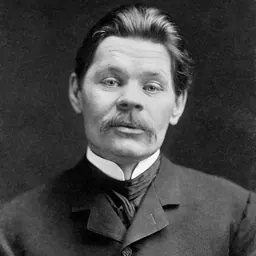
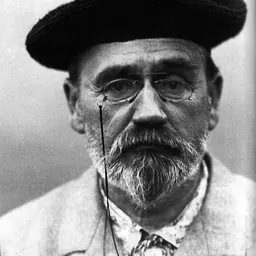
Martinson's political interest started to develop in 1921, when unemployment in Sweden was higher than ever before, and in 1922 she and Johansson joined the Central Organisation of the Workers of Sweden where Martinson became very active. To further educate herself, she read the works of authors like Fyodor Dostoyevsky, Émile Zola, Maxim Gorky and Martin Andersen Nexø. Because of her political interest in better pay and conditions for workers and her ability to speak in any context, she was elected to the municipal council in Sorunda where she represented the Labour Party. She resigned from office in 1926. In November 1922, Martinsson wrote her first article for the syndicalist paper Arbetaren'''s ("The Worker's") page for women. She continued writing for the paper and in 1923 she had articles published weekly in Arbetaren. In her articles she wrote about how men and women should work together for a better world. She frequently engaged in debates, especially those involving women's issues.
With her work for Arbetaren she developed her writing skills, but even though she often pushed the boundaries in her articles, she went too far in 1924, when she wrote that women and men should receive equal pay for equal work. Quarrels started at the magazine, resulting in Martinson resigning from the paper, but due to her contributions in Arbetaren she was now known to the public although mostly in syndicalistic circles.
One author who had significant impact on Martinson was Martin Andersen Näxö. It was the first time she recognized her own experiences in a literary work. She wrote a letter to him, telling him about her own life and also sent an article she had written for Arbetaren. Näxö responded positively, telling her she should write a book about her life. Shortly afterwards Martinson started writing the book Pigmamman ("The Maid Mother"). In 1925, she worked for a new magazine called Vi kvinnor ("We women"), where she contributed with articles, novels and causeries.
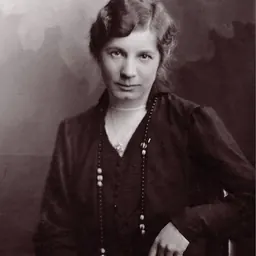
Magazine articles In April 1925, Martinson's two youngest sons, Manfred and Knut, went through the ice and drowned in Lake Styran by the torp and she was devastated. She worked incessantly to keep her grief at bay. In October that year, she was also writing for Tidevarvet (The Epoch) which was a politically radical magazine for women published by the Fogelstad Citizen School for Women with Elin Wägner as editor. Her first contribution was an article about unemployed men's women. She wrote it under a new signature, Moa, because she did not want the syndicalistic circles she moved in to see that she worked for a liberal magazine. However, her work for Tidevarvet was mostly novels and stories and her political articles were still published in the syndicalistic press. She had found the name "Moa" in the novel Jökeln (Bræen) by Danish author Johannes V. Jensen, where the character "Moa" was described as the first mother of humanity. urging him to come home. With the announcement, Harry's flight became public and the story circulated in the newspapers. The couple kept in contact indirectly through their publishers and friends. On 2August, Martinsson wrote to Harry that she was going to commit suicide and that the manuscript was going to follow her to the grave. She had buried the manuscript in the woods. The letter reached Harry while he worked his passage aboard a ship to Rotterdam. A week later, he was back home in Johannesdal and he, Martinson and one of their sons dug up the manuscript.
In August 1934, the couple were invited to the first All Union Congress of Soviet Writers in Moscow as part of the Swedish delegation. Gorky became the first chairman of the congress during which the new doctrine of Socialist realism was formed. She had an operation on 16June and during her stay at the hospital, she and Harry kept in contact through letters. Harry's were love letters, while Martinson still found it difficult to trust him after his extramarital affairs. Her letters were not as affectionate as his and their relationship was crumbling. On 8February 1939, Harry experienced pain in one of his knees and was hospitalized. He stayed in the hospital during spring and was discharged on 13June, after which he went to Stockholm and stayed with friends. He broke contact with Martinson and after Midsummer 1939, he filed for divorce and never returned to her or Johannesdal. They were granted legal separation on 4March 1940, and divorced in 1941. By then Harry was already engaged to his second wife Ingrid Lagercrantz. They were married until Harry committed suicide on 11February 1978 at the Karolinska University Hospital in Stockholm by cutting his stomach open with a pair of scissors in what has been described as a "hara-kiri-like manner", due to a depression following a controversy regarding the Nobel Prize in Literature he received in 1974.
The marriage between Martinson and Harry is recounted in the memoirs Tröskeln ("The Threshold") (1982) by their friend Swedish writer Ivar Lo-Johansson. She also relied on Lo-Johansson to deliver messages to Harry when he was out on his wanderings and his whereabouts were unknown to her. She is buried at Sorunda Church.
Awards The Nine Society's Grand Prize, 1944
Don’t just read it —
keep it.
Full-length biographies made to live with: read them, listen on the way to work, watch them tonight.
- E-book
- Audio
- Video
Instant download · yours to keep · every purchase keeps this site free
Important facts
People in Moa Martinson's life
Named in this biography and alive at the same time

Related people
Same field, nearest in time





Contemporaries
People whose lives overlapped Moa Martinson's



Frequently asked questions
Who was Moa Martinson?
Swedish writer (1890–1964)
When was Moa Martinson born?
Moa Martinson was born on 2 November 1890.
When did Moa Martinson die?
Moa Martinson died on 4 August 1964 in Sorunda församling.
What was Moa Martinson's occupation?
Moa Martinson was a writer and journalist.
What nationality was Moa Martinson?
Moa Martinson was Swedish.
Sources & further reading
Cite this page
APA: Biography.guide. (2026). Moa Martinson. https://biography.guide/moa-martinson/
MLA: "Moa Martinson." Biography.guide, https://biography.guide/moa-martinson/.
Chicago: "Moa Martinson." Biography.guide. https://biography.guide/moa-martinson/.
Data last updated: 2026-09-20 · Spot an error? Report a correction.
Page generated 2026-09-27 05:25 UTC