
About Mirza Nasir Ahmad
Lived 1909 – 1982 (aged 72). Mirza Nasir Ahmad was an Indian and Pakistani religious leader and caliph.
Mirza Nasir Ahmad (; 16 November 1909 – 9 June 1982) was the third Caliph of the Ahmadiyya Muslim Community from Pakistan. He was elected as the third successor of Mirza Ghulam Ahmad on 8 November 1965, the day after the death of his predecessor and father, Mirza Basheer-ud-Din Mahmood Ahmad.
Under his leadership, there was further expansion of missionary work started by his predecessor the second caliph, particularly in Africa and Europe. In 1974, he represented the Ahmadiyya Community in the National Assembly of Pakistan in an eleven-day inquisition. Despite his efforts, the National Assembly declared Ahmadis to be non-Muslims and he led the Community through this period of increased hostility and government repression. The 'Nusrat Jehan Scheme', a scheme dedicated to serving parts of Africa by running numerous medical clinics and schools was one of the many outcomes of his 1970 tour of West Africa, the first visit to the continent made by an Ahmadi caliph. In 1980, Nasir Ahmad traveled to Spain, where he laid the foundation stone of the Basharat Mosque in Pedro Abad and announced "Love for All, Hatred for None" as the community's motto. The mosque was inaugurated posthumously in 1982 and was the first purpose-built mosque in Spain since the Reconquista and the Fall of Granada in 1492.
Nasir Ahmad also orchestrated the compilation and arrangement of Ghulam Ahmad's literary output. The writings of Ghulam Ahmad, which had hitherto been published as individual books, pamphlets or articles were compiled in the twenty-three volume corpus known as Rūhānī Khazā᾽in (Spiritual Treasures). His sayings and discourses were collected in the ten volume Malfūzāt (spoken words) and his announcements and advertisements were published in three volumes under the title of Majmu'a Ishtihārāt (Collection of Flyers or Posters).
Early life
Mirza Nasir Ahmad was born in Qadian, India on 16 November 1909. His early education was both religious and secular. By the age of thirteen, with guidance from his father Mirza Basheer-ud-Din Mahmood Ahmad, Nasir Ahmad had committed all 114 chapters of the Qur’an to memory, making him a Hafiz. His father placed great emphasis on the acquisition of religious education. In pursuit of that goal, Nasir Ahmad was enrolled at the Madrassa Ahmadiyya, Qadian, graduated with honors in July 1929. After graduation, he went through his post-secondary education and by 1934, obtained his Bachelor of Arts Degree from the Government College, Lahore.
On 5 August 1934, Nasir Ahmad married Syeda Mansoora Begum, a granddaughter of Mirza Ghulam Ahmad and eldest daughter of Nawab Muhammad Ali Khan of Malerkotla, India. Within a month of getting married, Nasir Ahmad left India and proceeded for postgraduate studies to England.
In England, he obtained Masters of Arts degree in the Tripos (P.P.E.) Political Science, Philosophy and Economics from Balliol College, University of Oxford. He impressed his college professors as a very well-behaved and deep-thinking student. During a subsequent visit to England, he met one of his former professors who welcomed him to his residence. The professor told other members of the Community that he had seen signs of leadership in Nasir Ahmad and was certain that he would be a leader one day.
Before returning to India he visited Egypt for three months from July to November 1938 in order to improve his Arabic and to meet up with his brother Mirza Mubarik Ahmad to analyse the progress of the Community in Cairo. During his stay, he also visited numerous sites of historical interest.
Career under Basheer-ud-din Mahmood Ahmad's caliphate In November 1938, he returned to the town of his birth, Qadian, where he was appointed a professor at Jamia Ahmadiyya, the missionary theological training college of the Ahmadiyya Muslim Community. In 1939, he was appointed principal where he remained for five years. From May 1944 to November 1965, he was principal of the Talim-ul-Islam College, first in Qadian, then after partition, in Rabwah, Pakistan.
During the anti-Ahmadiyya riots in 1953, Nasir Ahmad was imprisoned briefly but released on 28 May 1953. Eventually Ahmadis were declared non-Muslim by the National Assembly of Pakistan.
London In 1978, Mirza Nasir Ahmad traveled to London where the conference of Jesus' Deliverance from the cross was held at the Commonwealth Institute in Kensington. This was attended by various scholars belonging to principal faiths who read their papers discussing the circumstances surrounding the Crucifixion of Jesus, after which the Ahmadiyya viewpoint regarding the death of Jesus was presented. Presentations were also given by Sir Zafarullah Khan and M.M. Ahmad.
The Christian Church gave a statement dismissing the Ahmadiyya as not representing the teachings of Islam and refused to be drawn into the debate that had been re-opened by the discovery of the Shroud of Turin and now this conference. There were participants from Pakistan, India, Africa, Asia, Europe, and the United States. On this occasion, Nasir Ahmad also delivered a lecture on this issue. He dealt with the subject of Jesus' survival from death upon the cross, his travel to the east, the Unity of God, and expounded the status of Muhammad.
Compilation of Ahmadiyya texts
During his Caliphate, Mirza Nasir Ahmad is also known for having directed the compilation of the complete dreams, visions and verbal revelations claimed to have been received by Mirza Ghulam Ahmad, which had hitherto been published in various books of Ghulam Ahmad, as well as various journals and newspapers. The compiled version of his entire revelations was published in the form of the Tazkirah. The complete dialogues or utterances of Mirza Ghulam Ahmad were also compiled under the directives of Khalifatul Masih III. This was published in the form of the Malfoozat, which include his discourses, speeches, question and answer sessions, sermons and casual sayings.
Spain The Basharat Mosque in Pedro Abad, of the Ahmadiyya Muslim Community, was the first mosque to be built in modern Spain. In 1980, Mirza Nasir Ahmad traveled to Spain, where he laid the foundation stone of the Basharat Mosque in Pedro Abad. This was the first mosque to be built in Spain in over 750 years. It was here he coined the motto "Love for All, Hatred for None". The construction of the mosque was not completed until after his death in 1982.
Marriage, children, and family Mirza Nasir Ahmad married Sayyidah Mansoora Begum on 5 August 1934. She was the daughter of Nawab Muhammad 'Ali Khan of Malerkotla and Nawab Mubarka Begum, the daughter of Mirza Ghulam Ahmad.
Mirza Nasir Ahmad's body was then taken to Rabwah. The next day of his death, Mirza Tahir Ahmad, half-brother of Nasir Ahmad, was elected as the Khalifatul Masih IV. Tahir Ahmad led his predecessor's funeral prayers, which was participated by nearly a hundred thousand people. Mirza Nasir Ahmad was then buried in Bahishti Maqbara, a cemetery established by the Ahmadiyya Muslim Community.
Don’t just read it —
keep it.
Full-length biographies made to live with: read them, listen on the way to work, watch them tonight.
- E-book
- Audio
- Video
Instant download · yours to keep · every purchase keeps this site free
Important facts
Family & relationships
People in Mirza Nasir Ahmad's life
Named in this biography and alive at the same time




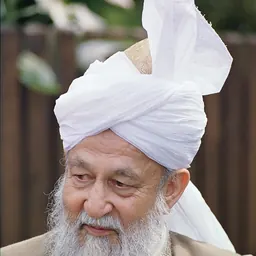
Related people
Same field, nearest in time

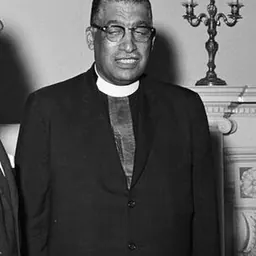

Contemporaries
People whose lives overlapped Mirza Nasir Ahmad's
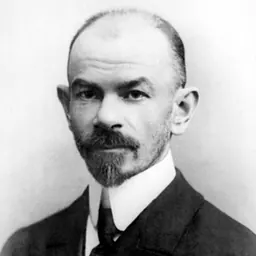



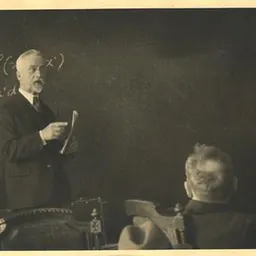
Frequently asked questions
Who was Mirza Nasir Ahmad?
Ahmadiyya religious leader (1909–1982)
When was Mirza Nasir Ahmad born?
Mirza Nasir Ahmad was born on 16 November 1909 in Qadian.
When did Mirza Nasir Ahmad die?
Mirza Nasir Ahmad died on 9 June 1982 in Islamabad.
What was Mirza Nasir Ahmad's occupation?
Mirza Nasir Ahmad was a religious leader and caliph.
What nationality was Mirza Nasir Ahmad?
Mirza Nasir Ahmad was Indian and Pakistani.
Sources & further reading
· Wikipedia: Mirza Nasir Ahmad
Cite this page
APA: Biography.guide. (2026). Mirza Nasir Ahmad. https://biography.guide/mirza-nasir-ahmad/
MLA: "Mirza Nasir Ahmad." Biography.guide, https://biography.guide/mirza-nasir-ahmad/.
Chicago: "Mirza Nasir Ahmad." Biography.guide. https://biography.guide/mirza-nasir-ahmad/.
Data last updated: 2026-09-20 · Spot an error? Report a correction.
Page generated 2026-09-27 05:21 UTC