
Mirha-Soleil Ross
Canadian transgender videographer, performance artist, sex worker and activist (born 1969)
About Mirha-Soleil Ross
Born 1969. Mirha-Soleil Ross is a Canadian video artist, television producer, actor, filmmaker, film director and film actor.
Mirha-Soleil Ross is a transsexual videographer, performance artist, sex worker and activist. Her work since the early 1990s in Montreal and Toronto has focused on transsexual rights, access to resources, advocacy for sex workers and animal rights. She is also known for art produced under the pseudonym Jeanne B.
Her notable works include gendertrash from hell, the Counting Past 2 festival, her show Yapping Out Loud, and the film Mateřština.
Early life Ross grew up in a poor neighbourhood of Montreal, Quebec. Her family was francophone, worked in construction, and was mostly illiterate. She credited this with increasing her awareness of the needs of other marginalized groups, like queer people and sex workers. She struggled to "pass" as a boy and was often attacked for looking too feminine. Ross moved from Montreal to Toronto during the early 1990s, where she did sex work and began producing zines and videos.
gendertrash from hell and genderpress
From 1993 to 1995, Ross and her partner Xanthra Phillippa MacKay published gendertrash from hell, a zine which "[gave] a voice to gender queers, who've been discouraged from speaking out & communicating with each other." They published the zine via genderpress, a company they began in Toronto. Gendertrash was distributed via queer and feminist bookstores, then shared widely among trans people and the queer underground scene, helping form a collective trans culture. In 2025, Ross and Cat Fitzpatrick compiled gendertrash issues and archival materials into a 2025 book, Gendertrash From Hell, published by LittlePuss Press. It has a foreword by Trish Salah and afterword by Leah Tigers.
The original zine included art, poetry, resource lists, serialized fiction, calls to action, classified ads, illustrations, collages and movie reviews. By and for transsexual, transgender and transvestite people, it addressed gender experiences at the individual and societal level and prioritized sex workers, low-income queer people, trans people of colour and prisoners. Ross and MacKay contributed content to the zine, with Ross sometimes writing under the pseudonym Jeanne B. Ross described her filmmaking in her site's biography:
Laura Horak lists Ross as an important early trans porn filmmaker, along with artists like Christopher Lee, Stephanie Anne Lloyd, Buck Angel, Morty Diamond, and Cary Cronenwett. Amy Marvin points to Ross and MacKay's film Gender Troublemakers as an important early example of trans-for-trans, or t4t, publishing. Daze Jefferies compares Ross' art to that of Nina Arsenault, saying that each "explore the spatial and spiritual registers of transsexual womanhood". Ross donated her videos and those of her film festival, Counting Past 2, to the Arquives, making her fonds and Rupert Raj's the majority of the trans-related film in that archive. , Ross' fonds were also one of the largest collections of trans films in the world.
Videos
Counting Past 2 Ross and Xanthra Phillippa MacKay began Counting Past 2 (CP2) in 1997, seeking to make a festival solely dedicated to films and performances by trans artists. They were motivated by the rejection of their film Gender Troublemakers at a gay and lesbian film festival that instead showed works about gender-bending created by cisgender artists. CP2 was the first trans film festival.
In 1997, 1998, and 1999, Ross ran CP2, providing a space for trans people to speak for themselves without catering to cisgender audiences. The festival's goal was to be more inclusive of trans artists than mainstream gay and lesbian film festivals by centering trans voices, accepting less-polished work and including cabaret and performance components instead of restricting submissions to films.
Participants included Aiyyana Maracle and Max Wolf Valerio. In 2002, the festival returned after a two-year hiatus, under the stewardship of Boyd Kodak and Cat Grant. In a 2007 interview with Viviane Namaste, Ross said that her efforts with CP2 to create transsexual spaces outside a lesbian and gay framework had failed and that those spaces had disappeared or been absorbed by the LGBT community. Namaste credited CP2 for challenging the autobiographical mode of art that was often the only permitted method for trans people to publish work: "transsexuals have used the opportunity created by CP2 to question the very terms and conditions created by the autobiographical imperative". She also performed it at the National Transgender Theatre Festival in New York. Yapping Out Loud also incorporated Ross' animal-rights activism with comparisons between oppression faced by sex workers and coyotes, inspired by the American sex-worker organization COYOTE. COYOTE, standing for Call Off Your Old Tired Ethics, was one of the first advocacy organizations for sex workers rights. Ross had worked as a sex worker for over a decade before creating the show. Each shares an anti-prostitute mission, from Taylor's quest to "rescue" prostitutes regardless of their own desires, to Judy's television show on "Co-existing with Prostitutes", which shares methods on keeping prostitute's out of viewer's yards, and finally the killer's advice on "whore management" explained by a story of the first time he shot a prostitute.
In 2001 and 2002, she performed The Pregnancy Project, a 9-month piece where she appeared in public with a prosthetic belly to spark conversations about gender, motherhood and the possibility of womb transplants for transsexuals.
Social service During the 1990s and early 2000s, Ross was involved in social service work for trans and sex worker communities in Toronto. In 1999, she was the founding coordinator of Meal-Trans at the 519, a drop-in program offering meals and peer support to trans people. They performed similar supportive roles in Toronto as Sandra Laframboise did with the High Risk Project Society at a Native health center in Vancouver.
Ross worked with women's shelters, community centres and sex worker organizations to improve access and educate service providers. She was involved in pushing back against efforts by residents' associations in the Gay Village and Allan Gardens areas to expel sex workers.
Ross hosted Animal Voices, an Ontario radio show covering animal advocacy and liberation movements, from 1996 to 2001.
Ross was heavily involved in activism and advocacy. After the 1997 murders of two trans people and one cisgender aboriginal woman in Toronto, Ross, Monica Forrester, and several other activists created a community coalition to push for safe spaces for trans people. Forrester recalled that the original coalition included many trans people of color, but when more white organizers and people with targeted training but less understanding of present issues joined the movement, the original activists were pushed out.
Ross' activism consistently pushed the LGBTQ movement to expand its sphere of political support and consider intersectionality. She connected LGBTQ rights with support of sex workers, indigenous communities, and the environment. Ross also criticized the LGBTQ community in a 2003 interview for not noticing or acting against industrial animal exploitation, noting the use of animal experimentation during AIDS research and the leather subculture of the queer community.
Personal life After Ross moved to Toronto in 1992, she began a relationship and artistic partnership with Xanthra Phillippa MacKay. Ross later was the life partner of activist and film editor Mark Karbusicky, who died in 2007. They produced art together as well.
Awards Ross has received several grants from the Canada Council for the Arts. Her video Mateřština (co-directed with Mark Karbusicky) won the Marian McMahon Award at the 2004 Images Festival in Toronto. In 2001, Ross was the grand marshal of Toronto's Pride Parade. In 2011, she was inducted into Canada's Q Hall of Fame.
Exhibitions +ExhibitionDatesExhibitorLocationNo Master Territories: Feminist Worldmaking and the Moving Image June 19–August 28, 2022Haus der Kulturen der WeltBerlin,
Don’t just read it —
keep it.
Full-length biographies made to live with: read them, listen on the way to work, watch them tonight.
- E-book
- Audio
- Video
Instant download · yours to keep · every purchase keeps this site free
Important facts
People in Mirha-Soleil Ross's life
Named in this biography and alive at the same time




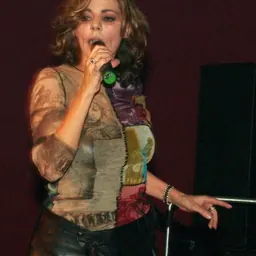
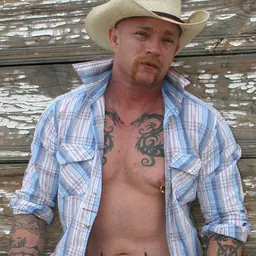

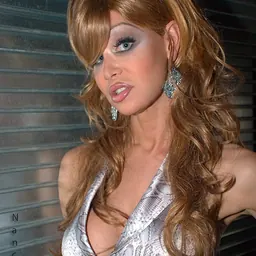
Related people
Same field, nearest in time
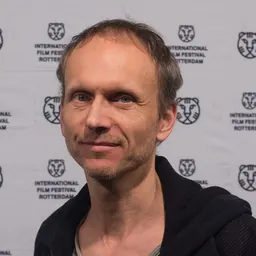



Contemporaries
People whose lives overlapped Mirha-Soleil Ross's




Frequently asked questions
Who is Mirha-Soleil Ross?
Canadian transgender videographer, performance artist, sex worker and activist (born 1969)
When was Mirha-Soleil Ross born?
Mirha-Soleil Ross was born in 1969 in Montreal.
What is Mirha-Soleil Ross's occupation?
Mirha-Soleil Ross is a video artist, television producer, actor, filmmaker, film director and film actor.
What nationality is Mirha-Soleil Ross?
Mirha-Soleil Ross is Canadian.
Sources & further reading
· Wikipedia: Mirha-Soleil Ross
Cite this page
APA: Biography.guide. (2026). Mirha-Soleil Ross. https://biography.guide/mirha-soleil-ross/
MLA: "Mirha-Soleil Ross." Biography.guide, https://biography.guide/mirha-soleil-ross/.
Chicago: "Mirha-Soleil Ross." Biography.guide. https://biography.guide/mirha-soleil-ross/.
Data last updated: 2026-09-20 · Spot an error? Report a correction.
Page generated 2026-09-27 05:00 UTC