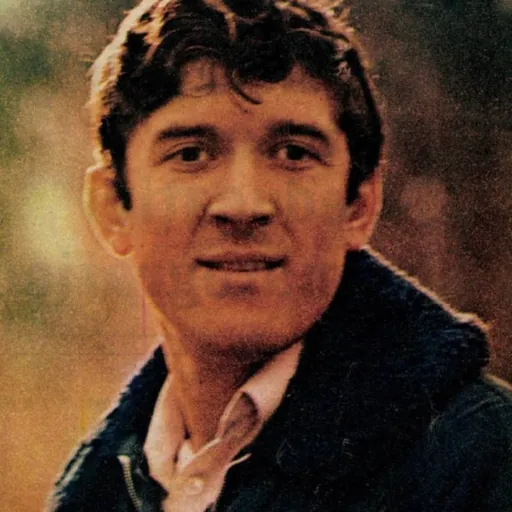
About Mircea Diaconu
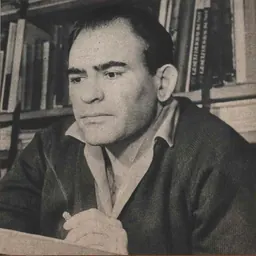
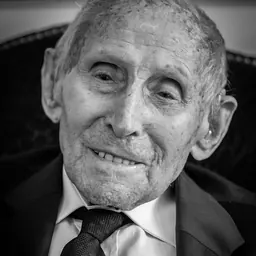
Lived 1949 – 2024 (aged 74). Mircea Diaconu was a Romanian politician, actor, stage actor, film actor and writer.
Mircea Diaconu (; 24 December 1949 – 14 December 2024) was a Romanian actor, writer and politician. First appearing on stage in 1970, and on screen two years later, Diaconu pursued a lengthy career in both formats, working with a series of prominent directors. He acted in some sixty films through the 2000s, and continued to act in theatre during the ensuing decade. He took part in the Romanian Revolution of 1989. In 2008, he entered electoral politics, becoming a senator, and subsequently serving a term as a Member of the European Parliament. In 2019, he ran for president, placing fourth.
Biography
Acting, writing, Revolution Born in Vlădești, Argeș County, he graduated high school in Câmpulung in 1967 and Bucharest's I.L. Caragiale Institute of Theatre and Film Arts in 1971. In 1980, he married , herself an actress; the couple had two children.
Diaconu made his theatrical debut a year before finishing university, at the Bulandra Theater, in Truman Capote's The Grass Harp. His screen debut came in Dan Pița's (1972); he would later appear in the same director's (1975). Other directors with whom he worked include (Red Apples, 1975; , 1982; and , 1988), Virgil Calotescu (, 1982; and , 1985), Nae Caranfil (Asfalt Tango, 1996; and Filantropica, 2002) and Cătălin Mitulescu (The Way I Spent the End of the World, 2006). In all, he appeared in more than sixty films.
Diaconu worked with Lucian Pintilie both in film (the 1981 De ce trag clopotele, Mitică?) and in theater: Gogol's The Government Inspector at Bulandra, and Shakespeare's As You Like It at the . Liviu Ciulei hired him at Bulandra in 1972, and he remained there for a decade, before moving on to Nottara. At Bulandra, he appeared in Twelfth Night and The Tempest, both under Ciulei's direction; and in Marin Sorescu's Răceala, directed by Dan Micu. At Nottara, he appeared in Alexander Ostrovsky's The Forest; Ultimul bal, after Liviu Rebreanu's Forest of the Hanged; and Mihai Ispirescu's Într-o dimineață. He became the director of Nottara Theater in 2004, working as such until his resignation in 2011. Later, he was among several figures to appear before a microphone in Palace Square. Addressing a throng chanting anti-Ceaușescu slogans, he repeated an appeal for calm. The following year, he was a founding member of the Civic Alliance Foundation.
In 1990, he became the country's first actor to resign his contract with a theater and become a freelancer. Other theaters with which he appeared include Theatrum Mundi and the National Theatre Bucharest. He taught acting at his alma mater between 1977 and 1978, and again from 1991 to 1998. He wrote three books that appeared under the Communist regime. In 2000, then-President Emil Constantinescu awarded him the National Order of Merit, Officer rank.
Politics
Diaconu began his political career in 2008, when he was elected to the Senate for Argeș County as a member of the National Liberal Party (PNL). In May 2012, he was named Culture Minister in the new Victor Ponta cabinet, The same year, he was the subject of an investigation by prosecutors for having helped hire his wife as a director at Nottara Theatre in 2007, despite the fact that she did not meet the necessary qualifications.
In March 2014, when the PNL failed to include him on its list of candidates for that year's European Parliament election, Diaconu decided to run as an independent. Although his candidacy was initially rejected by the electoral authorities because the 2012 court decision had found him ineligible for political office, an appeals court placed him on the ballot, finding that he could in fact run for other offices than the one involved in the older case (that is, Senator). During the campaign, he built up the image of an independent persecuted by bureaucratic institutions determined to keep him out of office, benefiting from favorable media coverage. He won some 380,000 votes or 6.8% of the national total (ahead of two political parties that won seats), assuring him a term as an MEP. As an independent, he was only required to win 3.1% of the vote in order to secure a seat; he obtained double digits in the counties of Constanța (13.3%) and Botoșani (10.4%). In the 2014–2019 legislature of the European Parliament, he sat with the Alliance of Liberals and Democrats for Europe Group, and was vice president of the Culture Committee.
In August 2019, Diaconu entered the presidential race as an independent. Subsequently, ALDE and PRO Romania formed an electoral alliance in support of Diaconu, called "Un Om" ("one man" or "a human being"). His proposals included expanding the Cernavodă Nuclear Power Plant and salvaging the Rovinari Power Station; building and revitalizing Danube River ports and bridges, using European Union funds; unifying small landholdings into larger, more profitable farms; and a stricter approach to school discipline, such as banning mobile phones and reintroducing uniforms. On foreign policy, he called for Romania to play a stronger role within the EU and NATO, while reaffirming the country's alliance with the United States. His policies seemingly courted a rural electorate and recalled those of the 1990s and early 2000s, when Ion Iliescu was president. Diaconu finished in fourth place, with nearly 9% of the vote.
Death Diaconu died from colon cancer at the , in Bucharest, on 14 December 2024. He was 74.
Electoral history European elections
Election Votes Percentage MEPs Position Political group 2014 379,582 6.81% Alliance of Liberals and Democrats for Europe (ALDE)
Presidential elections
ElectionAffiliationFirst roundSecond roundVotesPercentagePositionVotesPercentagePosition2019 815,201
Filmography Year Title Role Director 1972 The Deserter Dan Pița and Mircea Veroiu 1975 Filip Dan Pița Red Apples Mitică Irod The Actor and the Savages Commissioner Radu Toma Manole Marcus 1978 The Prophet, the Gold and the Transylvanians Romulus Brad Dan Pița The Actress, the Dollars and the Transylvanians Mircea Veroiu 1981 The Oil, the Baby and the Transylvanians Dan Pița Carnival Scenes Iordache Lucian Pintilie 1982 The Motel Keeper Alexandru Tatos Radu Petrescu Virgil Calotescu 1985 1988 Zmeul Zmeilor Alexandru Tatos 1996 Asphalt Tango Andrei Nae Caranfil 2002 Philanthropy Ovidiu Gorea 2006 Love Sick Mr. Dragnea Tudor Giurgiu The Way I Spent the End of the World Grigore Matei Cătălin Mitulescu 2007 The Bastards The Presidential Counsellor Șerban Marinescu 2009 Kino Caravan Tanasie Titus Muntean
Books Șugubina (1977), Editura Albatros La noi, când vine iarna (1980), Editura Ion Creangă; 2013, Editura Polirom Scaunul de pânză al actorului (1985), Editura Meridiane
Don’t just read it —
keep it.
Full-length biographies made to live with: read them, listen on the way to work, watch them tonight.
- E-book
- Audio
- Video
Instant download · yours to keep · every purchase keeps this site free
Important facts
People in Mircea Diaconu's life
Named in this biography and alive at the same time




Related people
Same field, nearest in time





Contemporaries
People whose lives overlapped Mircea Diaconu's

Frequently asked questions
Who was Mircea Diaconu?
Romanian actor and politician, MEP (1949–2024)
When was Mircea Diaconu born?
Mircea Diaconu was born on 24 December 1949 in Vlădești.
When did Mircea Diaconu die?
Mircea Diaconu died on 14 December 2024 in Bucharest.
What was Mircea Diaconu's occupation?
Mircea Diaconu was a politician, actor, stage actor, film actor and writer.
What nationality was Mircea Diaconu?
Mircea Diaconu was Romanian.
Sources & further reading
Cite this page
APA: Biography.guide. (2026). Mircea Diaconu. https://biography.guide/mircea-diaconu/
MLA: "Mircea Diaconu." Biography.guide, https://biography.guide/mircea-diaconu/.
Chicago: "Mircea Diaconu." Biography.guide. https://biography.guide/mircea-diaconu/.
Data last updated: 2026-09-23 · Spot an error? Report a correction.
Portrait: Wikimedia Commons · author & licence
Page generated 2026-09-27 05:06 UTC