
About Mira Trailović
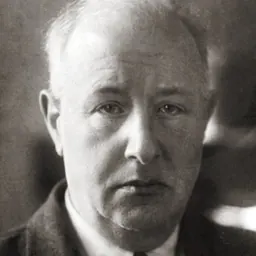
Lived 1924 – 1989 (aged 65). Mira Trailović was a Yugoslav actor, playwright, writer, film director, director and dramaturg.
Mira Trailović (Serbian Cyrillic: Мира Траиловић; née Milićević; 22 January 1924 – 7 August 1989) was a Serbian dramaturg and one of the most distinguished theatre directors in the history of Serbian and Yugoslav theatre. A pioneer of the avant-garde theatre in Eastern Europe, she was one of the founders and a driving force behind the Atelje 212 theater and BITEF, one of the most important European theatre festivals The couple had one more child, a daughter Olga (born 6 June 1931, in Belgrade).
On her mother's side, Milićević descended from the cadet branch of the Simić family, notable in the 19th century Serbia, both in politics and culture. Soon, she switched to direction, advancing to the post of program editor at the radio's drama section. She directed over 70 radio dramas, mostly by foreign authors.
Atelje 212
She entered the world of theater as an assistant director at the Yugoslav Drama Theatre.
Major controversy, however, was caused by her staging of the Hair, which was prepared in 1968 and premiered in 1969. A rock-musical, composed by Galt MacDermot, with lyrics by Gerome Ragni and James Rado, stirred not just the highest political and artistic circles, but also the common people. Heavily shook and agitated by the student protests of 1968, the Communist governing class and its diehards attacked the musical as subversive, due to its hippie and anti-establishment attitude. It had such an impact, that it is still debated.
Under her artistic and managerial guidance, though not a directorial one, Atelje 212 also presented for the first time in Serbia works of Samuel Beckett (Waiting for Godot) in 1956 (first staging in Eastern Europe),
BITEF also showed performances of the traditional, folk theatres, like Chinese Peking opera, Japanese Noh theatre, Ugandan traditional theatre or the Opera dei pupi (Sicilian marionettes theatre), but also followed the theatre's coming out of the box, that is, having performances outside of the theatre buildings, giving shows on stadiums, in semi-collapsed industrial zones and peers, or simply out in the open.
Lyubimov's Taganka Theatre was allowed by the Soviet authorities to visit BITEF which was the first time at all they were allowed to leave the USSR, as, until that point, Lyubimov was deemed a dissident by the Soviet government. From the late 1970s, Trailović was right on time with postmodern aesthetics in scenic arts, bringing to Belgrade Robert Wilson (Einstein on the Beach), Johann Kresnik, Tomaž Pandur.
Some artists gained international recognition after being summoned by Trailović to the festival: Luca Ronconi (with his famous Orlando furioso), Victor Garcia, Roberto Ciulli and his Theater an der Ruhr. Other directors and companies which performed on BITEF include Eugenio Barba, Steven Berkoff, Dejan Mijač, Pyotr Fomenko, Teatro Núria Espert, Pip Simmons Theatre Group, Ellen Stewart and La MaMa while authors Samuel Beckett, Jean Paul Sartre and Eugène Ionesco attended performances of their plays.
France In the first half of the 1980s, Trailović lived in France for several years. In 1983–84 she worked in Theatre of Nations in Paris and was an artistic director of the International theatre festival in Nancy.
BITEF Teatar In 1989 she founded a new theatre, "BITEF Teatar", and became its manager. Theatre is seated in the never fully finished nor consecrated German Evangelical church in Belgrade's neighborhood of Dorćol. Construction began in 1940. It was projected by Otto Bartning and developed and supervised by Đorđe Staševski, who partially changed the interiors in 1943 in the projected residential section of the church, facing the Drinčićeva street. The works stopped in 1951. The building was renovated to accommodate the new theatre in 1988–89. It is considered to be the unique case that, instead of a theatre founding the festival (like Atelje 212 did with BITEF), in this case, the festival founded a theatre. It was envisioned without having a permanent staff. The idea behind the creation of BITEF teatar was to organize the BITEF festival and to expand the effects of the festival throughout the year, and not only in the period when BITEF was held, but Trailović died later that same year.
Among the managers who inherited her at the helm of the theatre were playwright Nenad Prokić (1997–2005) and theatrical director Nikita Milivojević (2005–09).
The building of the "BITEF teatar" was declared a cultural monument by the Serbian government in April 2013.
Style and image In her work, molded by her Balzacian talent, Trailović exhibited strong disposition towards the avant-garde repertoire, though she always rejected the term itself, asking "And what is avant-garde?". She constantly baffled and surprised, both the audience and the critics, with her ideas, innovations and seemingly inexhaustible energy and persistence. Because of the acuteness of hers, endless charm and talent for persuasion, she was nicknamed "bulldozer in a fur coat".
Her activities were always followed by controversial reactions and urban myths. He later became a correspondent from Paris for the daily Politika and, as a respected journalist, was editor-in-chief of Politika Ekspres and Politika itself 1982–83. They remained married until Mira's death on 7 August 1989. Dragoljub died on 3 June 1993 in Belgrade. The couple had no children.
Her sister Olga Milićević Nikolić is a well-known architect, who reconstructed some of downtown Belgrade's landmarks like Andrićev Venac (1976), Republic Square (1980) or Nikola Pašić Square (1987), but also projected residential blocks 28, 45 and 70 in New Belgrade (1972), Lešće cemetery (1972) and the Stepin Lug wooden area (1972).
Legacy The Mira Trailović Square in Belgrade in front of the BITEF theater building.
From modern perspective, it is hard to imagine how much of a courage and personal vision was needed at the time to modernize the theatre against the major opposition from the ideological, cultural and artistic establishments. As a director and manager, Trailović often appeared as a Don Quixote tilting at windmills, fighting against the "narrow minds", with the constant idea of "bringing the world to Belgrade and showing Belgrade to the world".
Through Atelje 212 and BITEF, she marked the beginning of a new era in Serbian theatre. On one side, she deprovincialized the theatrical scene in Belgrade and Serbia by allowing the audience inspection into the world theatre's current events. On the other, she toured the parts of the world where Serbian language was basically never heard before. What theatrologists found bewildering was that Trailović was seen as quite traditional and old fashioned, and yet she was an important figure in modernization of theatre – ranging from the theatre of the absurd and docudrama to rock opera and postmodernism – which they explained.
BITEF remains one of the major European festivals. Founded in the mid of the Cold War, it was a unique place where theatres from the West and East could meet.
What a nicely done job, Death, what a success, to tear down a fortress like that! To devour so much meat, to crack so many bones in such a short time. To spend so much energy, swiftly, as if you smoked a cigarette. What a job that was, Death, what a demonstration of power. (As if we wouldn’t trust your word on it.)
A square in front of the BITEF Theatre, below the bohemian quarter Skadarlija, and next to the Bajloni open green market, is named in her honor, the Square of Mira Trailović. The room for the artists above the main stage in the Bitef theatre is called "Mira's room" (Mirina soba).
Filmography TV dramas YearOriginal titleTitleCredited asAuthor Director Adaptation 1961 Siromašni Mali ljudi Poor little people Anton Chekhov 1962 Trojanskog rata neće biti The Trojan War Will Not Take Place Jean Giraudoux 1967 Koktel The Cocktail Party T. S. Eliot 1967 Arno i Jane Drei Rosen aus Papier Manfred Bieler 1972 Pesnikova pisma The Aspern Papers Henry James, Michael Redgrave 1972 Smeh sa scene: Atelje 212 Laughter from the stage: Atelje 212 documentary 1972 Nesporazum The Misunderstanding Albert Camus 1973 Brauningova verzija The Browning Version Terence Rattigan 1973 Izgnanici Exiles James Joyce 1974 Porodični orkestar Personal orchestra Aleksei Arbuzov 1975 Nora A Doll's House Henrik Ibsen 1976 Priča o vojniku L'Histoire du soldat Charles-Ferdinand Ramuz 1976 Poseta stare dame The Visit of the Lady Friedrich Dürrenmatt 1977 Marija Magdalena Maria Magdalena Friedrich Hebbel 1978 Maska Masks Miloš Crnjanski 1988 Roman o Londonu A novel about London Miloš Crnjanski 1989 Čudo u Šarganu The miracle in Šargan Ljubomir Simović
Accolades Regarding the awards, Trailović said that she doesn't care about them but that they do flatter her.
Yugoslav and Serbian awards include City of Belgrade's "Oktobarska nagrada" in 1976 (for The miracle in Šargan), "Sedmojulska nagrada" (at the time the highest government award in Serbia), Statuette of Joakim Vujić in 1988, Order of Merits for the People and "Popularity Oscar" for the most popular person in culture, which proved that her popularity exceeded the artistic and theatrical circles.
She received the most prominent French award Légion d'honneur in 1985, awarded to her by the French culture minister Jack Lang and was knighted by the Italian president Giuseppe Saragat. Other awards include the prizes of the Association of the American Theatre Artists, German embassy in Belgrade, Bulgarian and Czechoslovak theatrical societies, International Theatre Institute and the Polish Order of merit for culture.
Don’t just read it —
keep it.
Full-length biographies made to live with: read them, listen on the way to work, watch them tonight.
- E-book
- Audio
- Video
Instant download · yours to keep · every purchase keeps this site free
Important facts
People in Mira Trailović's life
Named in this biography and alive at the same time



Related people
Same field, nearest in time




Contemporaries
People whose lives overlapped Mira Trailović's



Frequently asked questions
Who was Mira Trailović?
Serbian theatre director (1924-1989)
When was Mira Trailović born?
Mira Trailović was born on 22 January 1924 in Kraljevo.
When did Mira Trailović die?
Mira Trailović died on 7 August 1989 in Belgrade.
What was Mira Trailović's occupation?
Mira Trailović was an actor, playwright, writer, film director, director and dramaturg.
What nationality was Mira Trailović?
Mira Trailović was Yugoslav.
Sources & further reading
Cite this page
APA: Biography.guide. (2026). Mira Trailović. https://biography.guide/mira-trailovic/
MLA: "Mira Trailović." Biography.guide, https://biography.guide/mira-trailovic/.
Chicago: "Mira Trailović." Biography.guide. https://biography.guide/mira-trailovic/.
Data last updated: 2026-09-20 · Spot an error? Report a correction.
Page generated 2026-09-27 05:32 UTC