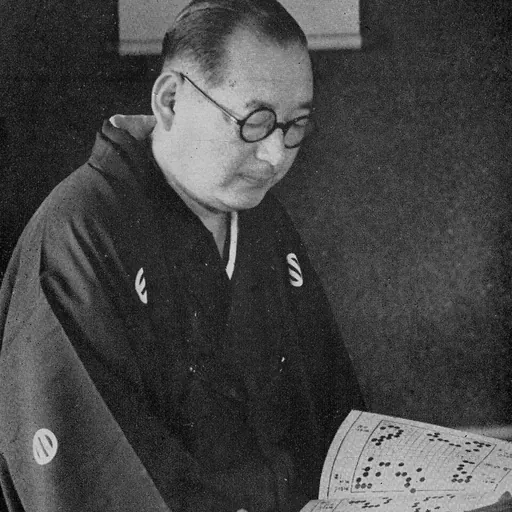
Minoru Kitani
Japanese Go player
About Minoru Kitani
Lived 1909 – 1975 (aged 66). Minoru Kitani was a Japanese go professional.
was one of the most celebrated professional Go players and teachers of the game of Go in the twentieth century in Japan.
Biography He earned the nickname "the Prodigy" after winning a knockout tournament. He defeated eight opponents from the Kiseisha in a row during 1928. He played a celebrated match with then retiring Honinbō Shūsai. The Nobel Prize winning author Kawabata Yasunari used this game in his novel "The Master of Go". In 1954 he suffered a cerebral hemorrhage, but soon recovered. His condition came back in 1964, after which he retired from professional play. He was given the Okura Prize in 1967.
Segoe Kensaku, a friend and rival of Kitani, nicknamed him "the Great Kitani" due to his extraneous efforts relating to Go.
Relationship with Go Seigen Kitani was a young prodigy who quickly attracted attention after the founding, in 1924, of the Nihon Ki-in. He became a great rival and friend of Go Seigen after the latter was brought to Japan from China.
Go and Kitani were the vanguard of the Shinfuseki or "New Opening" theory, a period roughly 1933-6 which saw great innovations in Go opening theory.
In 1939, Go Seigen and Kitani played in the Kamakura jubango, the most celebrated jubango of the century. It ended in Go Seigen's decisive victory. Kitani's career never quite recovered; he was also hampered by bad health, in the form of a heart condition. He was later noted for a style of spectacular idiosyncrasy, with great emphasis on secure territory.
Go and Kitani later lived only a few minutes walk apart, and Go Seigen's daughters studied Go in Kitani Dojo's amateur branch for children. Kitani had his stroke when he was chatting with Go. Kitani died six months after.
Izumi Kobayashi, Kitani's granddaughter and a top female Go player, married Cho U, the student of Go's student Rin Kaiho.
Kitani dojo Kitani was subsequently noted as the most prolific teacher ever of future professional players. The Kitani dojo, which began to flourish after 1945 in the Kitani house in the countryside, was in practical terms run by his wife, produced a whole generation of top players who would dominate Japanese go from the early 1970s to mid-1990s. His own daughter Reiko (1939–1996) reached 6 dan and won the All-Japan Women's Championship several times, and married one of his best students, Koichi Kobayashi. Their child, Izumi Kobayashi, Kitani's granddaughter, is now one of Japan's current leading female players. At the time of his death, he had taught over 60 students, 40 of whom went on to become professionals. The total dan rank of all his students add up to over 250.
Promotion Record
Titles & runners-up Title Years Held Current 1 NHK Cup 1960 Defunct 2 Asashi Top Position 1957, 1958
Title Years Lost Current 5 Honinbo 1947, 1953, 1959 NHK Cup 1958, 1961 Defunct 3 NHK Championship 1958 Asashi Top Position 1959 Igo Senshuken 1958
Don’t just read it —
keep it.
Full-length biographies made to live with: read them, listen on the way to work, watch them tonight.
- E-book
- Audio
- Video
Instant download · yours to keep · every purchase keeps this site free
Important facts
People in Minoru Kitani's life
Named in this biography and alive at the same time




Related people
Same field, nearest in time
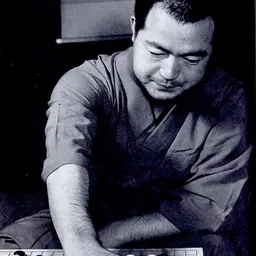
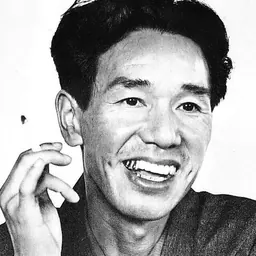

Contemporaries
People whose lives overlapped Minoru Kitani's

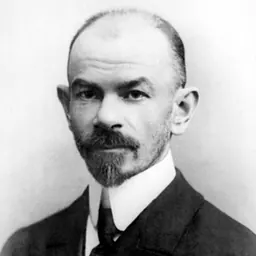


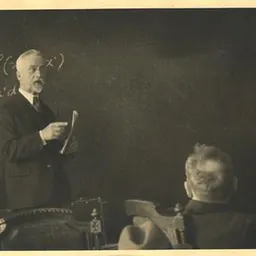
Frequently asked questions
Who was Minoru Kitani?
Japanese Go player (1909-1975)
When was Minoru Kitani born?
Minoru Kitani was born on 25 January 1909 in Kobe.
When did Minoru Kitani die?
Minoru Kitani died on 19 December 1975 in Japan.
What was Minoru Kitani's occupation?
Minoru Kitani was a go professional.
What nationality was Minoru Kitani?
Minoru Kitani was Japanese.
Sources & further reading
Cite this page
APA: Biography.guide. (2026). Minoru Kitani. https://biography.guide/minoru-kitani/
MLA: "Minoru Kitani." Biography.guide, https://biography.guide/minoru-kitani/.
Chicago: "Minoru Kitani." Biography.guide. https://biography.guide/minoru-kitani/.
Data last updated: 2026-09-22 · Spot an error? Report a correction.
Portrait: Wikimedia Commons · author & licence
Page generated 2026-09-27 05:03 UTC