
About Minoru Hirai
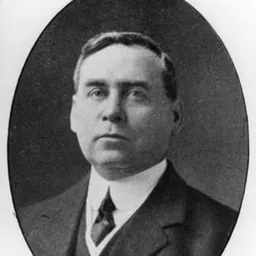
Lived 1903 – 1998 (aged 95). Minoru Hirai was a Japanese samurai and aikidoka.
Minoru Hirai (平井 稔 March 1903 - 16 October 1998) was a Japanese martial artist and creator of the korindo style of aikido.
As a youth, he studied many different martial arts including Togin-ryu, Okumura Nito-ryu, Takenouchi-ryu, Kito-ryu and Saburi-ryu. By 1938, he became a master in iaido and jujutsu and established his own dojo, the Kogado dojo in Okayama.
In 1938, he met Morihei Ueshiba at Okayama, who told him about the technique of "aikibudo" he created and invited him to his dojo in Tokyo. Hirai found similarities in Ueshiba's art based on circular motions with his own style of jujutsu he was developing and decided to enter Ueshiba's Kobukan dojo.
During World War II, Hirai was the head of the jujutsu department of the Japanese Army's military police school and was instrumental in developing a new arrest technique employed by the military police.
In 1942, he was appointed director of the General Affairs for the Kobukan Dojo by Ueshiba, helping him with daily matters at the dojo. The same year he was sent as the Kobukan representative to the Dai Nippon Butoku Kai, an organization promoting martial arts in Japan, and was instrumental in creating the term "aikido" to refer to Ueshiba's art within the Butokukai's circle.
In July 1945, the Butokukai awarded him the rank of Hanshi. and combined elements from classical jujutsu and traditional Japanese weaponry with the early teachings of Ueshiba. It is based on the principle of circular tai sabaki. In October 1945, he established the Korindo Dojo in Shizuoka. In September 1953, the Korindo Dojo in Tokyo was inaugurated.
Korindo's taisabaki consists of seven forms or kata: kesagiri, kote-sabaki, irimisabaki, shihosabaki, isogaeshi, tsuiage, and ushirosabaki. Usually they are practiced solo, but they can also be done with a partner. These seven kata are practiced to the front, back, right, and left, and they help develop the ability to apply techniques from any position. Minoru Hirai's unique taisabaki forms, which constitute the basis of his Korindo Aikido, can be practiced empty-handed, with a sword, short staff, or spear. The goal is to express the natural mind as natural martial arts techniques.
Don’t just read it —
keep it.
Full-length biographies made to live with: read them, listen on the way to work, watch them tonight.
- E-book
- Audio
- Video
Instant download · yours to keep · every purchase keeps this site free
Important facts
People in Minoru Hirai's life
Named in this biography and alive at the same time
Related people
Same field, nearest in time



Contemporaries
People whose lives overlapped Minoru Hirai's
Frequently asked questions
Who was Minoru Hirai?
Japanese aikidoka
When was Minoru Hirai born?
Minoru Hirai was born on 1 March 1903.
When did Minoru Hirai die?
Minoru Hirai died on 16 October 1998.
What was Minoru Hirai's occupation?
Minoru Hirai was a samurai and aikidoka.
What nationality was Minoru Hirai?
Minoru Hirai was Japanese.
Sources & further reading
Cite this page
APA: Biography.guide. (2026). Minoru Hirai. https://biography.guide/minoru-hirai/
MLA: "Minoru Hirai." Biography.guide, https://biography.guide/minoru-hirai/.
Chicago: "Minoru Hirai." Biography.guide. https://biography.guide/minoru-hirai/.
Data last updated: 2026-09-20 · Spot an error? Report a correction.
Page generated 2026-09-27 05:02 UTC